The Harbor Before Movement
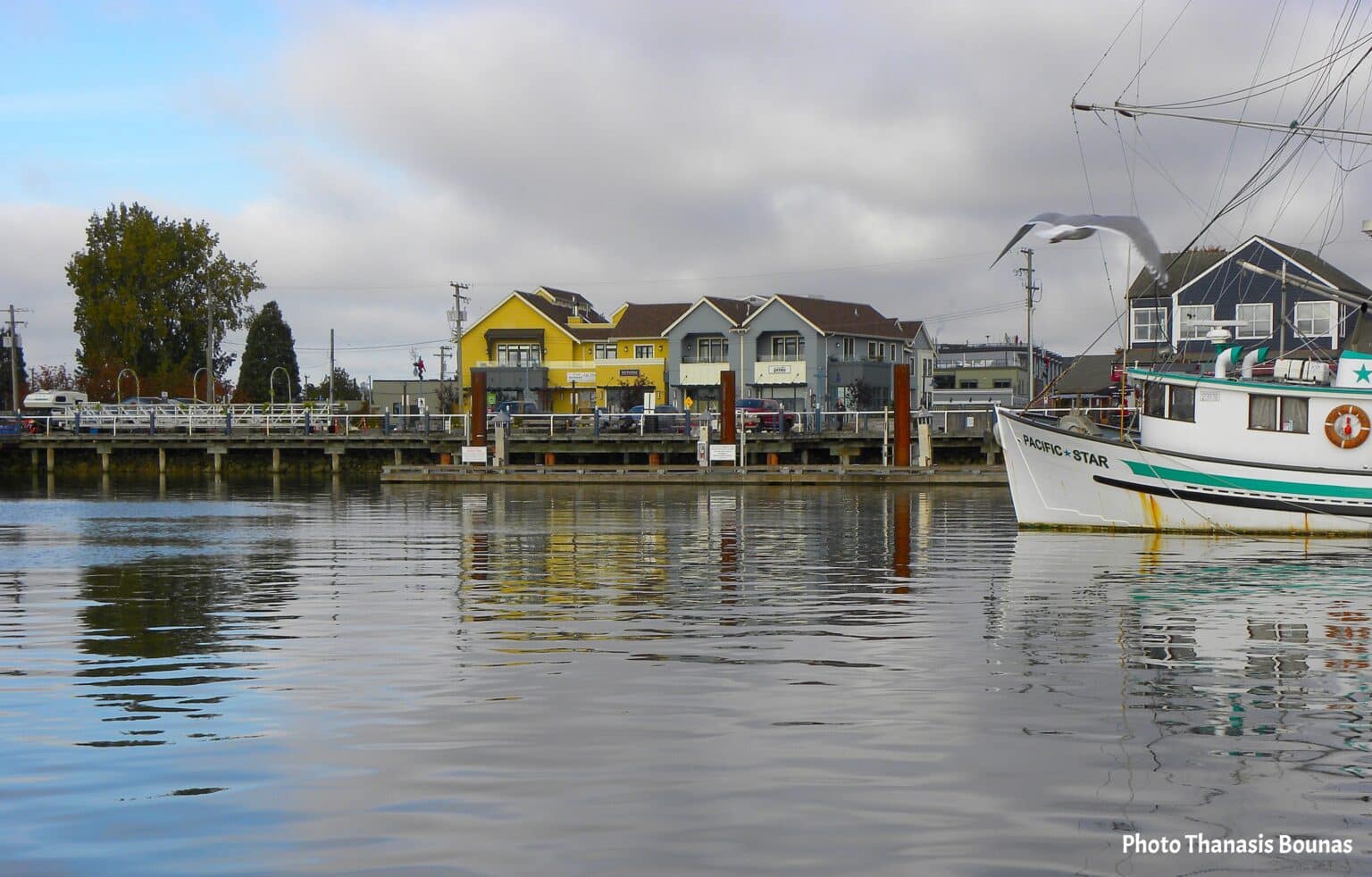
The water barely moves.
Soft ripples spread beneath the hull. The boat waits without tension. Across the dock, color reflects gently. A gull glides, then vanishes into the gray sky.
Nothing feels urgent.
Calm in Sailing does not remove motion.
It refines it.
The harbor breathes slowly. And in that slow rhythm, the mind begins to settle.
The Psychology of Steady Attention
Calm is not emotional emptiness.
It is regulated awareness.
In Sailing, you read the surface. You sense subtle changes. You respond early, not react late.
Psychologically, this is attentional control. The ability to stay present without being pulled by every internal wave.
Travel activates the senses. New places increase alertness. But Sailing trains a quieter skill — selective steadiness.
As explored in Sailing and Direction,
movement without clarity leads to drift. Calm creates direction.
You cannot choose your horizon if your mind is scattered.
Reflection as Inner Navigation
Look at the reflection in the water.
Houses. Sky. Boat.
Nothing distorted. Nothing exaggerated.
Calm sharpens perception.
In psychology, reflection allows integration. You observe your thoughts instead of drowning in them. You feel the wind without amplifying it.
Sailing demands this internal clarity.
You do not overcorrect.
You adjust.
Travel becomes less chaotic when the inner sea is steady.
The Quiet Strength of Controlled Motion
There is strength in this harbor.
Not loud strength.
Controlled strength.
The rope holds. The hull floats. The water carries weight without strain.
Calm in Sailing is disciplined softness.
You trim lightly. You steer gently. You move forward without inner noise.
Between departure and arrival, between wind and stillness, lies a psychological state that defines the journey.
Sailing and Calm are not the opposite of intensity.
They are its mastery.
And somewhere in the quiet reflection of boat against water, you understand:
The sea does not need to be silent.
Only the sailor does.