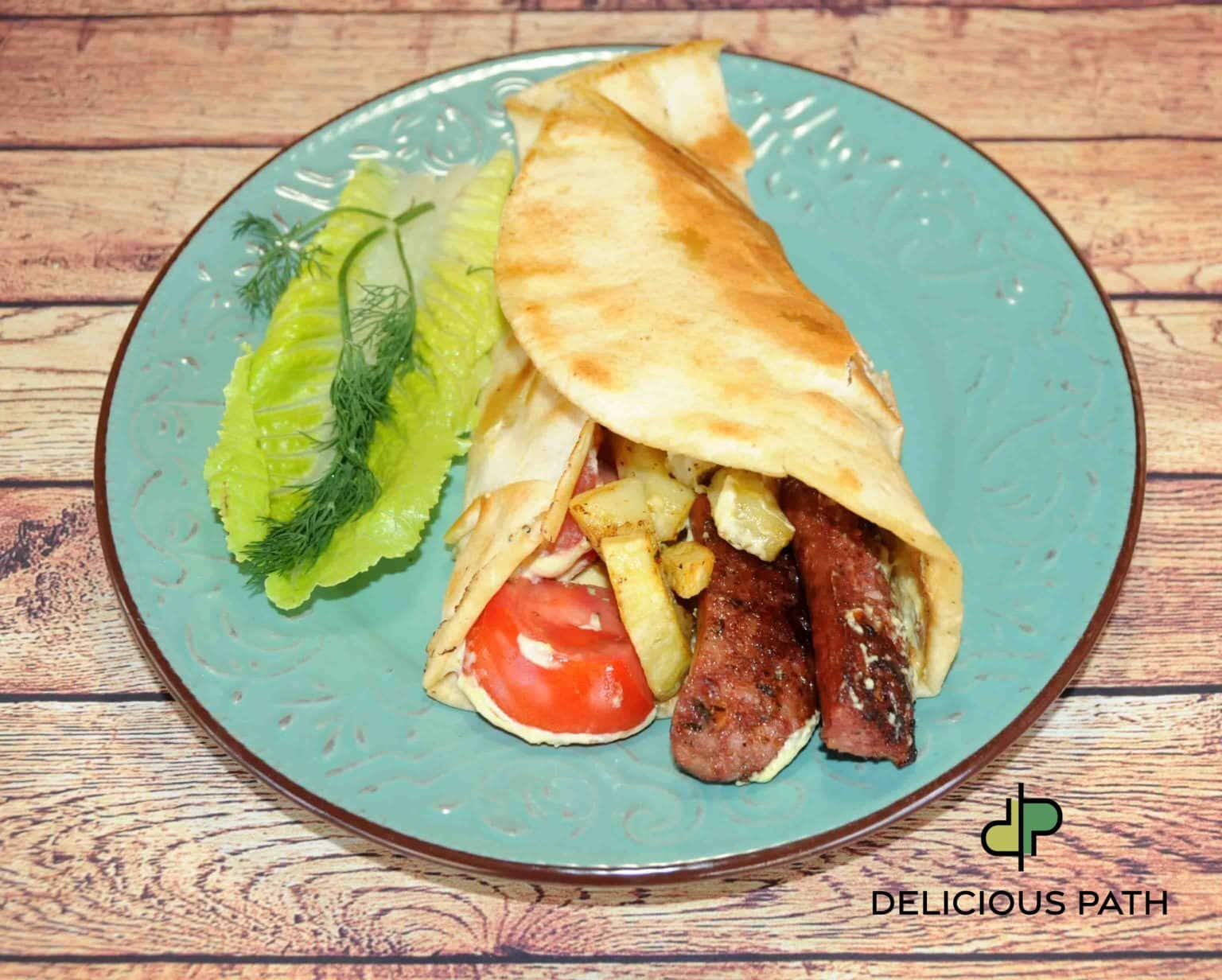
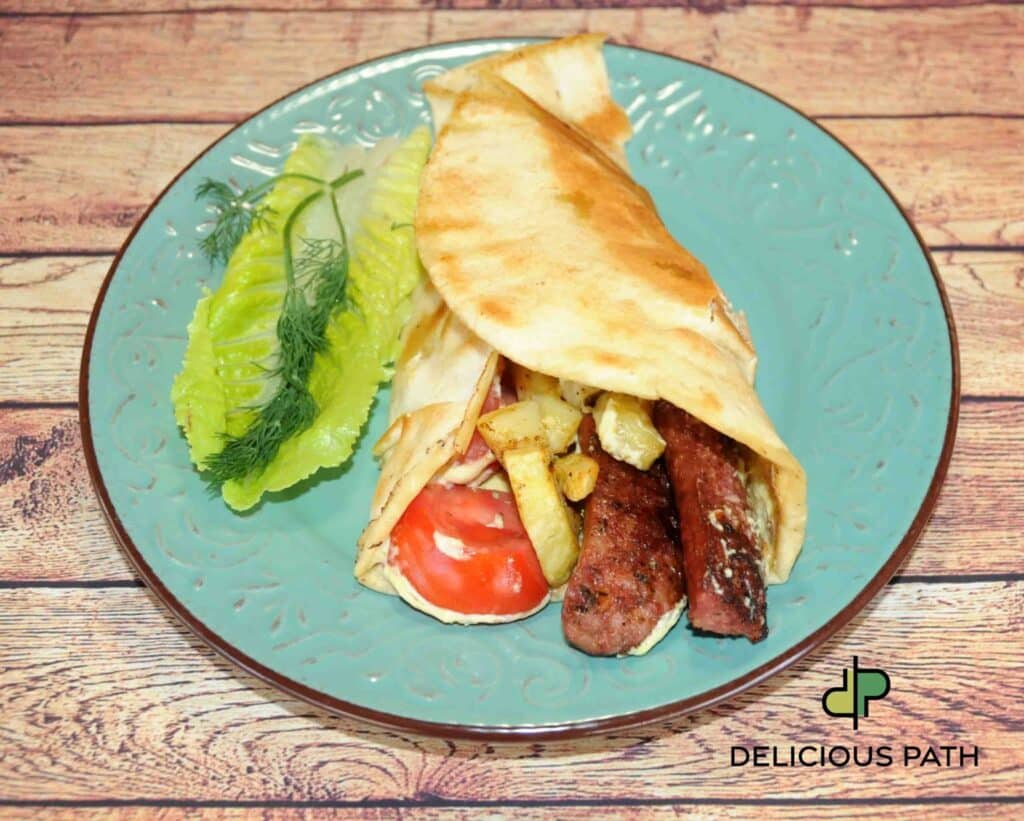
The plate is simple.
Warm pita folded gently.
Sausage resting beside roasted potatoes.
Tomato.
Green leaves.
Nothing extravagant.
And yet, it holds something deeper than hunger.
The Ritual of Trust
Food is an act of faith.
You sit.
You pause.
You taste.
You trust that what is placed in front of you will nourish more than the body.
The bread is soft.
The meat carries heat.
Steam rises quietly.
Faith lives in small rituals.
In the decision to sit at a table instead of rushing past it.
The Psychology of Appetite
Travel changes the way we eat.
Or perhaps, eating changes the way we travel.
When you arrive somewhere unfamiliar,
a plate becomes your first conversation.
No shared language.
Only flavor.
Psychologically, this is vulnerability.
You accept what you do not fully know.
You allow taste to guide you.
In a previous reflection on Faith in Sailing and the Inner Voyage, faith was a winter road.
Here, it is warmth in your hands.
Different landscape.
Same inner movement.
Bread as Anchor
Look at the folded pita.
It holds everything together.
Without it, the ingredients fall apart.
Faith works the same way.
It is not loud belief.
It is structure.
An invisible cohesion.
In the philosophy of Sailing, trust is not theoretical.
It is embodied.
You trust the wind.
You trust the rope.
You trust the meal before departure.
Food before a journey carries something symbolic.
Energy, yes.
But also grounding.
Eating as Arrival
The psychology of travel is not only about movement.
It is about presence.
When you taste slowly,
you arrive.
The sausage is seasoned.
The potatoes are imperfect.
The lettuce is crisp.
Nothing on the plate is trying to impress.
It simply exists.
Faith is similar.
It does not argue.
It sustains.
This meal is not a recipe.
It is a pause.
A reminder that before crossing oceans,
before entering cities,
before confronting yourself—
you sit.
You eat.
You trust.
And that
is enough.