There are moments when food does not speak loudly.
It listens.
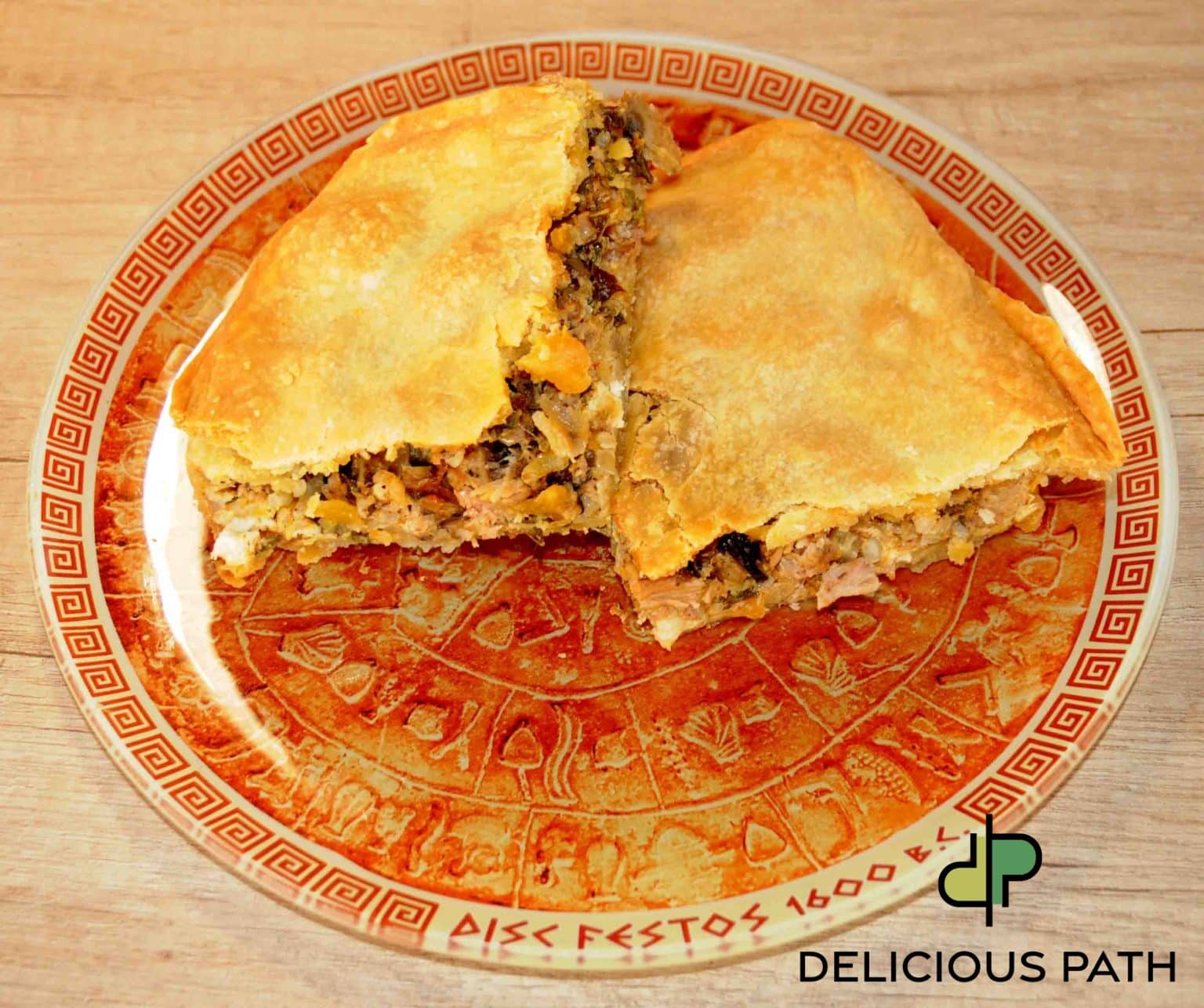
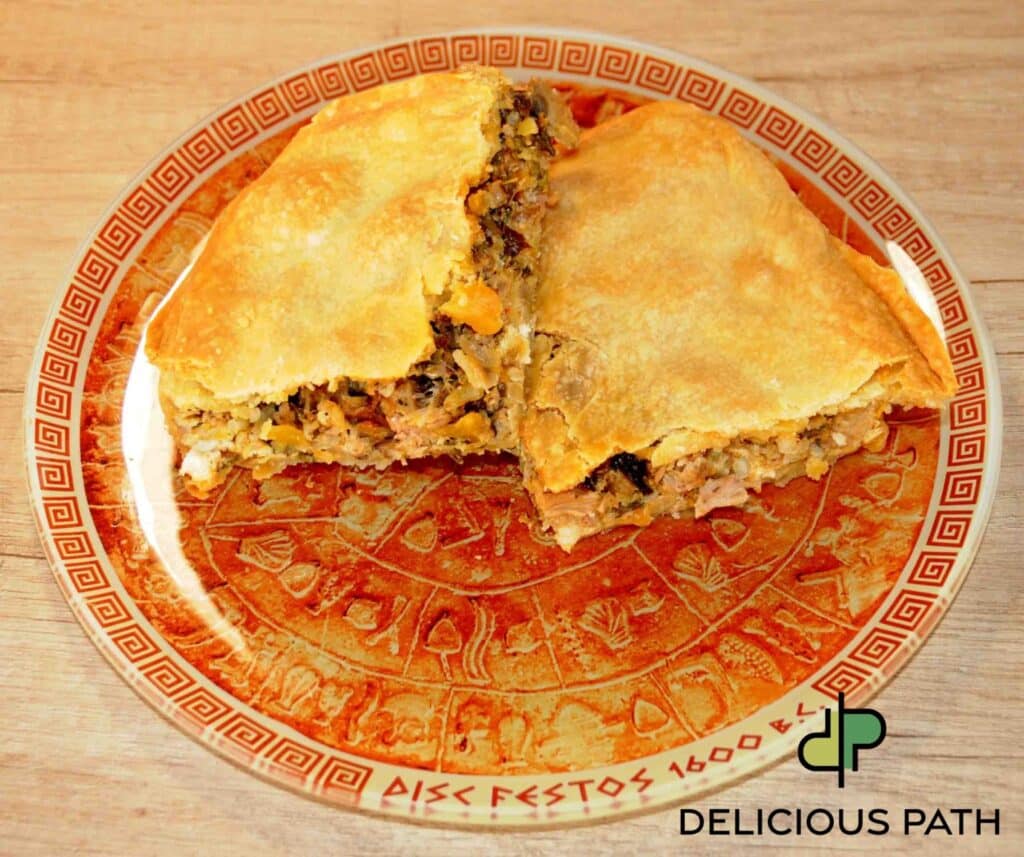
In this photograph, a humble meat pie rests on a red-patterned plate like a compass of memory. Its golden crust is not shouting for attention; it simply waits. The surface is gently cracked, revealing a filling that carries warmth, patience, and the quiet rhythm of hands that kneaded and folded with care.
This is not just Food.
This is Listening.
The Philosophy of Food in the Key of Listening
At bounas.com, Food is never only nourishment. It is geography. It is psychology. It is sailing without leaving the table.
The pie in the image feels like a harbor after a long passage. The crust, firm yet fragile, mirrors the hull of a boat that has faced the wind. Inside, the layers resemble stories gathered along a journey — spices like distant ports, textures like changing tides.
Listening begins in the kitchen.
When dough is rolled, when filling is seasoned, when heat slowly transforms raw ingredients into something whole, there is an invisible dialogue taking place. The cook listens to texture. To scent. To timing. To silence.
And this is where psychology enters the voyage.
Listening and the Psychology of Travel
Travel changes us not because we move, but because we begin to listen.
In sailing, the sea does not tolerate noise. The sailor must listen to the wind, to the shift of weight, to the subtle difference between calm water and an approaching gust. Listening becomes survival. But more than that, it becomes transformation.
The same psychology applies to food on a journey.
After days at sea, after long roads and unfamiliar streets, a simple meal becomes profound. The mind, slightly worn by distance and discovery, opens. The senses sharpen. We listen differently. We taste differently.
A pie like this — warm, grounded, honest — becomes more than comfort. It becomes anchoring.
Psychologically, this is regulation. The nervous system, often activated by travel, finds safety in ritual. Familiar textures reduce uncertainty. Warmth restores balance. Chewing slows thought. Breathing deepens.
Listening is not passive.
It is healing.
Sailing, Silence, and the Taste of Return
Imagine a sailor stepping ashore after hours of watching horizons. The mind still carries the rhythm of waves. The body still sways with imaginary motion.
Now imagine this plate placed before them.
The golden crust is land.
The red plate is memory.
The filling is experience.
In that first bite, something happens internally. The sailor listens — not only to the crunch, but to the relief. To the shift from alertness to softness. To the quiet joy of being held by something solid.
Food becomes the bridge between motion and stillness.
And this is why Listening is essential in both Sailing and Travel psychology. Without listening, the journey remains external. With listening, the journey becomes inner.
The Inner Voyage Through Taste
The photograph invites us to pause. The pie is cut in two — like a voyage divided into departure and return. It exposes its interior without hesitation. There is honesty in that gesture.
Listening, too, requires exposure. We must open ourselves — to wind, to water, to unfamiliar cities, to our own internal tides.
In the philosophy of Food, Listening is the quiet art of attention. It is noticing how flavor carries memory. How texture awakens childhood. How warmth stabilizes emotion after distance.
It is understanding that even a simple meal can become a psychological harbor.
Because sometimes, the sea is loud.
And sometimes, the most profound navigation happens when we sit, take a bite, and truly listen.