The Quiet Composition
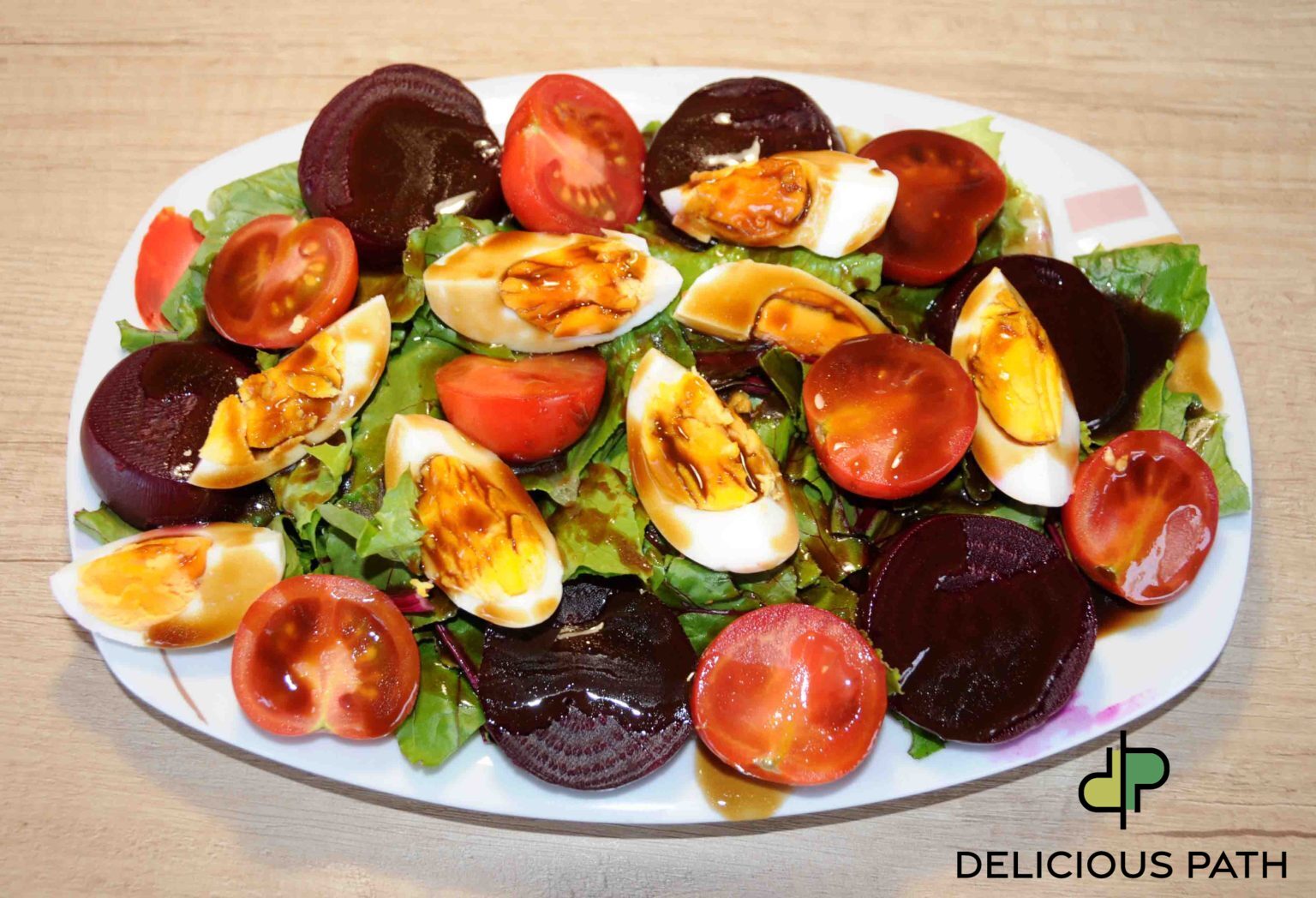
Beetroot, deep and grounded.
Tomatoes, open and bright.
Eggs cut in halves,
their centers holding a softer sun.
Greens beneath everything,
barely visible,
supporting the weight.
Nothing is excessive.
Nothing competes.
It is a plate that trusts its own balance.
The Simplicity of Trusting
In food, trusting is restraint.
You do not hide ingredients.
You allow them to remain themselves.
Beetroot tastes of soil.
Tomato tastes of light.
Egg tastes of care and time.
Like Trusting the Light Beneath the Bridge,
the harmony does not come from control —
but from quiet alignment.
Psychology in travel works the same way.
You move toward unknown places
without overcomplicating the step.
You trust the process of unfolding.
Between Land and Open Water
Salad is land.
Color drawn from soil.
Texture shaped by seasons.
And yet, on a boat at anchor,
such a plate feels complete.
In sailing, trusting is essential.
You prepare the vessel.
You study the wind.
But you cannot command the sea.
You trust your skill.
You trust your awareness.
You trust the invisible currents beneath the surface.
Food on board becomes psychological grounding.
A reminder that even surrounded by water,
you carry earth within you.
The Inner Steadiness
Trusting is not naïve optimism.
It is a cultivated calm.
The kind you feel
when cutting vegetables slowly
in a quiet galley.
The kind you feel
when the boat rocks gently at dusk
and you know you have done what you can.
Looking at this plate —
dark reds, bright greens, golden centers —
you sense integration.
The psychology of travel depends on this integration.
If you distrust every movement,
every horizon becomes threat.
If you trust your preparation,
every horizon becomes invitation.
Trusting is the decision
to engage fully
without demanding certainty.
And like a simple meal shared after a long sail,
it nourishes more than the body.
It steadies the mind.
It softens the journey.
It deepens the voyage within.