The Harbor Before Departure
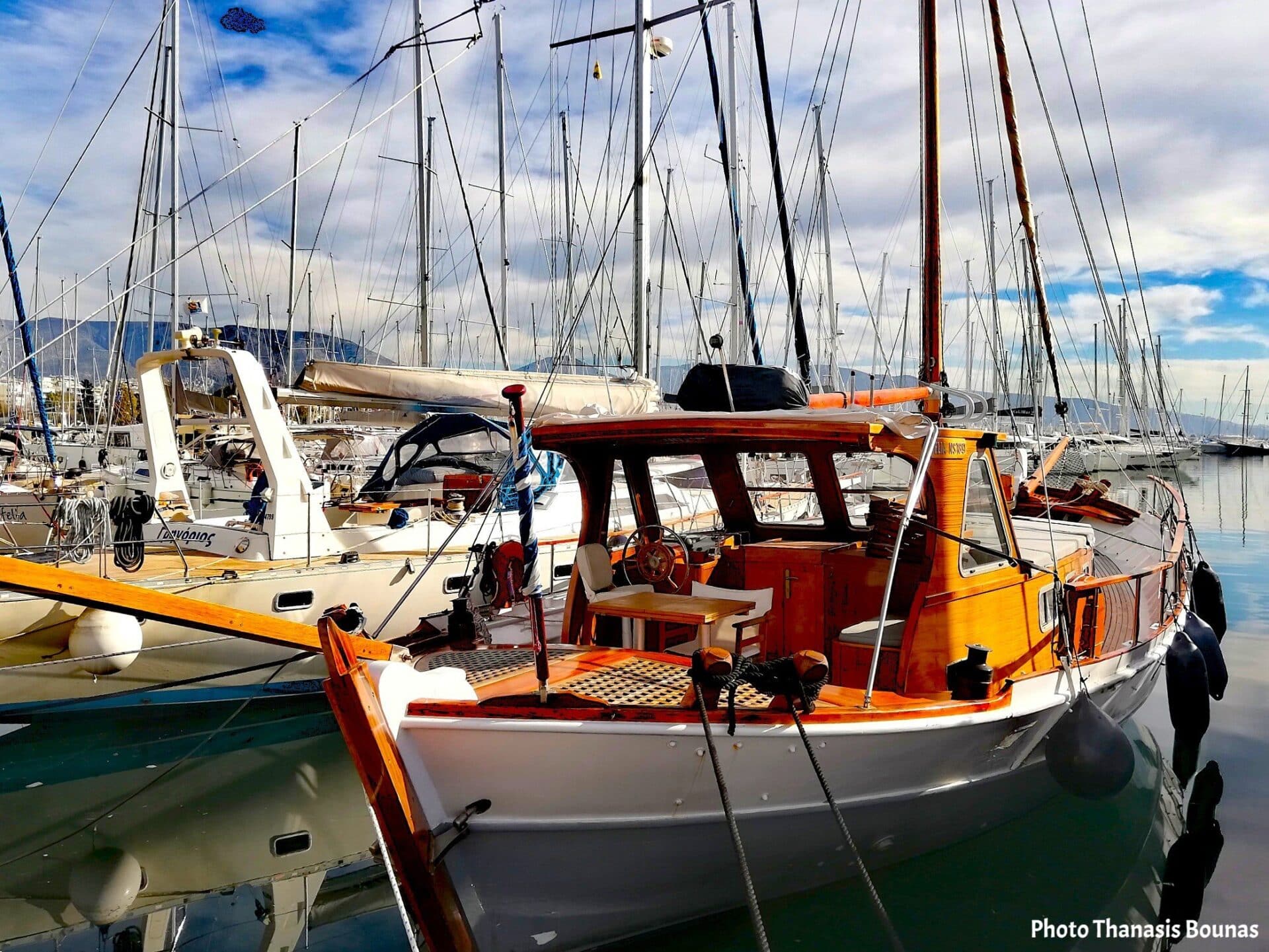
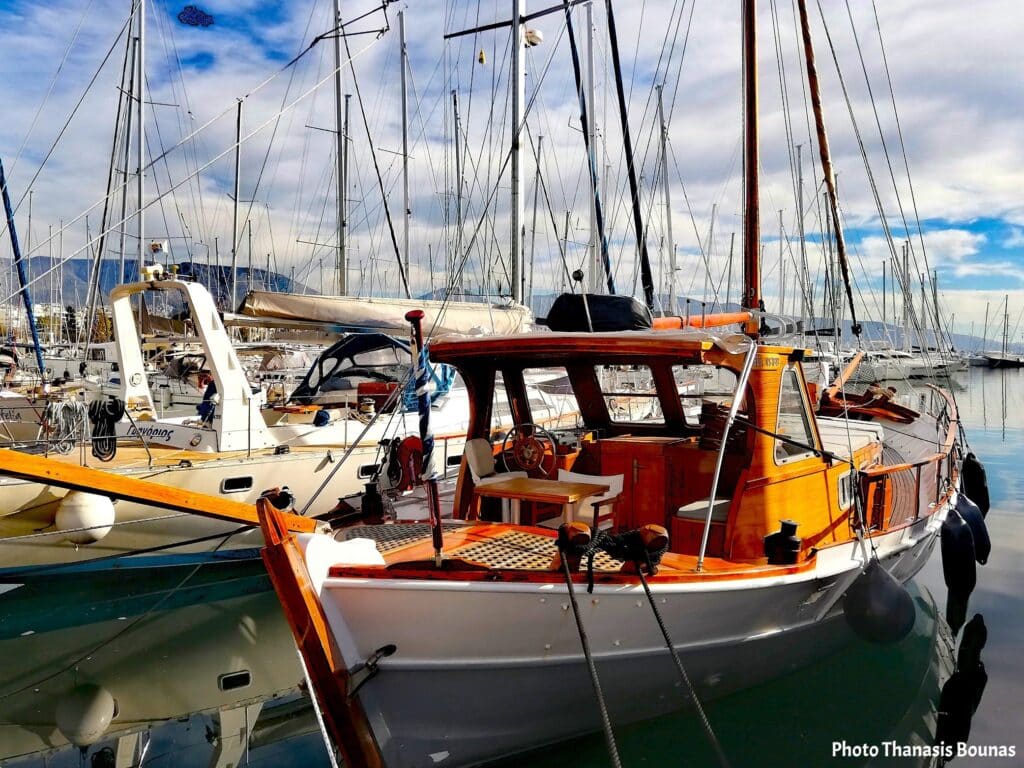
A wooden sailboat rests in the marina.
Polished deck. Tight ropes. Reflections trembling softly beneath the hull.
Around it, dozens of masts rise like a forest of silent lines against the sky.
Yet the boat feels alone.
Solitude in sailing does not begin offshore. It begins here — in still water, before the wind claims direction. In this pause, the vessel is not moving, yet it already carries distance within it.
Travel psychology teaches us that anticipation activates the same neural pathways as movement. Even while anchored, the mind begins to sail.
And solitude appears — not as loneliness, but as preparation.
The Psychology of Sailing Alone
There is a unique mental shift when one sails without noise.
Without conversation.
Without distraction.
Without urgency.
The rhythm of water replaces external dialogue. The creak of wood becomes internal narration.
Psychologically, solitude in sailing strengthens self-regulation. Studies in environmental psychology show that open water environments reduce cognitive overload and increase reflective thought.
When you steer alone, decisions become clearer. Emotions surface without distortion.
As explored in Where the Harbor Becomes a Quiet Revelation, harbors are not just physical spaces; they are thresholds of awareness. Sailing extends that threshold outward.
The sea does not interrupt you.
It listens.
Masts Like Thoughts in the Sky
Look at the photograph.
Vertical lines everywhere — masts piercing the clouds, rigging crossing like unspoken questions.
Solitude is rarely empty.
It is structured.
Each mast holds tension. Each rope balances pressure. The system works because every line knows its place.
The psyche functions the same way during solitary travel. Thoughts align. Priorities reorganize. Emotional noise settles.
Sailing offers something few other journeys provide:
A controlled isolation.
You are alone — but not disconnected. Surrounded by horizon, you become more aware of your internal compass.
Solitude as Navigation
In sailing, direction is never imposed. It is negotiated — between wind, water, and intention.
The same is true for the traveler.
Solitude sharpens navigation. Without external validation, choices become authentic. Without constant stimulation, perception deepens.
The marina may be full of boats, yet each journey is singular.
This wooden sailboat, resting quietly before departure, holds a psychological truth:
Solitude is not withdrawal.
It is alignment.
When sailing meets solitude, travel becomes inner cartography. The sea becomes mirror. The wind becomes dialogue.
And somewhere between harbor and horizon, the traveler discovers that being alone on open water is not isolation —
It is clarity.