Between Mast and Reflection
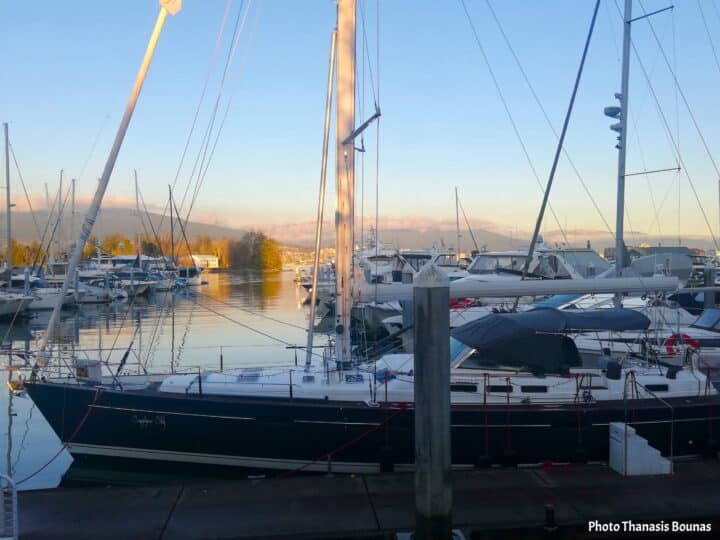
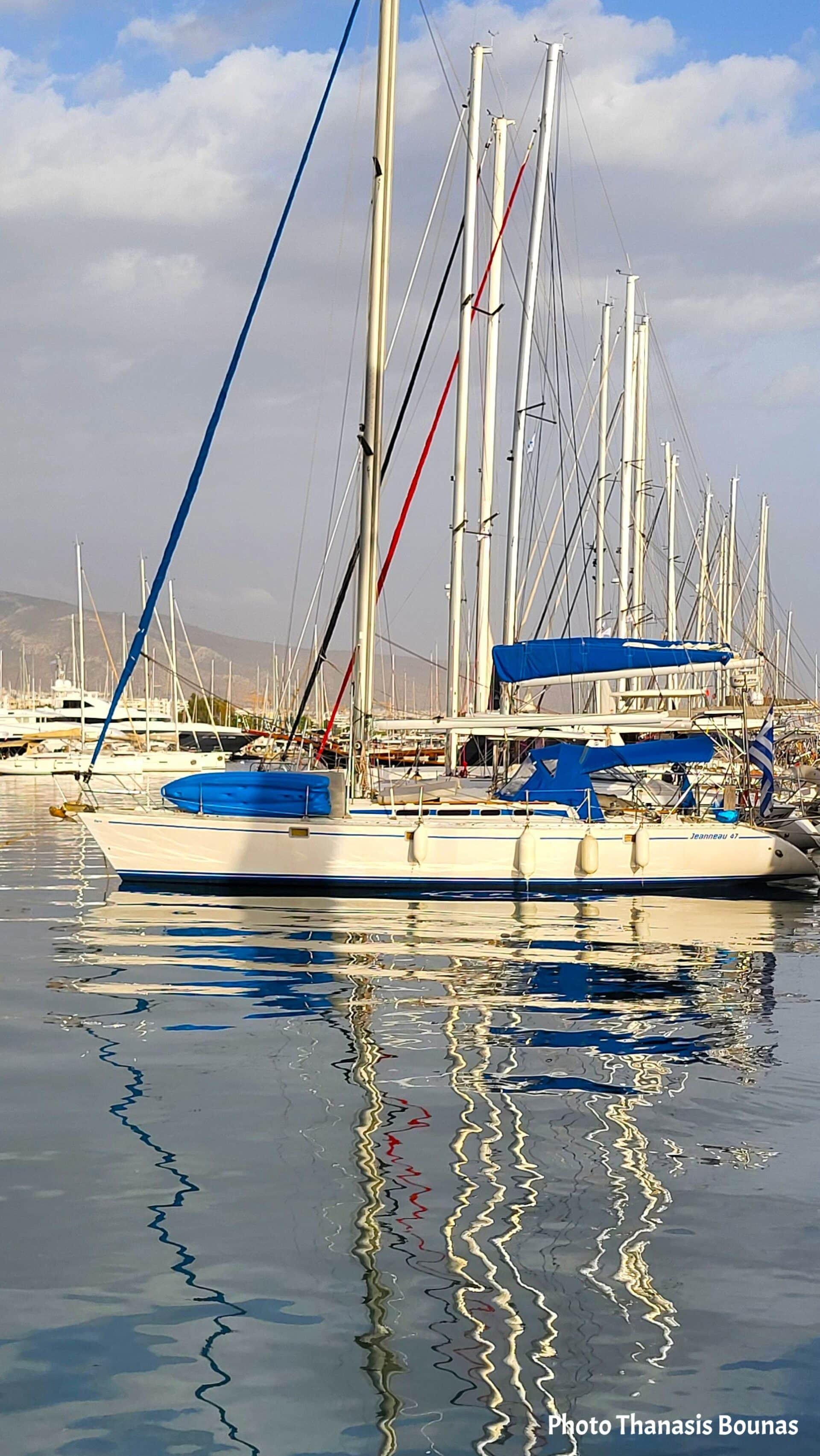
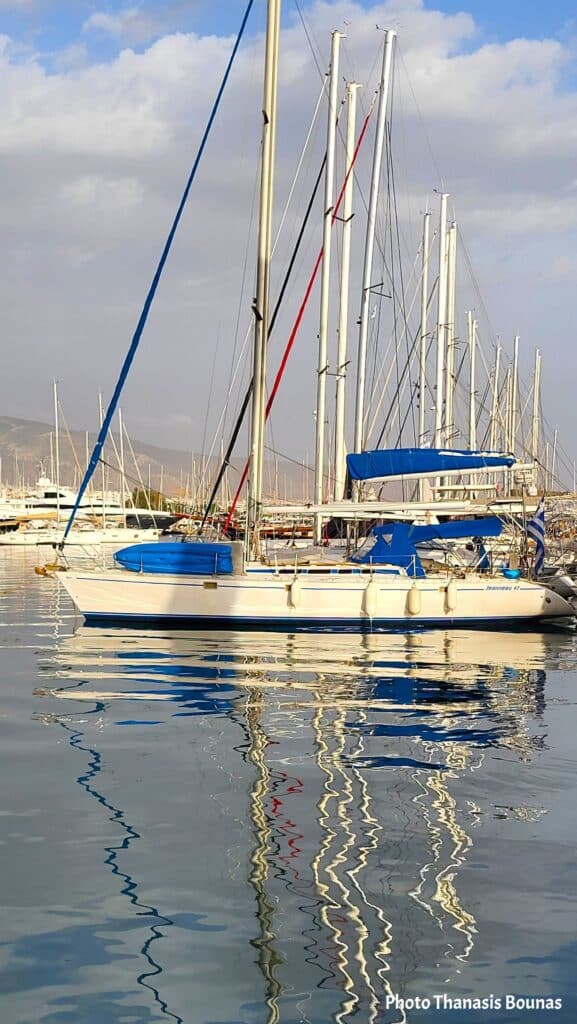
A white hull rests on quiet water.
Blue canvas folded.
Lines relaxed.
Masts rising like vertical thoughts against a soft sky.
And below—
their reflection trembles.
Balance is not stillness.
It is alignment between what stands
and what moves beneath it.
In Sailing, balance begins long before departure.
It begins in awareness.
The Architecture of Stability
Every sailboat is a lesson in invisible equilibrium.
Weight below the waterline.
Wind pressure above.
Tension distributed through ropes and structure.
Nothing random.
Everything calibrated.
As explored in the reflection Faith in Sailing on bounas.com, trust is what allows the vessel to lean without collapsing.
Balance works the same way.
It is supported by something unseen.
The sailor adjusts sails.
But first, he adjusts himself.
An anxious mind overcorrects.
A distracted mind hesitates.
True balance is internal before it becomes nautical.
The Psychology of the Open Water
Travel by sea amplifies emotion.
Horizon expands perception.
Silence magnifies thought.
On land, imbalance can be hidden.
At sea, it becomes visible immediately—
in posture,
in decisions,
in reaction to wind shifts.
Sailing trains emotional regulation.
You cannot control the gust.
You can only redistribute tension.
Like the reflection in the water—
distorted,
yet still connected to the mast above—
your inner state mirrors your external navigation.
Balance is the bridge between both.
When the Water is Calm
In the harbor, the boat appears motionless.
But it is never truly still.
Micro-movements.
Gentle corrections.
Balance is dynamic.
Not a fixed position—
a continuous conversation between forces.
The psychology of Sailing teaches this quietly:
You do not eliminate imbalance.
You respond to it.
And in that response,
you find center.