Light in food is not about brightness or color.
It is about clarity.
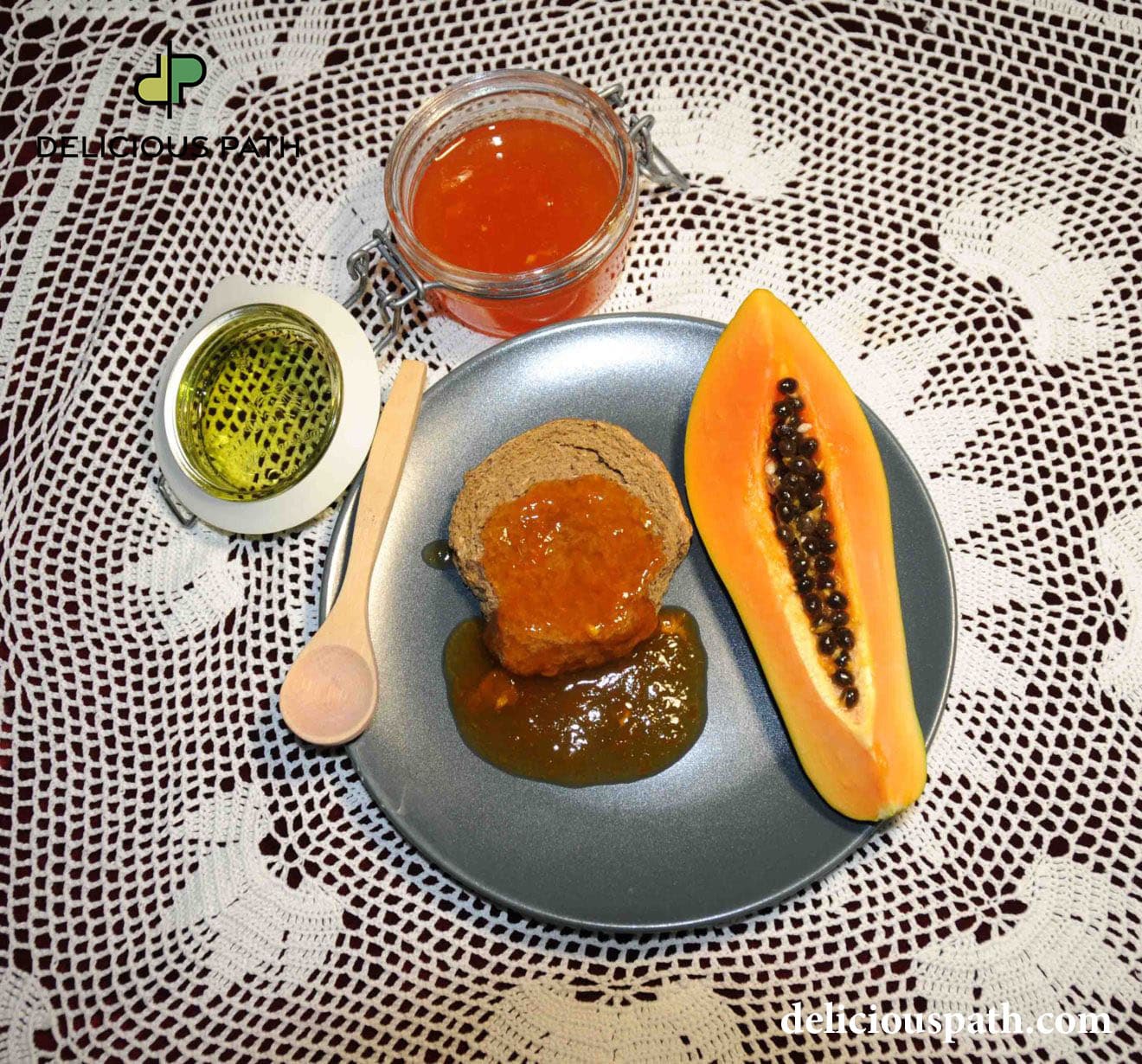
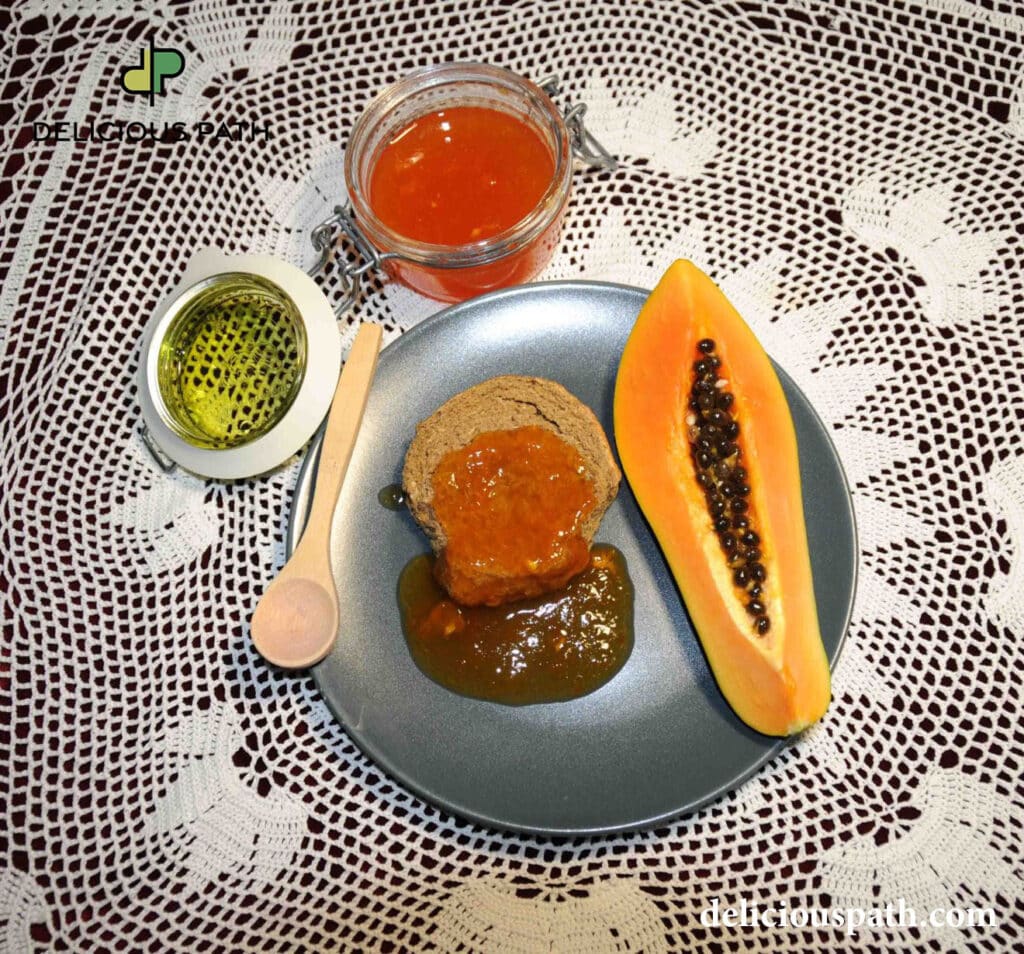
In the photograph, a papaya rests open on a grey plate.
Its flesh is luminous, almost translucent, holding the sun inside it.
Dark seeds form a quiet axis at its center, while papaya jam spreads slowly over bread beside it.
A small glass of olive oil reflects a softer glow.
Nothing here is decorative.
Everything feels intentional.
The Taste of Real Light
After hours at sea, appetite changes.
Salt stays on the skin.
Wind clears unnecessary thought.
The horizon continues inside you long after docking.
Sailing simplifies hunger.
You no longer look for intensity.
You look for alignment.
Papaya carries light differently than cooked food.
It feels direct.
Unhidden.
Honest.
Like the reflection described in Light – What Remains After the Salt,
it does not produce light.
It receives it.
Psychological Softness After Movement
Travel — especially by sail — reorganizes the nervous system.
Repetition of waves steadies internal rhythm.
Wind reduces mental excess.
Distance softens urgency.
When you sit at a table after that, you are not just eating.
You are recalibrating.
Papaya feels open and breathable.
Jam deepens sweetness without heaviness.
Bread grounds the experience.
Olive oil connects texture to memory.
This is not about ingredients.
It is about regulation.
Light food allows thought to remain clear.
It supports reflection instead of distracting from it.
Continuation, Not Contrast
The lace beneath the plate resembles quiet patterns of water.
Structured, repetitive, contained.
Papaya against grey ceramic.
Seeds against flesh.
Sweetness against neutrality.
Contrast exists without conflict.
Light becomes edible presence.
It steadies rather than excites.
You taste slowly.
You notice that the sea has not disappeared.
It has settled inside you.
Food becomes part of the inner voyage.
Not indulgence.
Not display.
But continuation.
Light.
Not glare.
A gentle internal orientation that keeps you balanced —
as if the horizon were still in front of you.