Light at sea is never decorative.
It is structural.
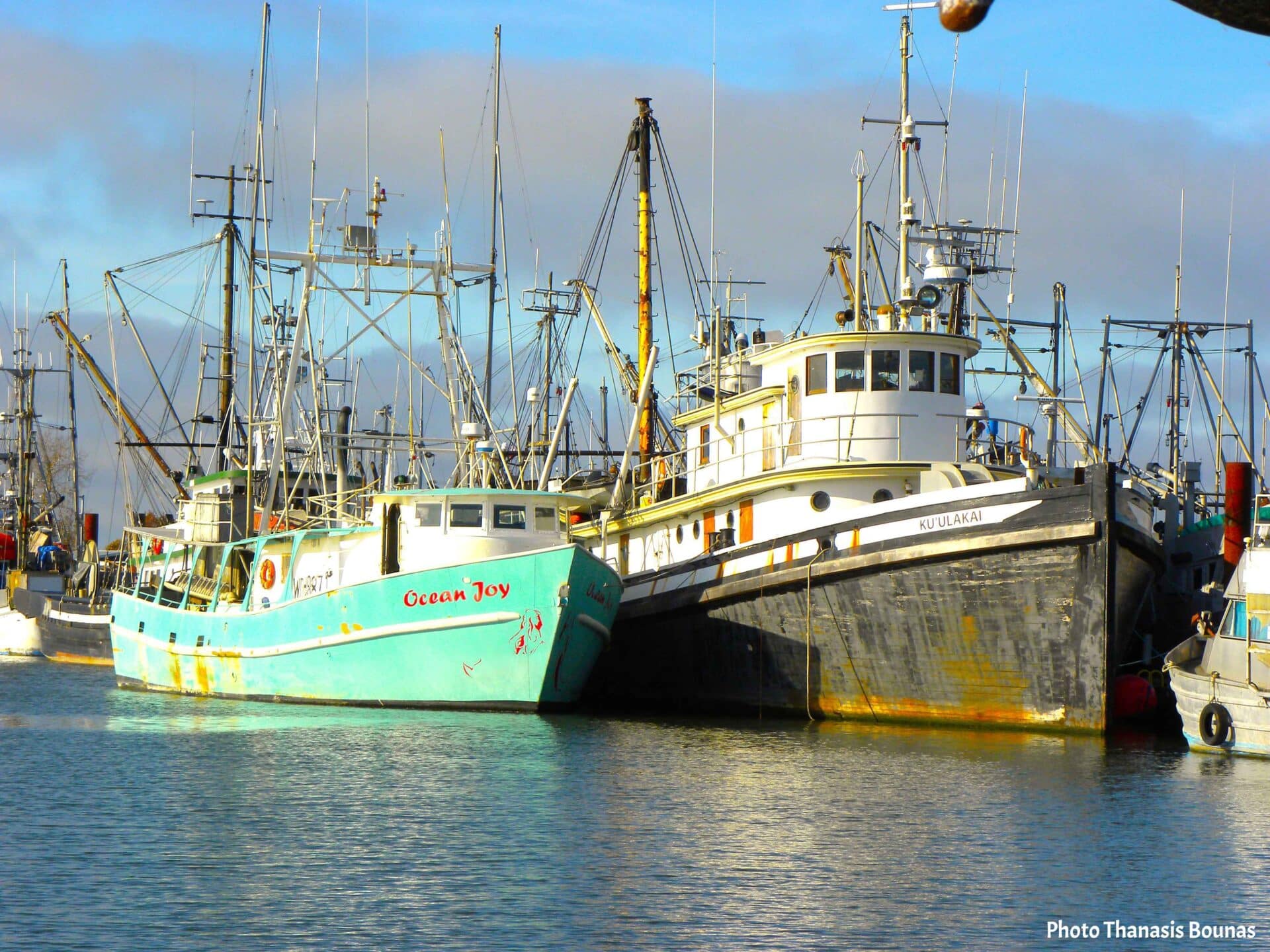
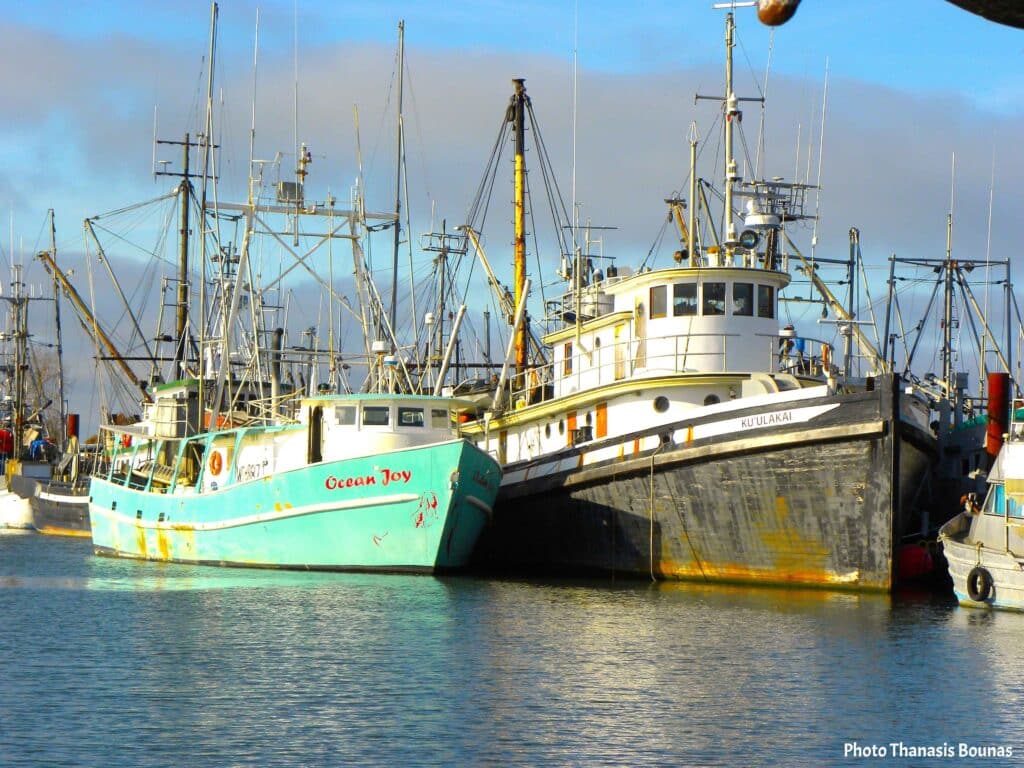
In the photograph, two working boats rest side by side.
Their hulls carry scratches, rust, and layers of effort.
Masts and antennas rise densely above them, like lines drawn upward with intention.
The water is calm.
But the vessels are not light in mass.
Only in balance.
Practical Illumination
This is not cinematic light.
It is working light.
It runs along metal edges.
It exposes texture.
It defines what is solid and what has aged.
Fishing boats do not perform for the eye.
They endure.
And yet, light insists on outlining them with precision.
It does not beautify.
It clarifies.
Exposure and Awareness
Sailing reshapes psychology through exposure.
On land, complexity hides behind walls.
At sea, structure is visible.
You see the cables.
You see the joints.
You see what keeps everything aligned.
Light becomes diagnostic.
It teaches attention.
It teaches maintenance.
It teaches responsibility.
In that sense, it moves differently than in Light – What the Glass Remembers at the End of the Day.
There, reflection gathered memory.
Here, illumination reveals function.
Floating Through Density
The boats are heavy.
Industrial.
Layered with equipment and history.
And yet they float without hesitation.
This is the quiet lesson of sailing.
Weight is not the obstacle.
Imbalance is.
Light helps you measure that difference.
It shows where tension lives.
It shows where stability remains.
Psychologically, travel by sea does the same.
You begin to notice what you carry.
You begin to distinguish between burden and structure.
The harbor remains still.
The water supports without comment.
Light rests on steel and salt
and makes everything readable.
Light.
Not softness.
Not spectacle.
But orientation.
The ability to see clearly,
even when surrounded by density.