A Different Perspective of the City
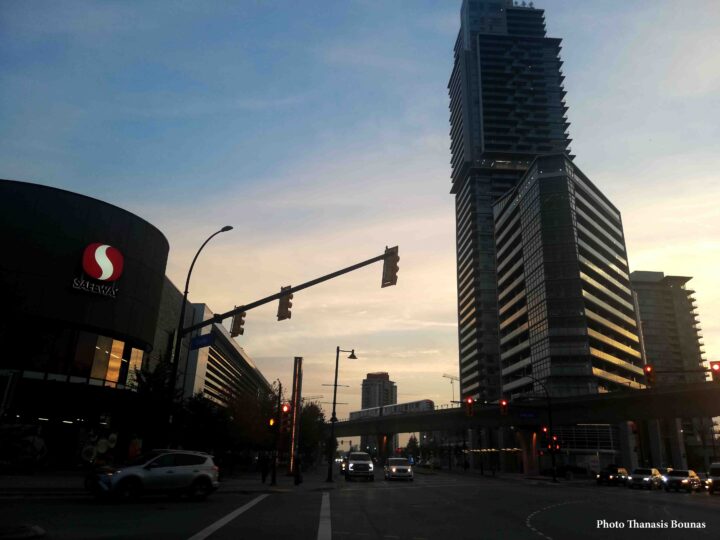
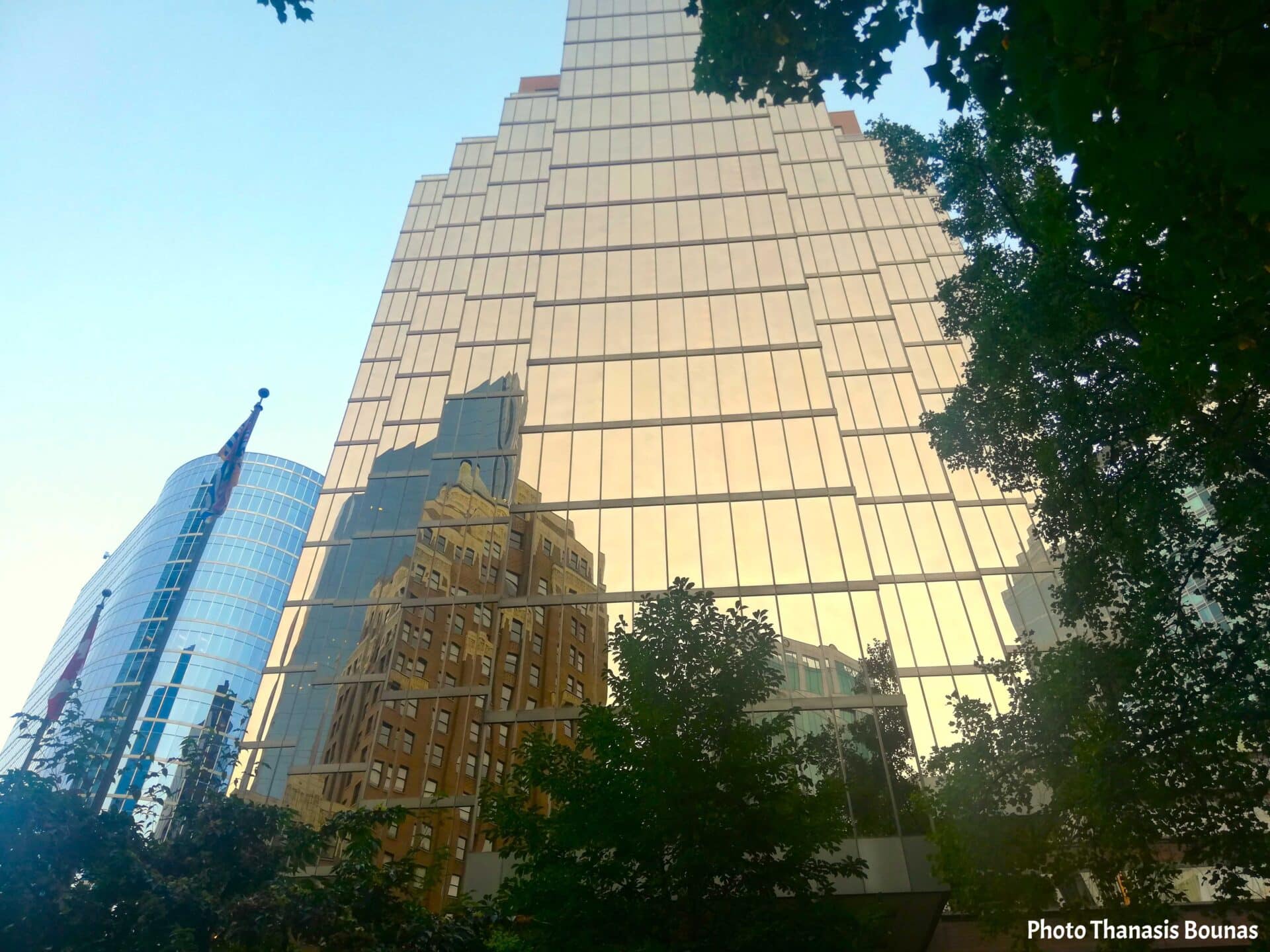
Looking up at the skyscrapers of downtown Vancouver, you begin to understand how the city has evolved over time.
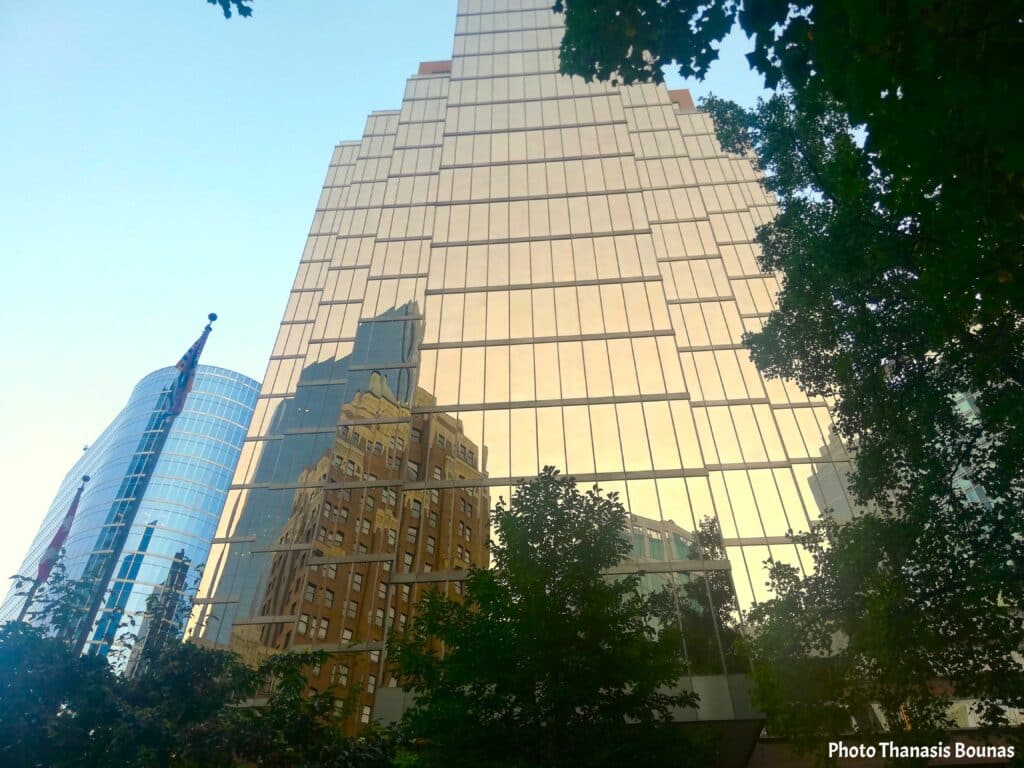
The buildings rise with clean lines and reflective surfaces, capturing not only the sky but also the surrounding structures. It’s a view that makes the city feel larger, more open, and constantly changing.
Walking Between Modern Towers
I often find myself walking through these streets, looking up instead of forward.
There is something impressive about being surrounded by tall buildings that reflect light in different ways. Every angle offers a new composition — glass, shadows, and reflections blending together.
It’s a simple walk, but visually it never feels simple.
The Power of Reflections
What stands out the most is how the buildings interact with light.
The glass surfaces reflect older buildings, the sky, and even the trees around them. It creates layers — a mix of past and present in a single frame. The city doesn’t just exist in front of you, but also around and within the reflections.
The Evolution of Vancouver’s Architecture
Vancouver’s architectural identity has developed over time.
Before the city was officially incorporated in 1886, the area was already inhabited by Indigenous peoples for thousands of years. After the Great Fire of 1886, much of the city had to be rebuilt.
In the early 20th century, buildings were mostly low-rise and constructed with brick and stone. As the city grew, especially after the expansion of the Canadian Pacific Railway in 1887, Vancouver became a key economic center.
The major transformation came in the late 20th century, particularly from the 1970s and 1980s, when modern urban planning introduced glass high-rises designed to maximize light and views.
This architectural style, often referred to as “Vancouverism,” became more defined in the 1990s and 2000s, focusing on livability, density, and integration with nature.
Vancouverism: A Unique Urban Identity
“Vancouverism” is what makes the city stand out globally.
It combines tall, slim residential towers with open public spaces, greenery, and views toward the mountains and water. The use of glass is not just aesthetic — it connects the buildings with their environment.
This approach has influenced urban design in many cities around the world.
A City Between Nature and Structure
Even in the middle of downtown, you never feel disconnected from nature.
Trees, light, and reflections soften the strong presence of the buildings. The city feels balanced — not overwhelming, but alive and breathable.
It’s a place where architecture does not dominate, but coexists.
A View That Keeps Changing
Every time I walk here, the city looks different.
The light changes, the reflections shift, and the atmosphere evolves. What you see one day is never exactly the same the next.
That’s what makes downtown Vancouver so interesting — it’s not static, it’s constantly transforming.