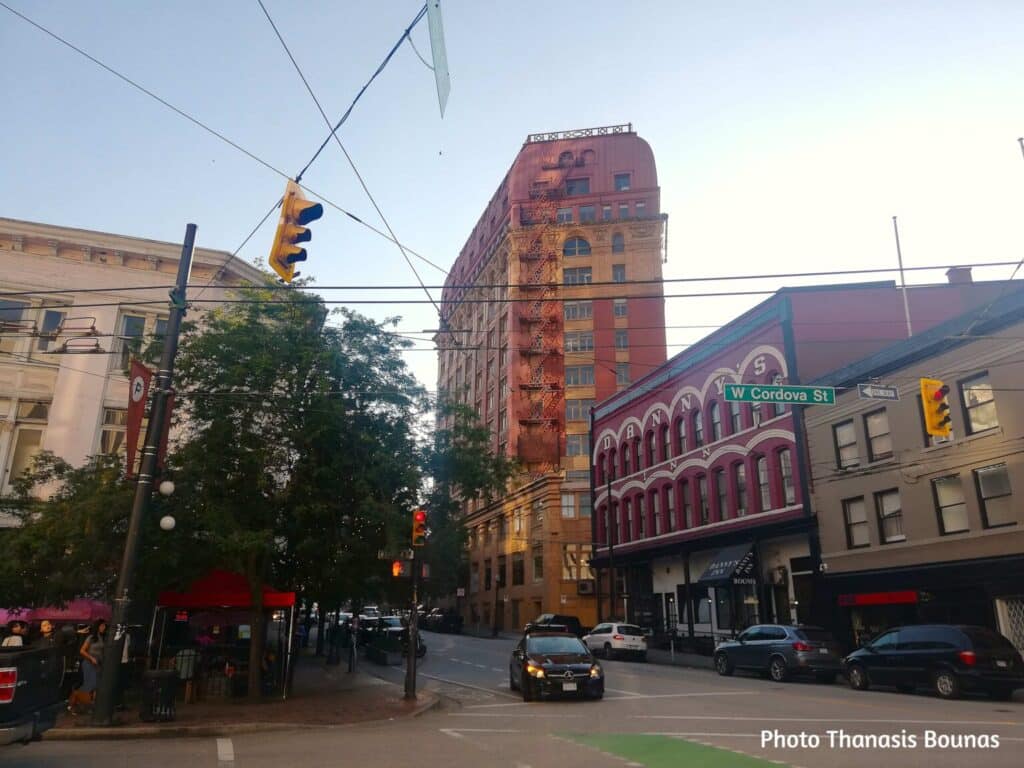
A Street That Speaks Quietly
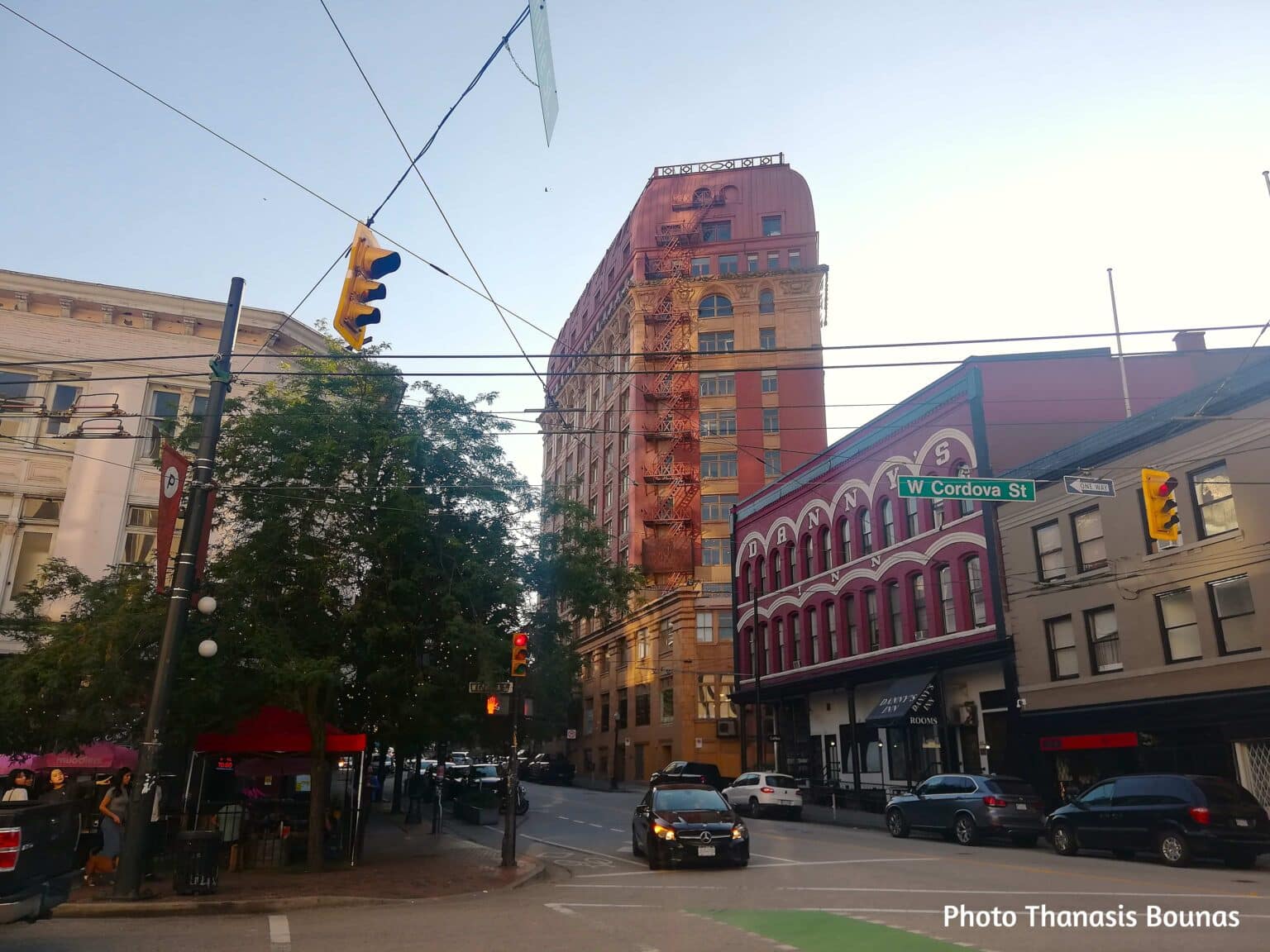
On West Cordova Street in Vancouver, nothing demands attention.
The city does not try to impress you.
Instead, it reveals itself slowly — through architecture, light, and the subtle movement of everyday life. Historic buildings stand alongside passing cars, while the street carries a quiet presence that is easy to overlook.
But if you pause, you begin to listen.
The Psychology of Listening in Travel
Listening in travel is not only about sound.
It is about awareness.
About noticing what exists beyond the obvious.
The psychology of travel teaches that when you stop trying to capture everything, you start to understand more. You observe details, rhythms, and patterns that are otherwise lost in movement.
Listening becomes a different way of seeing.
West Cordova Street: Old Vancouver’s Living Memory
West Cordova Street is part of old Vancouver, where the city’s history remains visible in its architecture.
Classic facades, layered structures, and preserved buildings reflect the early identity of Vancouver, British Columbia, Canada. These streets are not static — they are alive, shaped by both past and present.
Here, the city does not speak loudly.
It communicates through presence.
Beyond the Noise
Cities are often associated with noise.
But real listening happens when you move past it.
In West Cordova Street Vancouver, the experience is not about what you hear first — traffic, voices, movement — but about what remains after that noise fades into the background.
What stays is the feeling of place.
Understanding Through Stillness
Travel is not always about discovering something new.
Sometimes, it is about recognizing what is already there.
In Vancouver, listening allows you to connect with the city on a deeper level. You stop searching, and you start receiving.
And in that quiet exchange, travel becomes something more than movement — it becomes understanding.