A City Built Upward
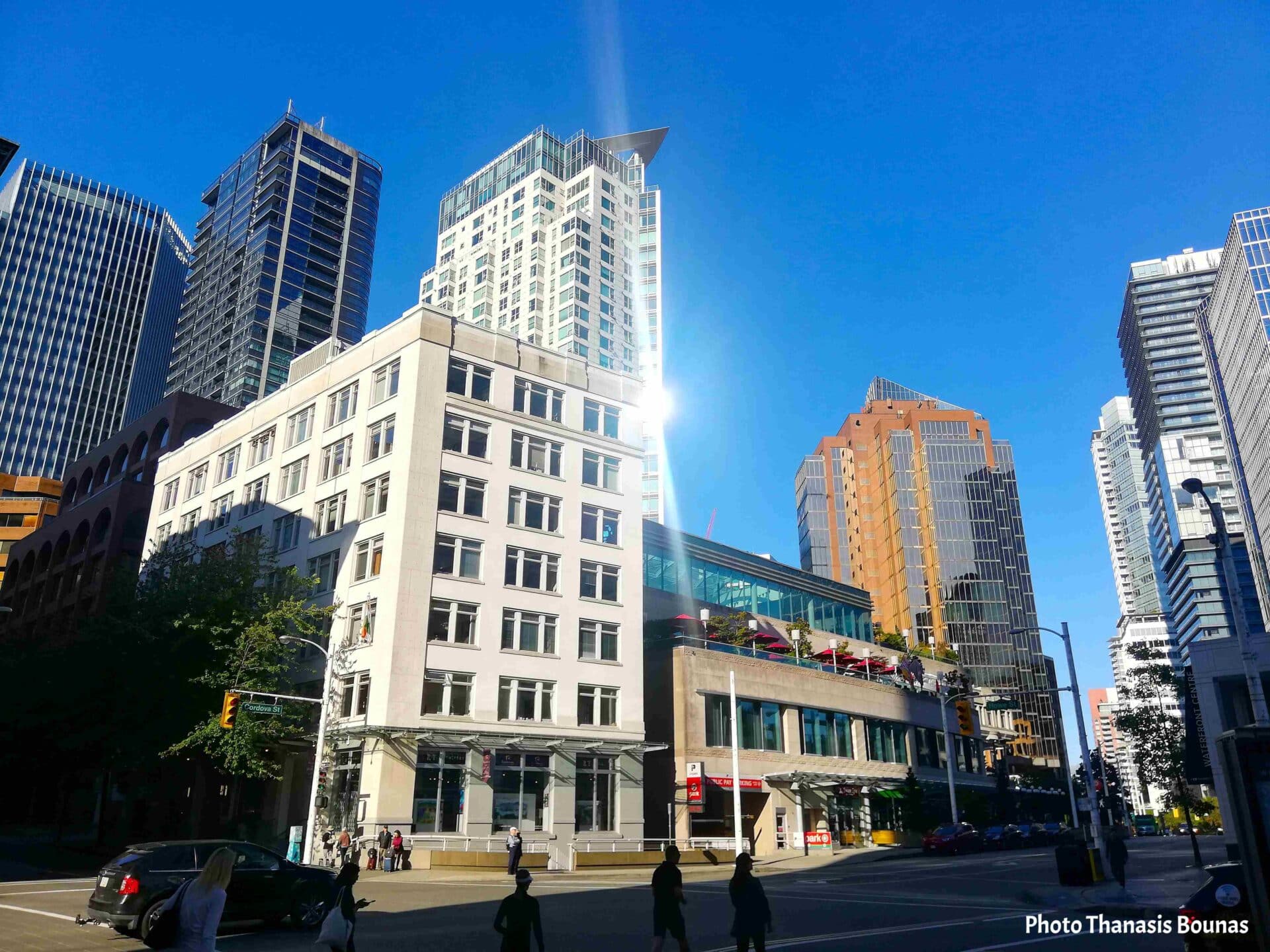
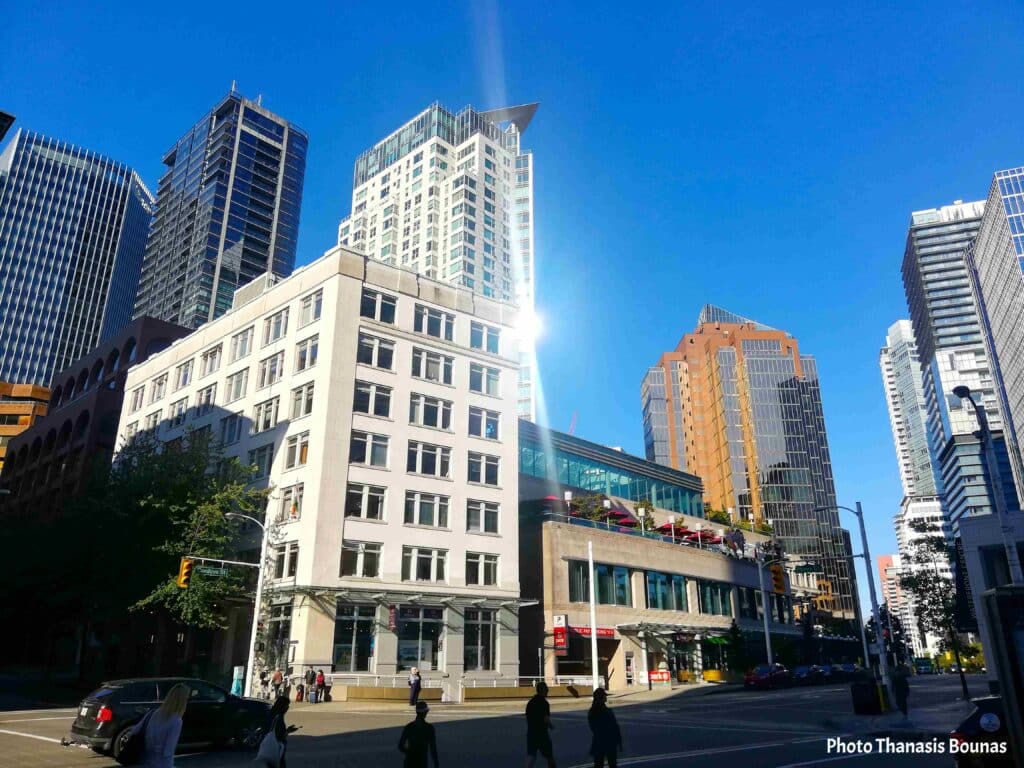
In Downtown Vancouver, the skyline does not rise suddenly.
It builds layer by layer.
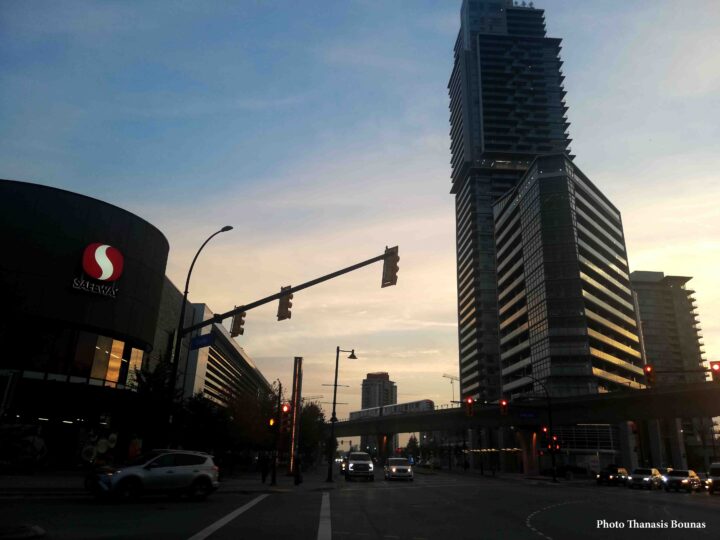
Older low-rise structures remain grounded at street level, while modern towers stretch upward, reflecting light in shifting patterns throughout the day.
Nothing feels accidental.
Everything feels accumulated.
Where Past and Present Meet
Walking through the streets, the contrast becomes clear.
Early 20th-century buildings still stand with solid facades and defined edges.
Around them, glass towers reshape the skyline with transparency and height.
Downtown Vancouver developed rapidly during the late 20th century, transforming from a port-centered district into a dense urban core.
The past was not erased.
It was built around.
Light as Architecture
Glass dominates much of the skyline.
It reflects the sky.
It mirrors neighboring buildings.
It changes with every hour.
In the morning, it feels sharp.
By afternoon, it softens.
At sunset, it absorbs color.
The buildings do not stay the same.
They respond.
Streets That Keep Moving
At ground level, the pace is different.
Pedestrians cross between signals.
Cars move through intersections.
Conversations pass quickly.
There is no single rhythm.
Movement overlaps —
brief, continuous, and layered.
A City That Adapts
Downtown Vancouver has grown with intention.
Urban planning here has focused on density, walkability, and the integration of residential life within the city center.
It is not only a place to work.
It is a place to live.
That shift defines its character today.
What Remains After Passing Through
Cities like this are not remembered in single moments.
They are remembered in fragments:
Light on glass.
Shadows between buildings.
A crossing, a pause, a direction.
You move through them —
but parts of them stay with you.