Where Movement Pauses
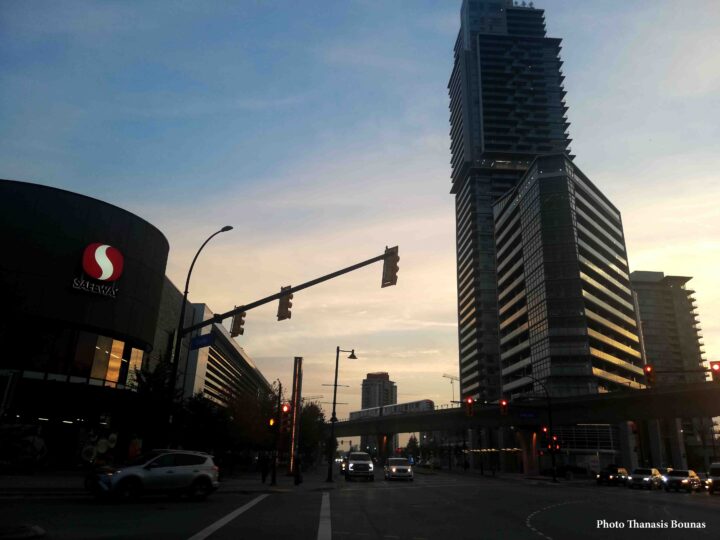
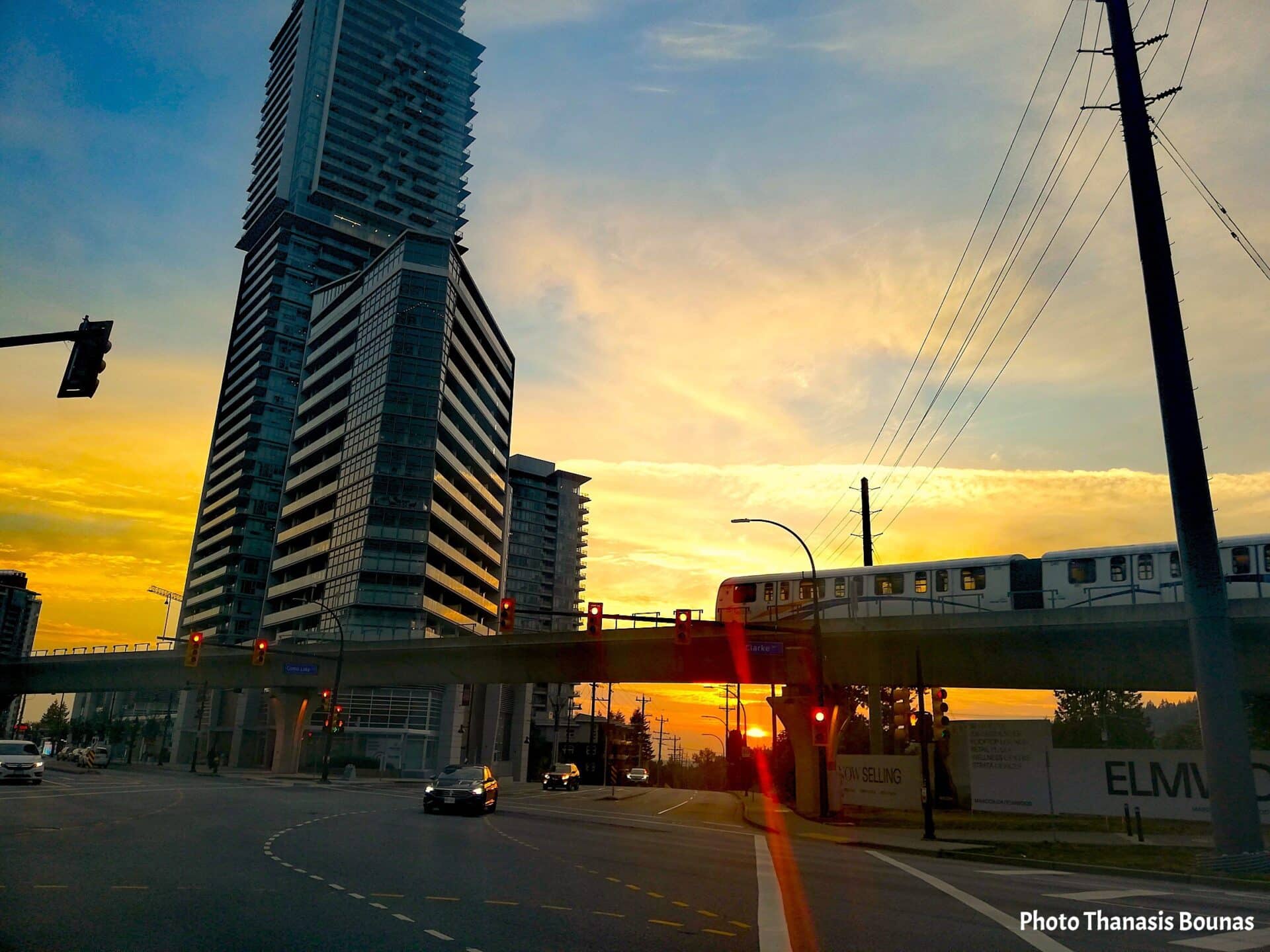
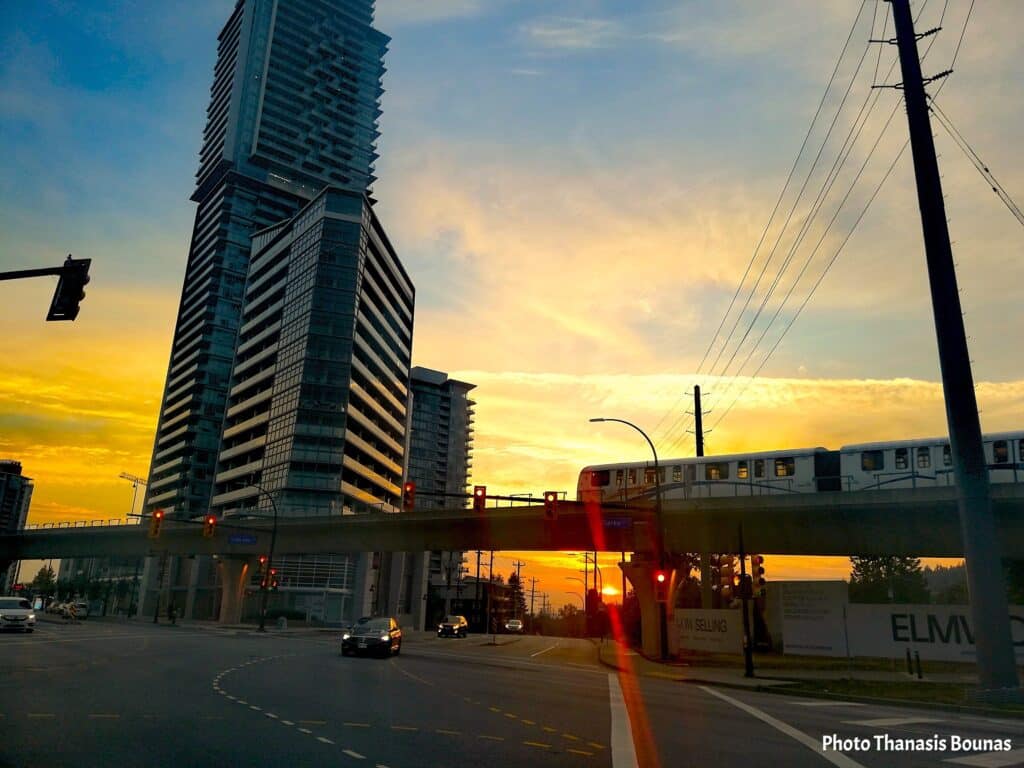
At a quiet intersection in Burquitlam, British Columbia, everything seems to pause at once.
The traffic lights hold their red glow.
Cars slow into stillness.
Even footsteps hesitate.
Above, the train moves.
A City That Moves in Layers
The scene unfolds in two directions.
On the ground, there is waiting.
Above, there is motion.
The elevated tracks carry the train forward, uninterrupted, while below, the city follows a different rhythm — one defined by signals, pauses, and brief stillness.
It is not chaos.
It is coordination.
The Architecture of Transition
Tall residential towers rise beside the intersection, catching the last light of the day.
Glass reflects the sky.
Concrete holds the structure steady.
Everything here feels designed for movement — yet at this exact point, movement stops.
Not permanently.
Just long enough to notice it.
A Line Built for the Future
The train passing above is part of Vancouver’s rapid transit system, introduced in 1985 as one of the world’s first fully automated urban rail networks.
Designed to move efficiently without drivers, it reshaped how the region connects.
The Burquitlam station, added later as part of network expansion, reflects that growth — linking quieter residential areas to the wider city.
What was once distant
became connected.
When Time Slows Down
Waiting at a crossing is usually overlooked.
But in moments like this, it becomes visible.
The setting sun stretches across the street.
The light softens the edges of buildings and roads.
Time does not stop.
It expands.
The Quiet Between Movements
There is a subtle tension in the pause.
Engines idle.
Lights remain unchanged.
People look ahead.
Nothing is happening —
and yet everything is about to.
What the Crossing Reveals
This moment is not about the destination.
It is about the interval.
The brief space where movement is suspended, where the city holds its breath before continuing.
And then, without warning, everything starts again.