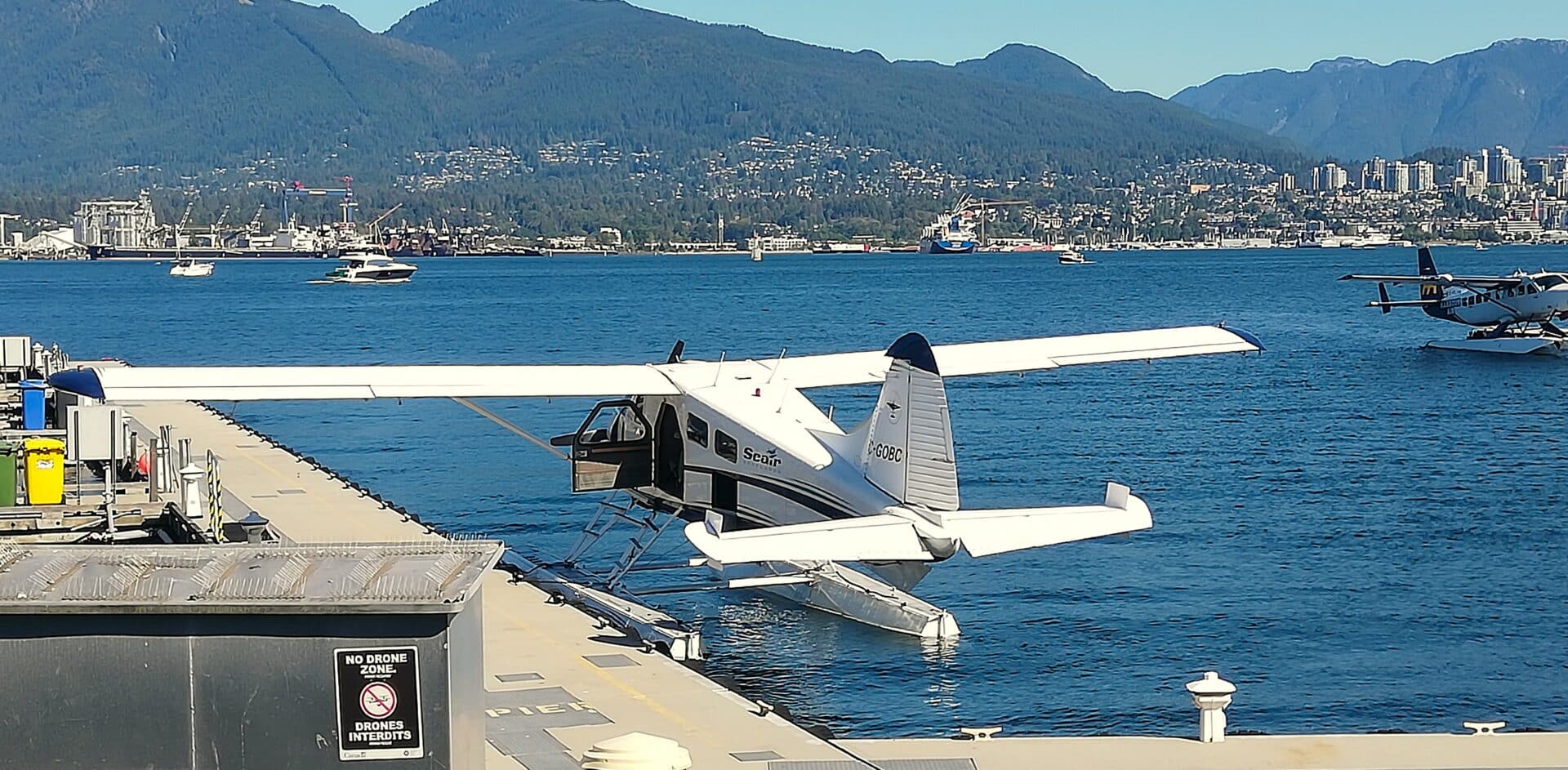
In British Columbia, the sea is more than a landscape. It is a connection between coastal cities, remote communities, forested islands and the mountains of Canada‘s Pacific coast.
Along these waters, an unusual form of aviation has become part of everyday life.
Seaplanes.
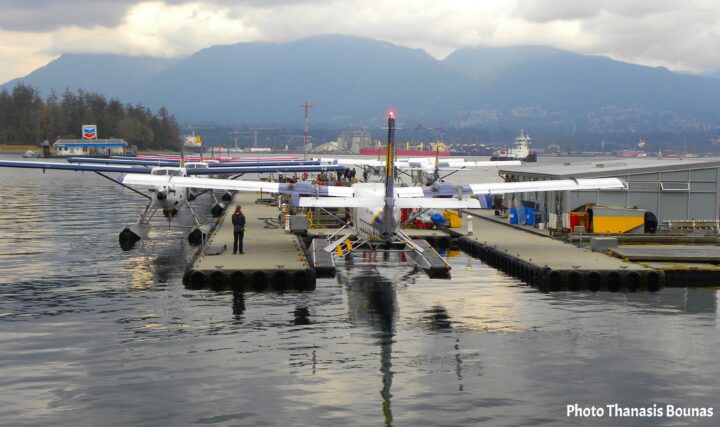
With their floats resting on the water and their wings stretching above busy harbors, these aircraft create a remarkable meeting point between the worlds of sailing and flying.
Watching a seaplane on the water is one of those distinctive moments that reveals the maritime character of British Columbia.
Seaplane in British Columbia | Flying Over Canada’s Pacific Coast
A Different Way to Travel Along Canada’s Pacific Coast
British Columbia’s coastline is shaped by countless islands, narrow channels, sheltered bays and mountainous landscapes.
For many coastal communities, traveling by road is not always practical. Some places can only be reached by boat or aircraft.
Seaplanes provide an important connection across this geography.
Unlike conventional aircraft, floatplanes can take off and land on suitable bodies of water, allowing passengers to travel between coastal destinations without relying on large airports.
In places such as Vancouver and Victoria, their presence has become a familiar part of the waterfront.
The sound of an aircraft engine above the harbor, followed by the sight of floats touching the water, is part of the atmosphere of Canada’s Pacific coast.
The Maritime History of British Columbia’s Seaplanes
The relationship between aviation and the coast of British Columbia stretches back more than a century.
As aircraft technology developed during the early twentieth century, floatplanes became particularly useful in regions where mountains, forests and waterways made conventional transportation difficult.
They helped connect remote settlements, transported people and supplies, and supported activities such as forestry, surveying and coastal exploration.
Over time, commercial seaplane services became an established part of regional transportation.
Today, companies such as Harbour Air continue this tradition, operating flights between destinations in coastal British Columbia.
The aircraft themselves may have changed, but the geographical reasons for using them remain remarkably similar.
Water continues to serve as a natural transportation corridor.
Where the Harbor Becomes an Airport
One of the most fascinating aspects of seaplane travel is the way an ordinary waterfront can also become an aviation environment.
Sailboats, motor yachts and working vessels may share the broader harbor landscape with aircraft preparing for departure.
From the shoreline, the contrast is striking.
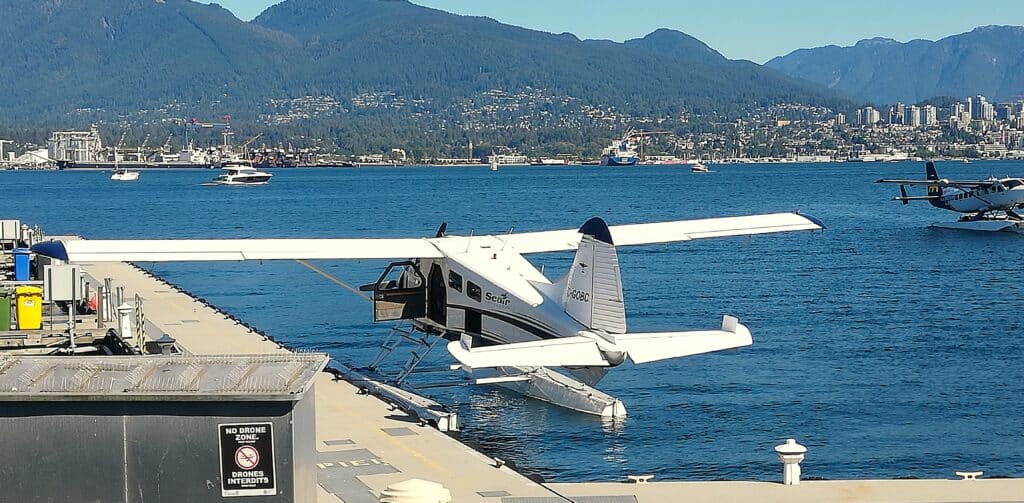
A seaplane looks almost like a boat while resting on its floats. Yet moments later, it can accelerate across the water, rise into the air and disappear toward the distant coastline.
In Vancouver, the waterfront near Canada Place is particularly well known for its seaplane activity.
Nearby, the waters of Burrard Inlet, Coal Harbour and the surrounding coastal landscape create an environment where maritime and aviation activities exist side by side.
This relationship between aircraft, boats and the sea gives British Columbia’s waterfronts a character unlike many other urban destinations.
Exploring British Columbia Beyond the Waterfront
The seaplane is only one part of the larger story of coastal British Columbia.
Around Vancouver, places such as False Creek and Granville Island reveal the relationship between the city and its waterways.
Farther south, White Rock offers a different perspective on the Pacific coast, with its long waterfront and views toward Semiahmoo Bay.
Steveston preserves another side of the region’s maritime heritage through its historic fishing community and working waterfront.
Each destination tells a different story.
Together, they reveal how closely the identity of British Columbia is connected to the Pacific Ocean.
Whether traveling by sailboat, walking beside a harbor or watching an aircraft prepare to take off, the water remains at the center of the experience.
Between the Sea and the Sky
There is something memorable about seeing a seaplane resting on the water.
The aircraft belongs to two different worlds.
Its floats connect it to the sea, while its wings suggest the freedom of the sky.
For a traveler who loves sailing, this combination feels particularly familiar.
Both sailing and seaplane travel offer a different relationship with geography. Coastlines, islands and distant horizons become part of the journey rather than simply scenery along the way.
And perhaps that is what makes these aircraft so fascinating.
They remind us that the Pacific coast of Canada can be explored from more than one perspective.
Sometimes from the deck of a boat.
Sometimes from a quiet waterfront.
And sometimes from the sky above British Columbia.