Looking Up in the City Core
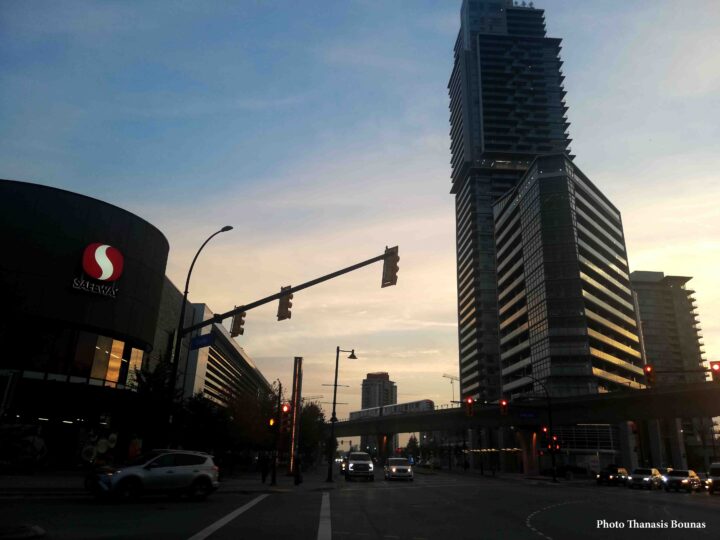
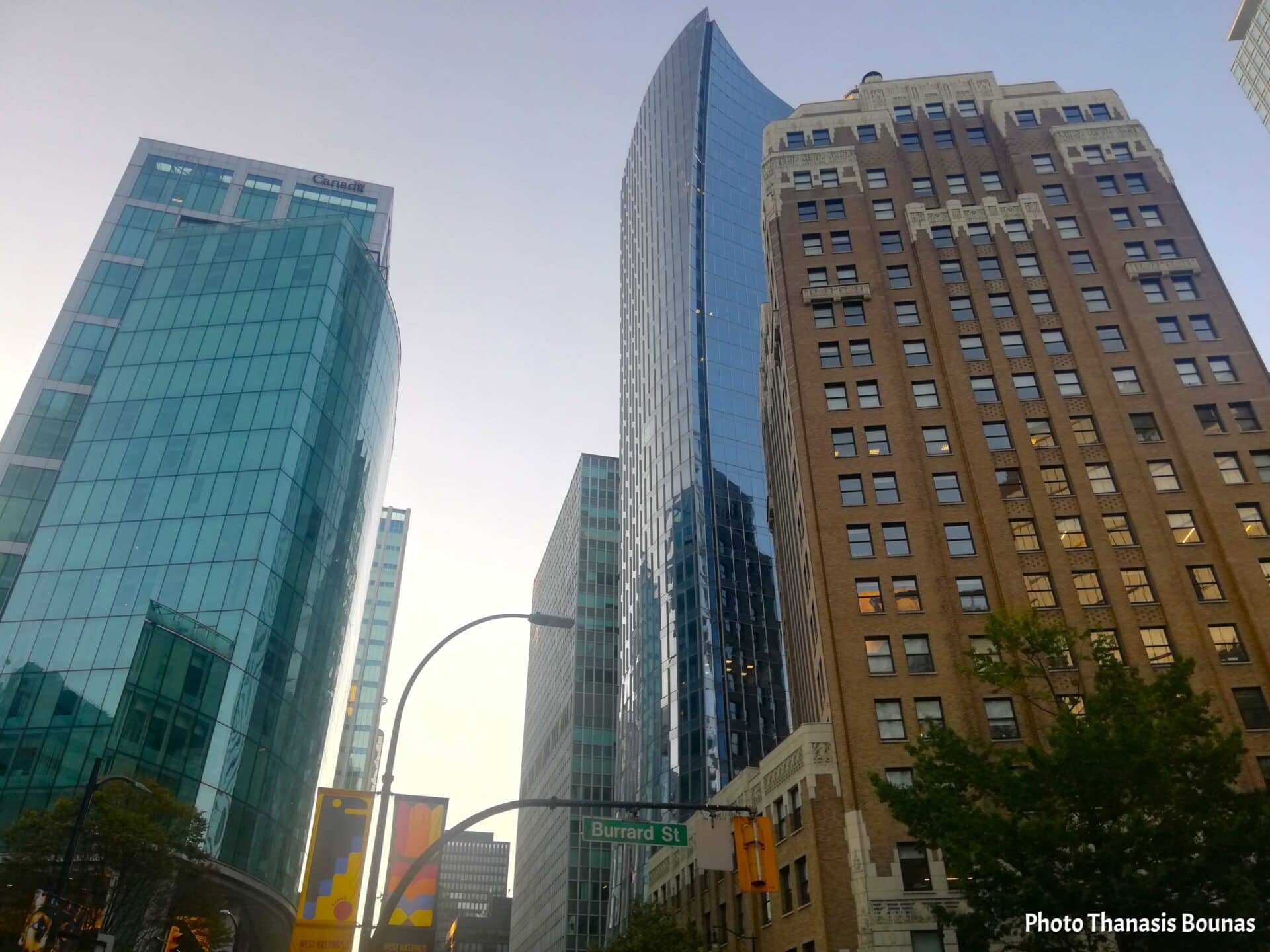
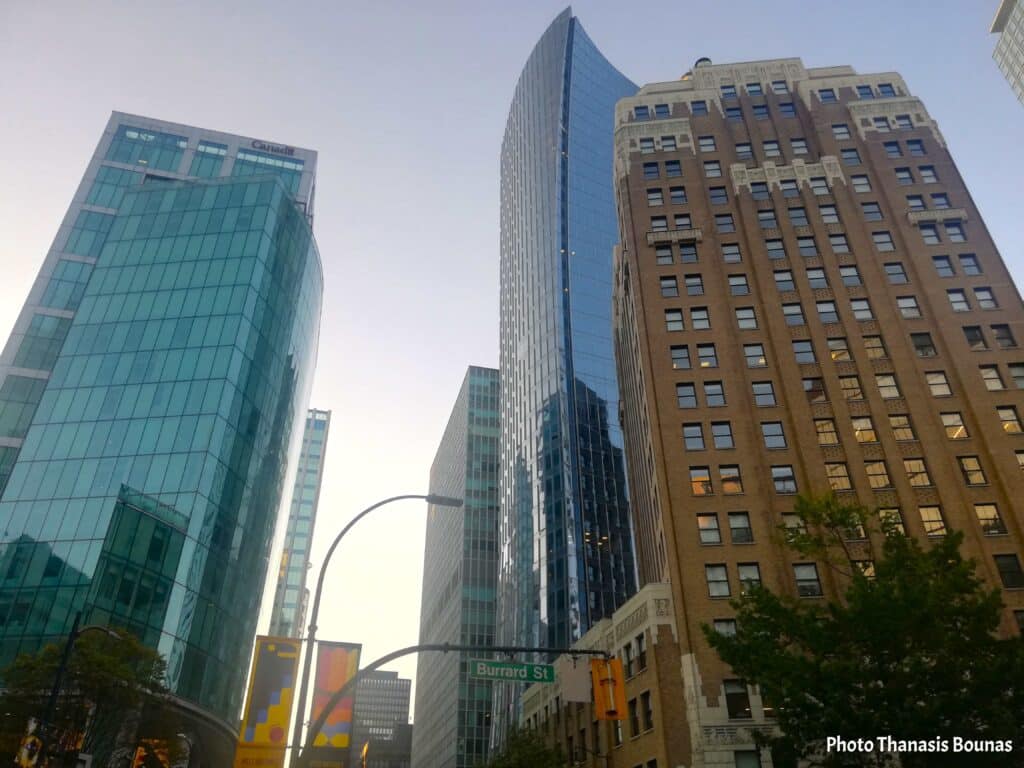
On Burrard Street in Vancouver, the skyline doesn’t feel uniform.
Glass towers reflect the sky.
Next to them, older buildings hold their texture — brick, stone, symmetry.
You don’t see one era.
You see layers.
The Spine of Downtown
Burrard Street is not just another road.
It runs through the heart of downtown Vancouver and the financial district, connecting the waterfront at Canada Place to the neighborhoods south of False Creek.
This is where the city organizes itself.
Intersections here — especially Burrard and Georgia — are considered central points of the urban core.
Everything passes through this line.
From Cedar Street to City Landmark
What is now Burrard Street once had a different identity.
Parts of it were originally known as Cedar Street, before being unified and renamed in the 1930s following the construction of the Burrard Bridge.
That change reshaped how people moved through the city.
It transformed a fragmented route into a major urban axis.
Architecture Across Time
Along Burrard Street, architecture tells the story of Vancouver’s growth.
- Early 20th-century buildings brought ornament and detail
- Mid-century structures introduced modern materials
- Contemporary towers focus on glass, light, and vertical space
One of the most iconic examples nearby is the Marine Building (1930) — an Art Deco landmark once the tallest in the city.
Each building represents a different moment in time.
Together, they form a continuous narrative.
Contrast That Defines the City
What makes this street unique is not any single building.
It’s the contrast.
Historic facades stand beside reflective towers.
Heavy materials meet transparency.
This tension is not accidental.
It’s how Vancouver evolved — quickly, but without completely erasing what came before.
A Street That Keeps Changing
Even today, Burrard Street continues to shift.
New developments rise. Older structures adapt or disappear. The skyline is never finished.
Yet the street remains constant — a line connecting past ambition with present identity.
What You Notice Last
At first, you see buildings.
Then differences.
Then transitions.
And eventually, something more subtle:
A city doesn’t grow in one direction.
It builds over itself.