Fragility at sea does not look weak.
It looks magnificent.
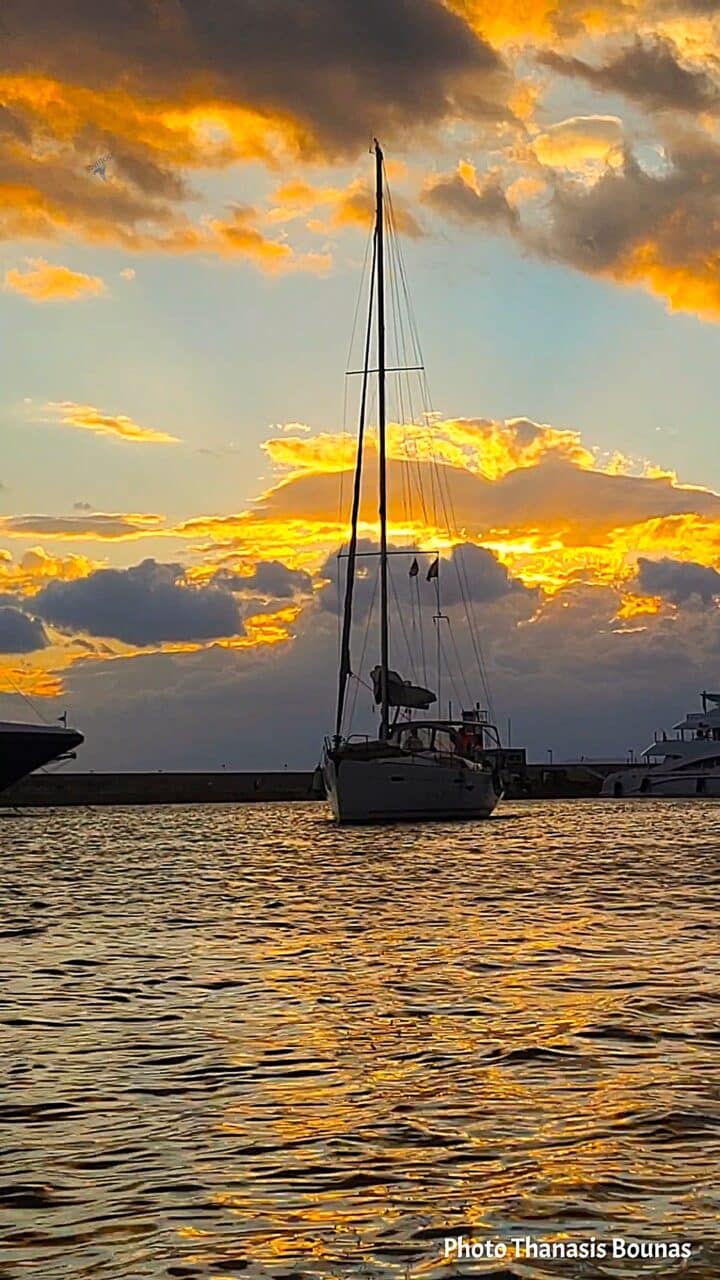
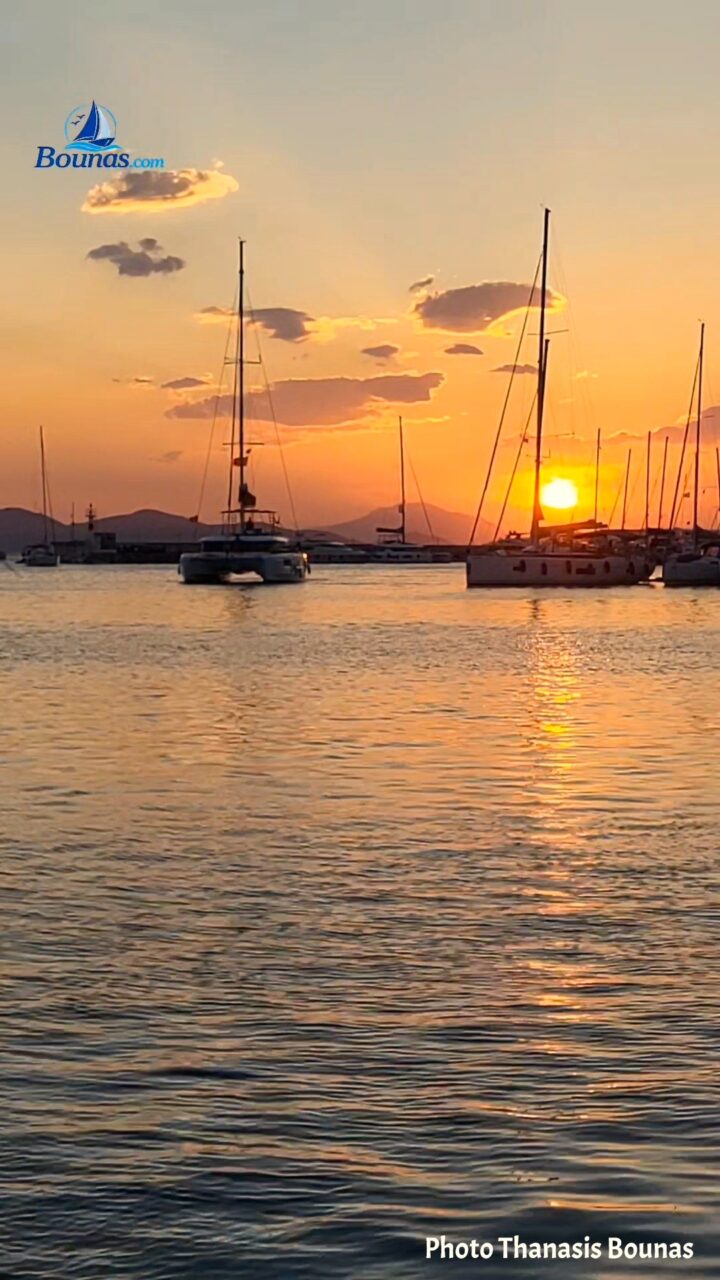
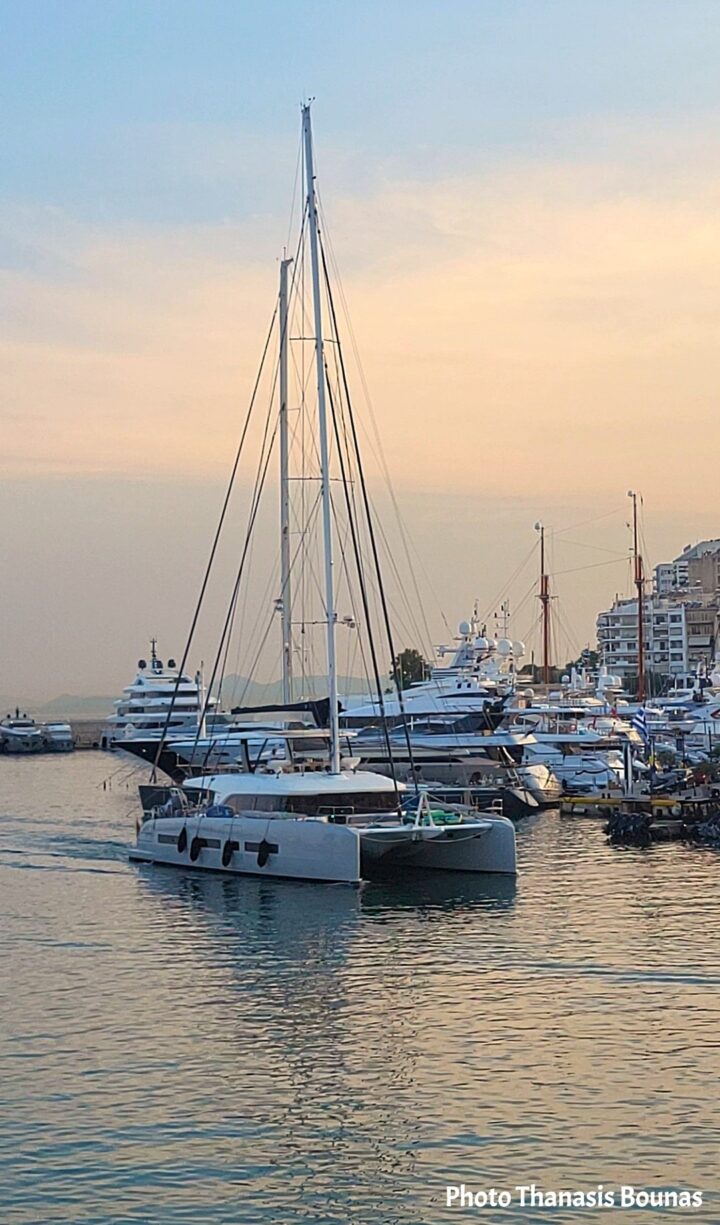
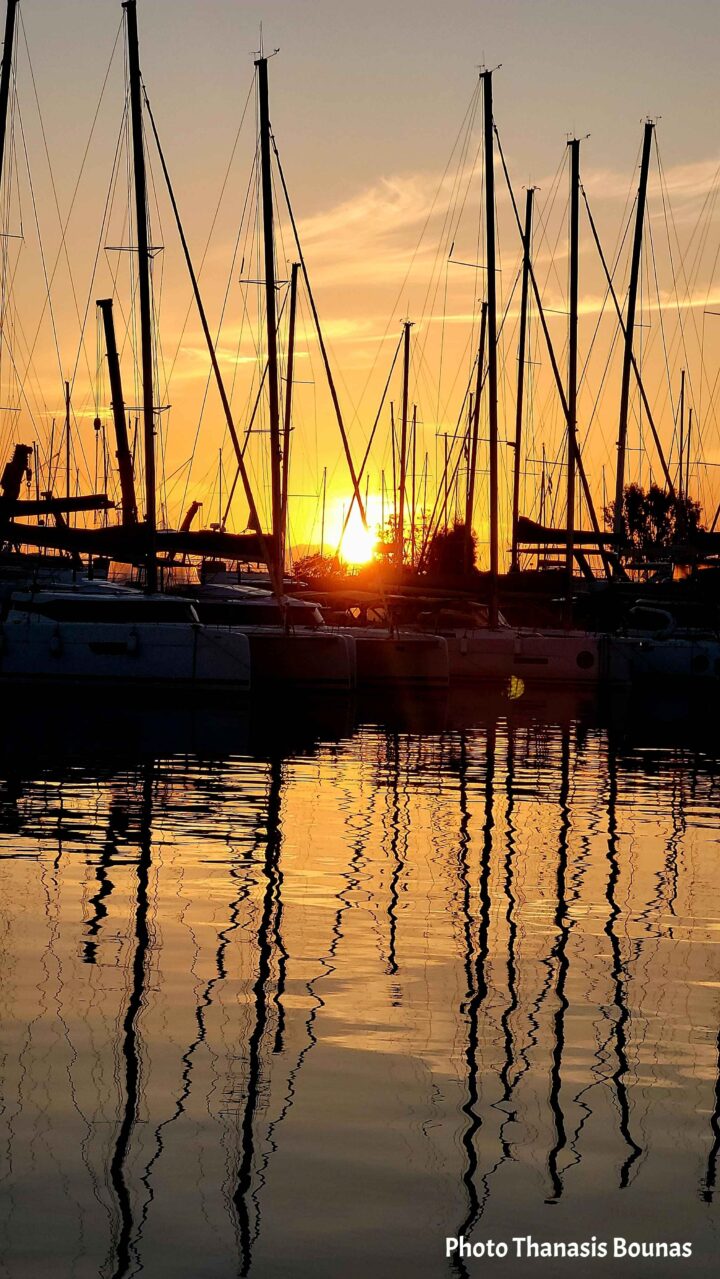
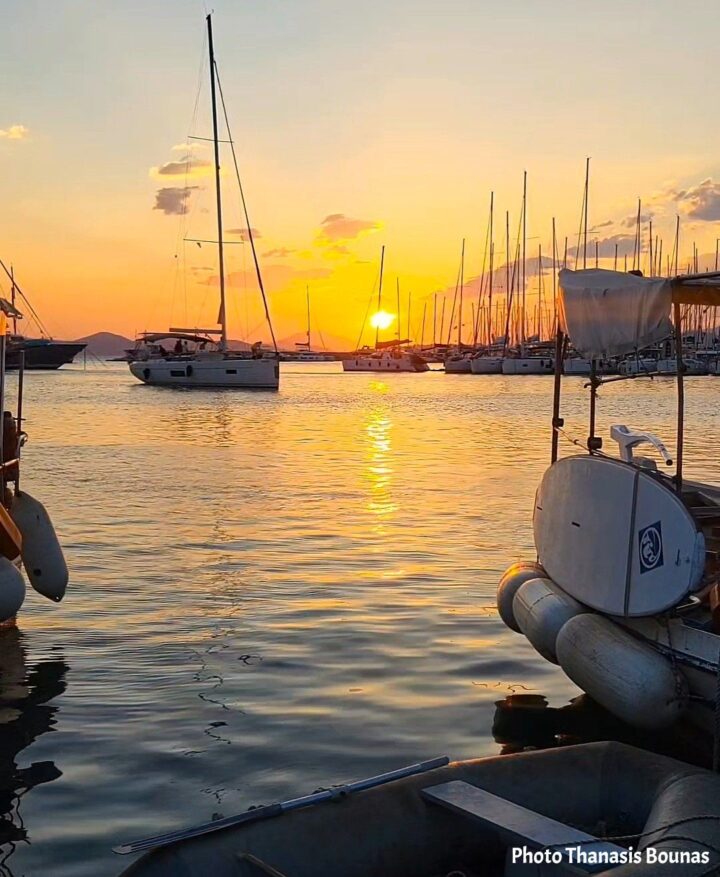
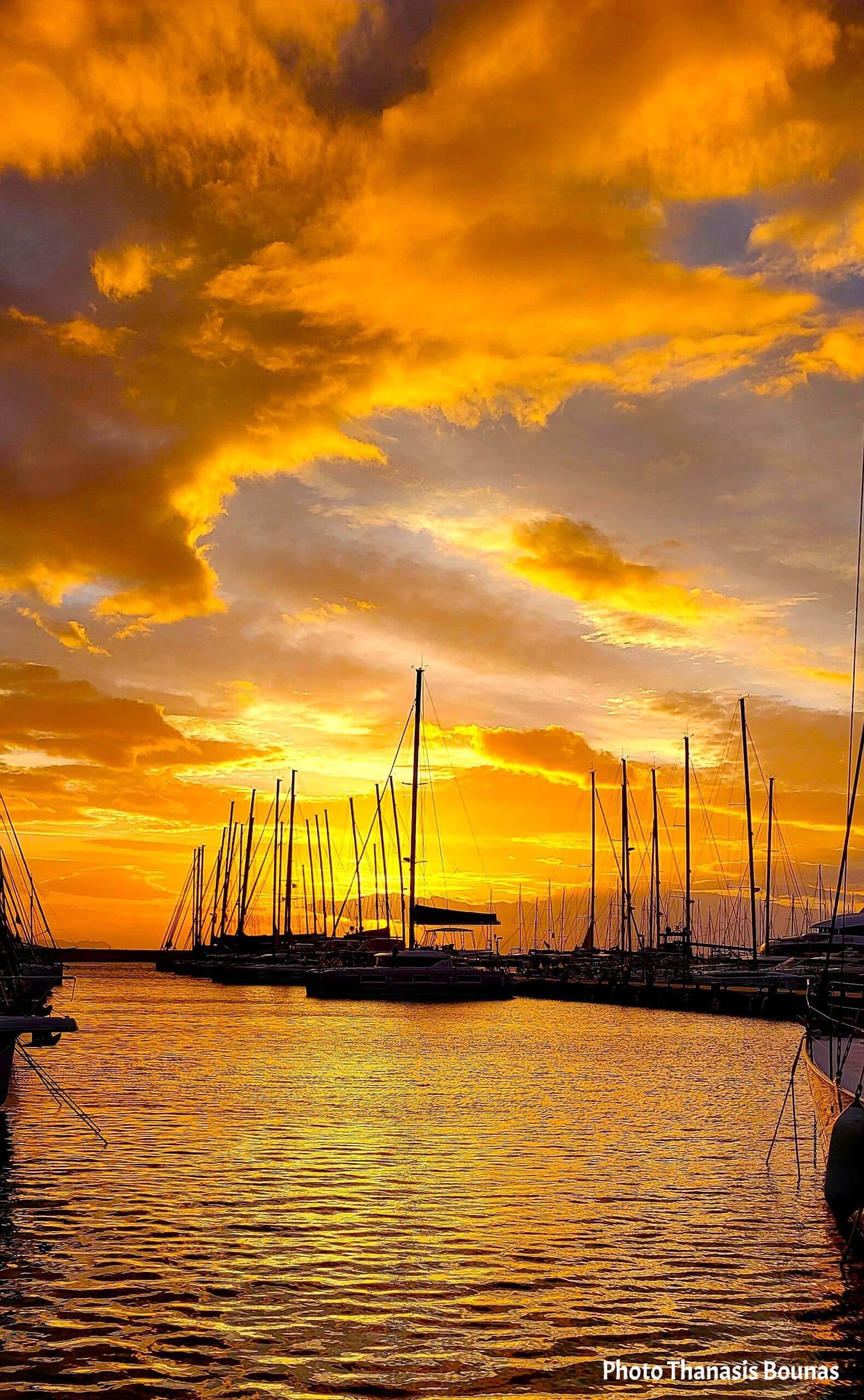
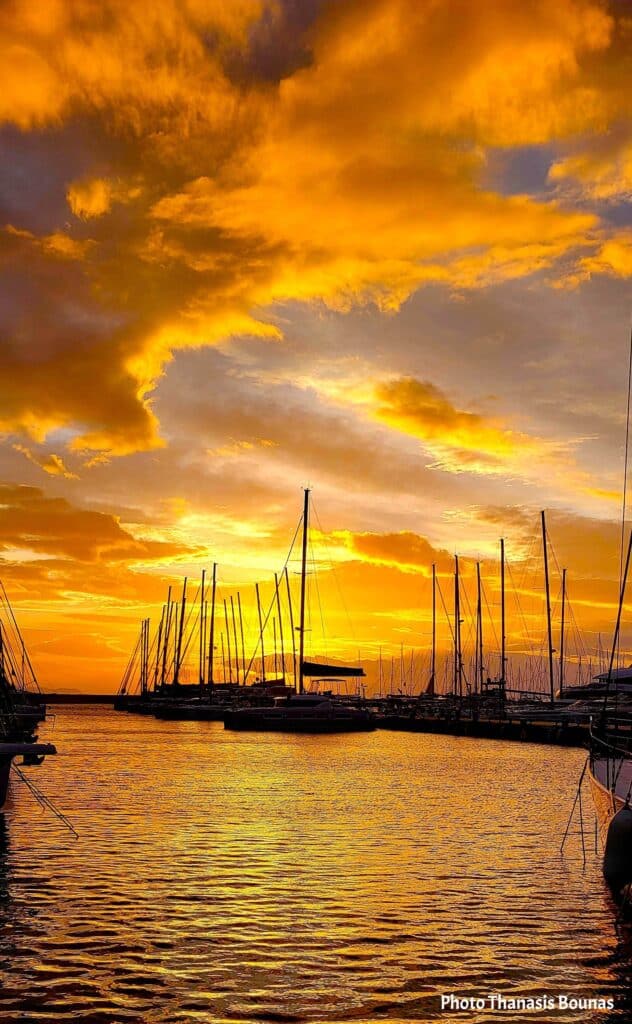
In the photograph, the marina is flooded with gold.
Clouds burn above the masts.
Water reflects the sky as if it were liquid fire.
Boats stand still.
But the light is already leaving.
The Hour That Breaks Slowly
Sunset is a negotiation.
Between brilliance and disappearance.
The masts rise like thin lines against an overwhelming sky.
They appear strong.
Yet they depend on balance, on tension, on invisible forces.
Fragility is not in the hull.
It is in the moment.
Psychologically, travel by sail teaches you this repeatedly.
The sea can look calm.
The horizon can look certain.
But conditions shift quietly.
And you learn to feel change before it becomes visible.
The Weight of Beauty
There is something almost excessive in this sky.
Gold layered upon gold.
Clouds shaped by currents you cannot see.
Beauty at sea often carries fragility within it.
Not because it will collapse.
But because it cannot last.
This awareness echoes differently than 🔴Shadow in Sailing Psychology – Reflection, Depth and the Inner Tide🔴.
There, fragility lived in movement beneath stillness.
Here, it lives in brilliance before fading.
Sailing and Sensitivity
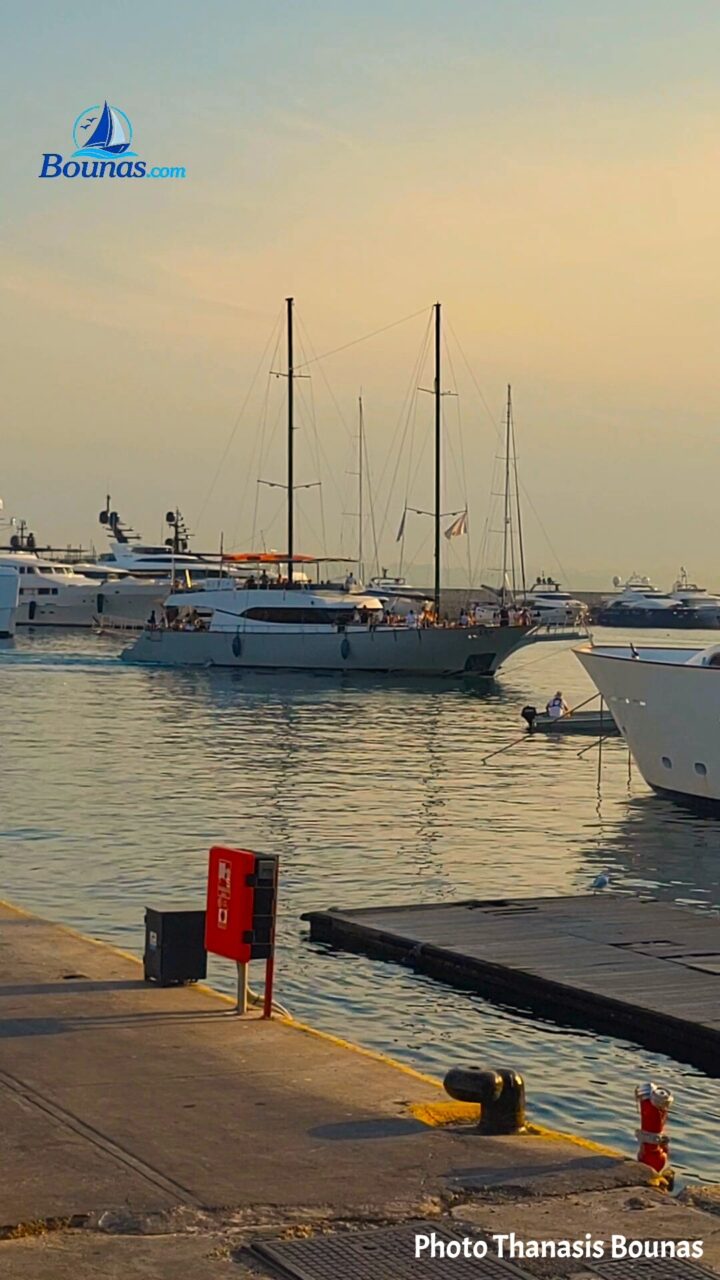
The boats are docked.
Lines secured.
Water steady.
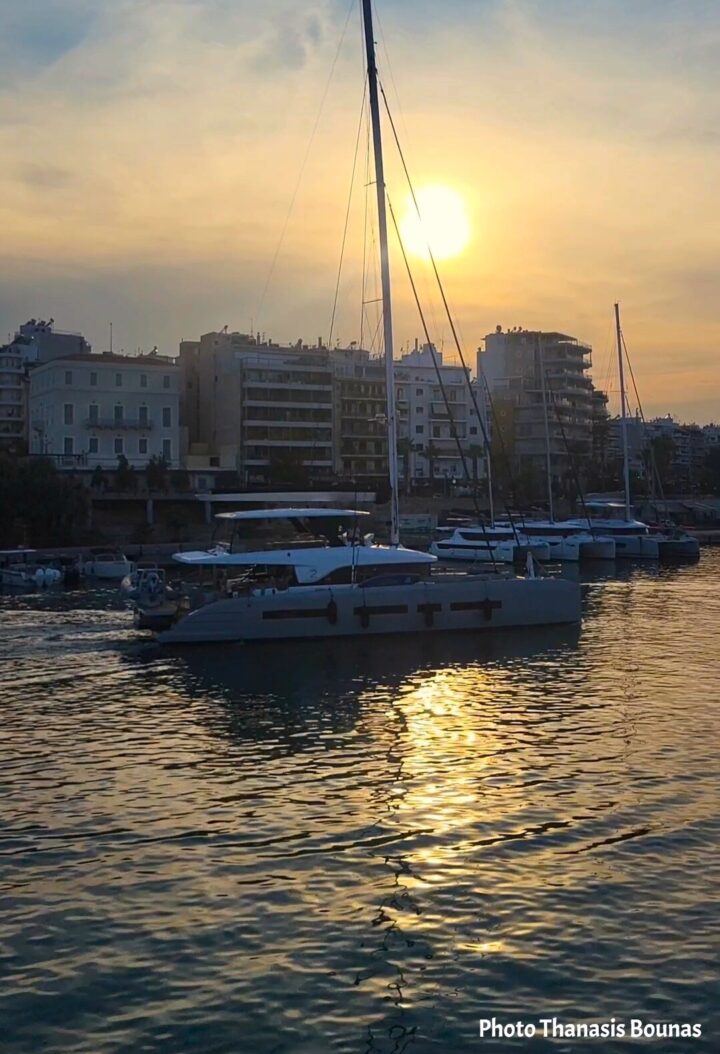
Yet the entire scene depends on light that is thinning by the minute.
Sailing reshapes psychology through sensitivity.
You begin to notice subtle wind shifts.
Changes in color.
Alterations in current.
Fragility becomes a skill.
Not fear.
The capacity to read nuance.
To respond early.
To respect what cannot be controlled.
In the photograph, the gold will disappear.
The sky will darken.
The masts will remain as silhouettes.
But the awareness formed in this hour will stay.
Fragility.
Not as weakness.
As perception sharpened by impermanence.
The inner voyage is not about holding the light.
It is about understanding its departure —
and navigating steadily
when the brilliance fades.