A Quiet Corner in the City
On Melville Street in Vancouver, the city feels different.
Not empty — but calm.
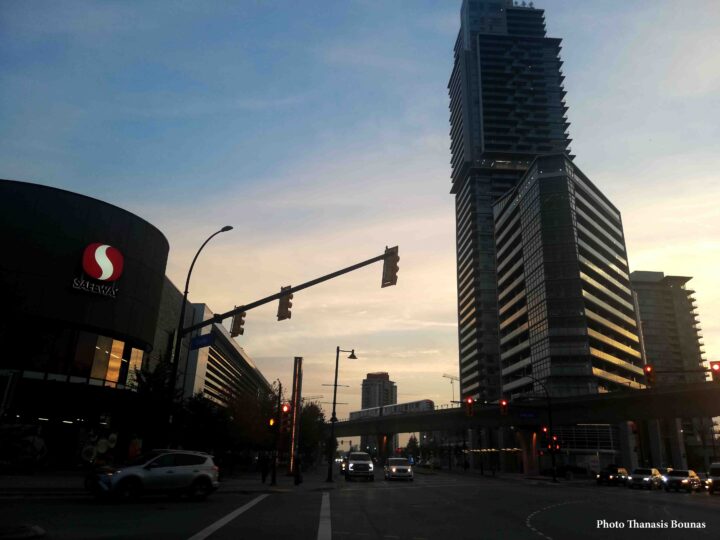
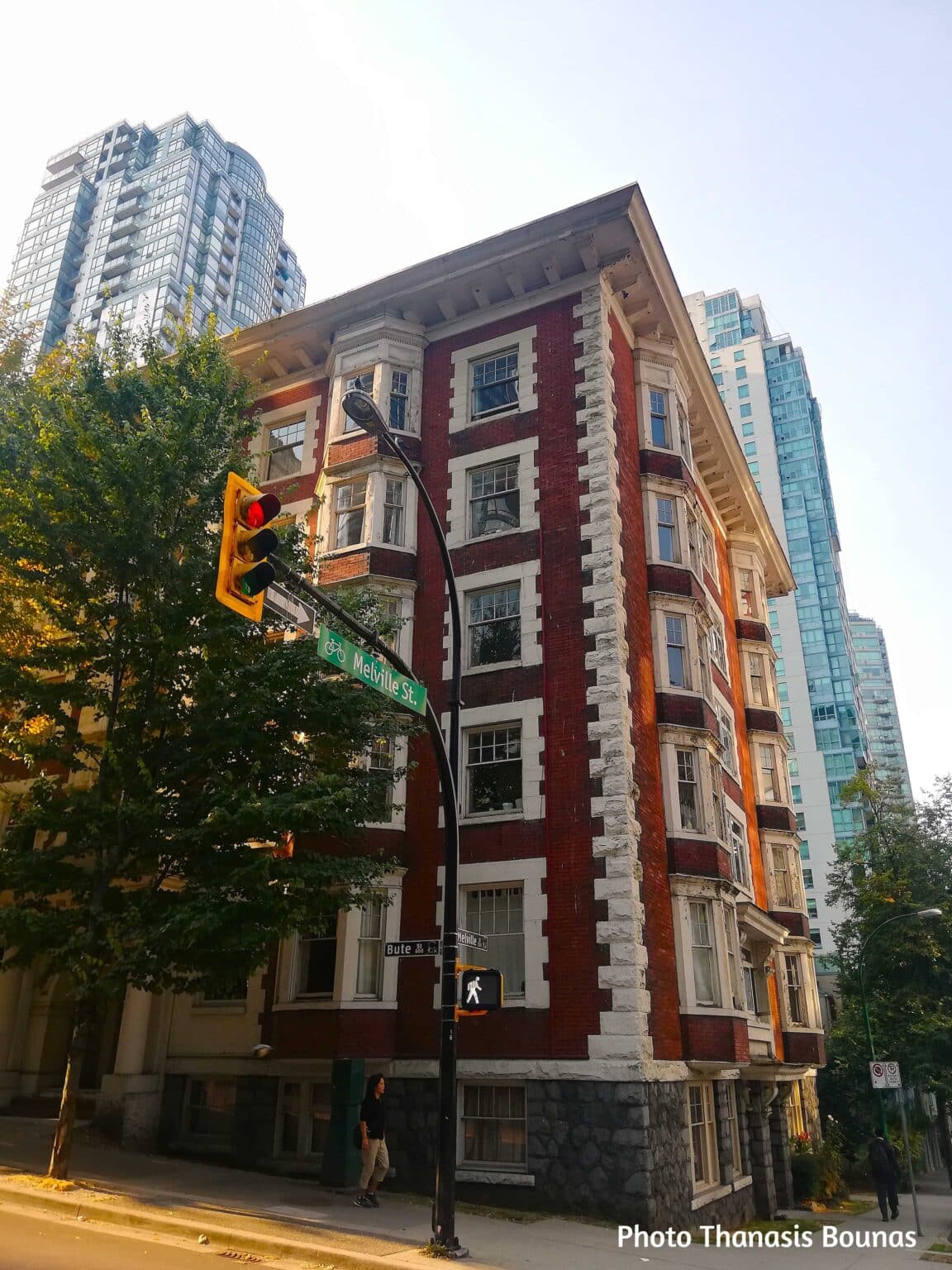
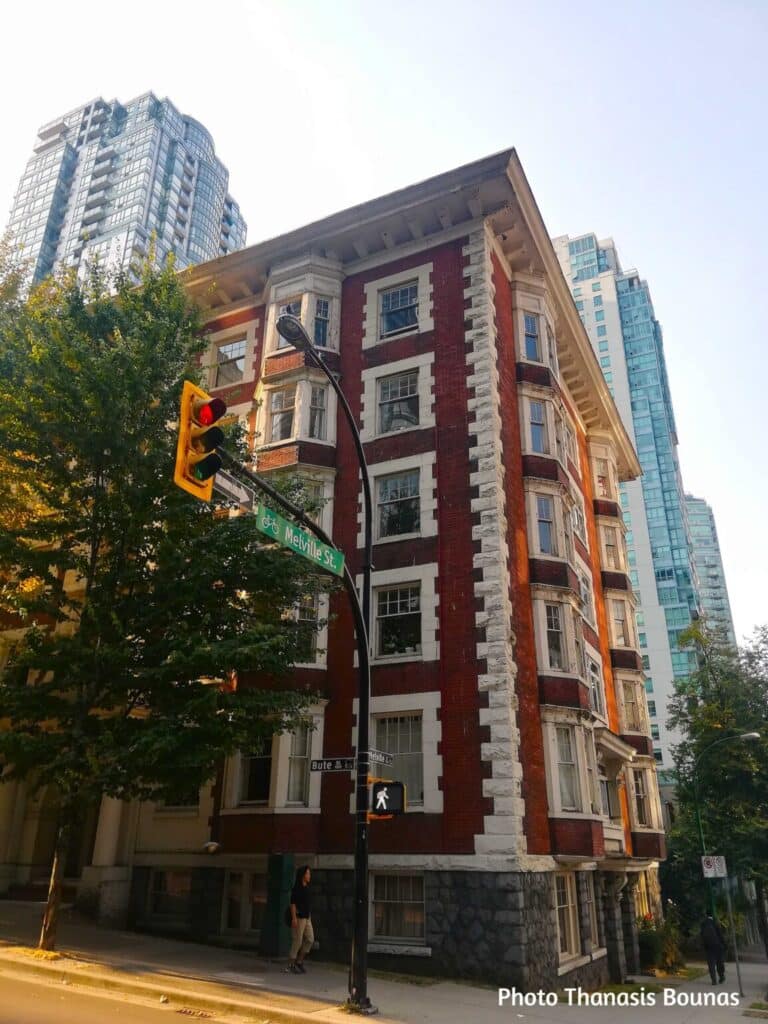
A historic red brick building stands quietly between modern towers, creating a contrast that does not compete, but coexists. The older structure holds its presence, while the skyline rises around it.
In this balance, solitude begins to emerge.
The Psychology of Solitude in Travel
Solitude in travel is often misunderstood.
It is not isolation.
It is not absence.
It is a space — a moment where you are fully present without distraction. The psychology of travel shows that solitude allows you to reconnect with your surroundings in a deeper way.
You are not removed from the city.
You are more aware of it.
Melville Street: Between Past and Skyline
Melville Street in Vancouver, British Columbia, Canada, reflects the city’s layered identity.
Historic buildings remain grounded, while glass towers rise above them. This contrast does not divide the city — it defines it.
The red brick facade becomes more than architecture.
It becomes a reference point — a reminder of continuity within change.
Finding Space in Movement
Cities are full of motion.
Cars pass, people walk, buildings grow. Yet within this movement, there are moments where everything feels still.
On Melville Street Vancouver, solitude appears not because the city stops, but because your attention shifts. You begin to notice the quiet spaces between movement.
A Different Kind of Presence
Solitude in travel is not about being alone.
It is about being present without noise — internal or external.
In Vancouver, this presence can be found in unexpected places. A street corner, a building, a moment of light.
And in that moment, you understand that solitude is not something you search for.
It is something you allow.