The space between structures
Breath in travel is not something you plan.
It happens quietly.
Between moments.
Between movements.
Between buildings.
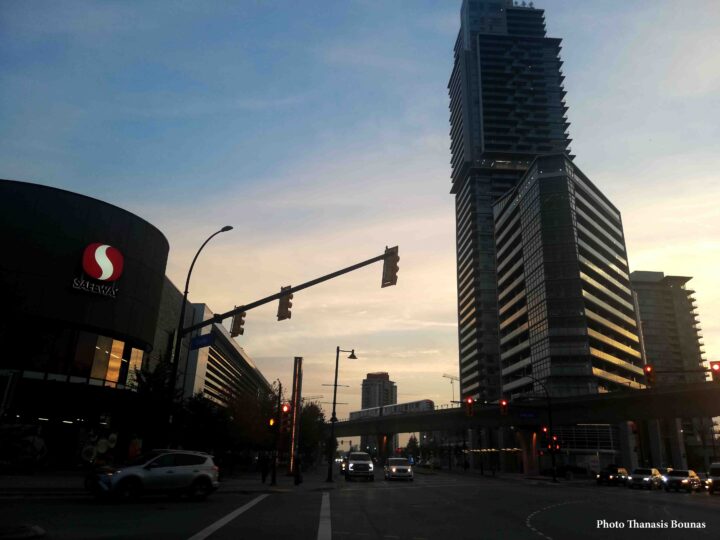
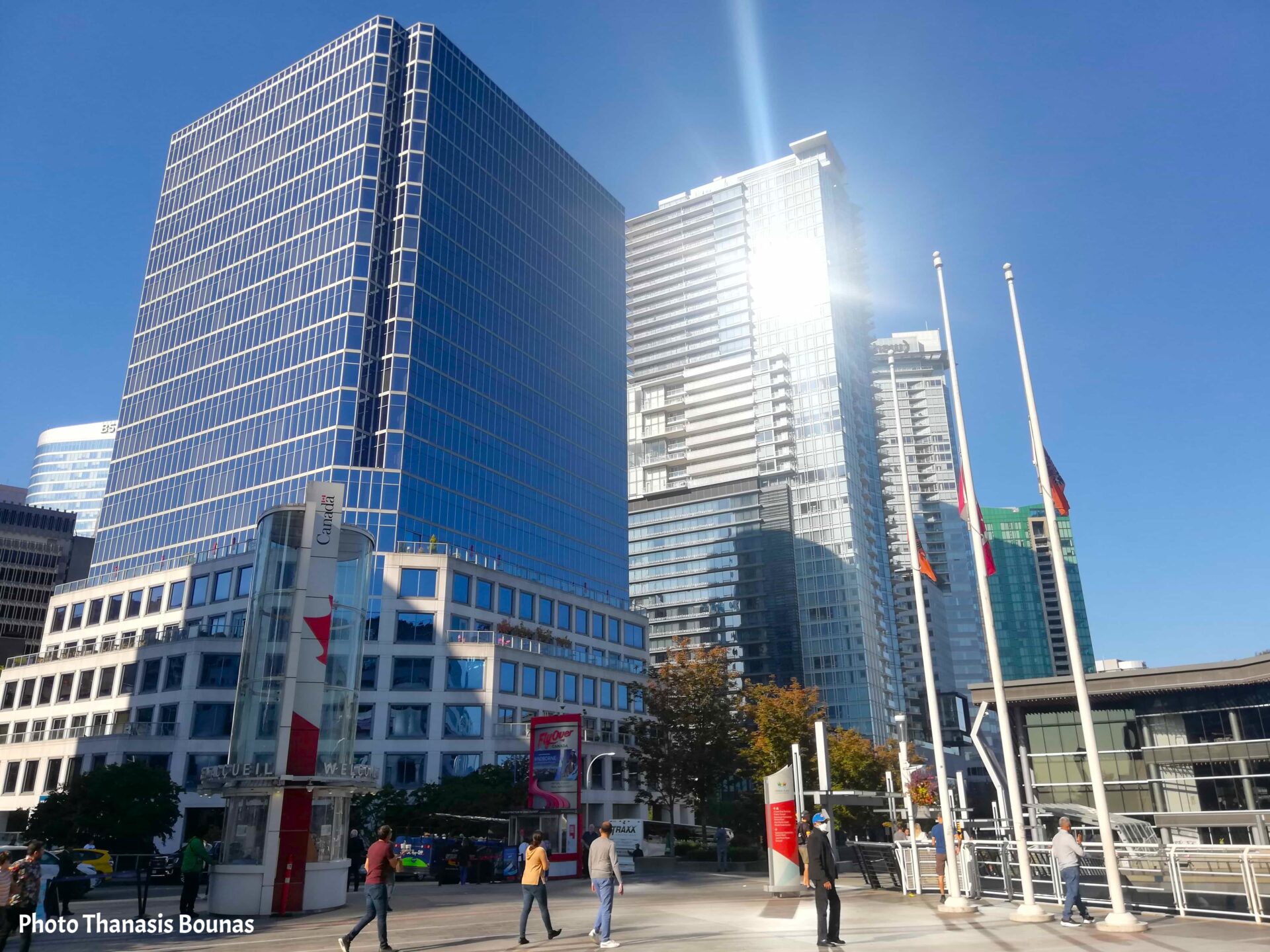
Standing in downtown Vancouver, surrounded by glass towers and open sky, you begin to feel that space again.
A city of light and reflection
Vancouver is known for its modern architecture.
From the late 20th century onward, the city embraced glass as a defining element of its identity. Towers reflect the sky, the ocean, and the mountains, blending the urban with the natural.
The result is not heaviness.
It is light.
When the city allows you to breathe
Even in the center of downtown, there is openness.
Wide walkways.
Waterfront views nearby.
Light moving freely between buildings.
This is not accidental.
Urban planning in Vancouver has focused on livability—creating spaces where people can move, pause, and breathe.
The role of light
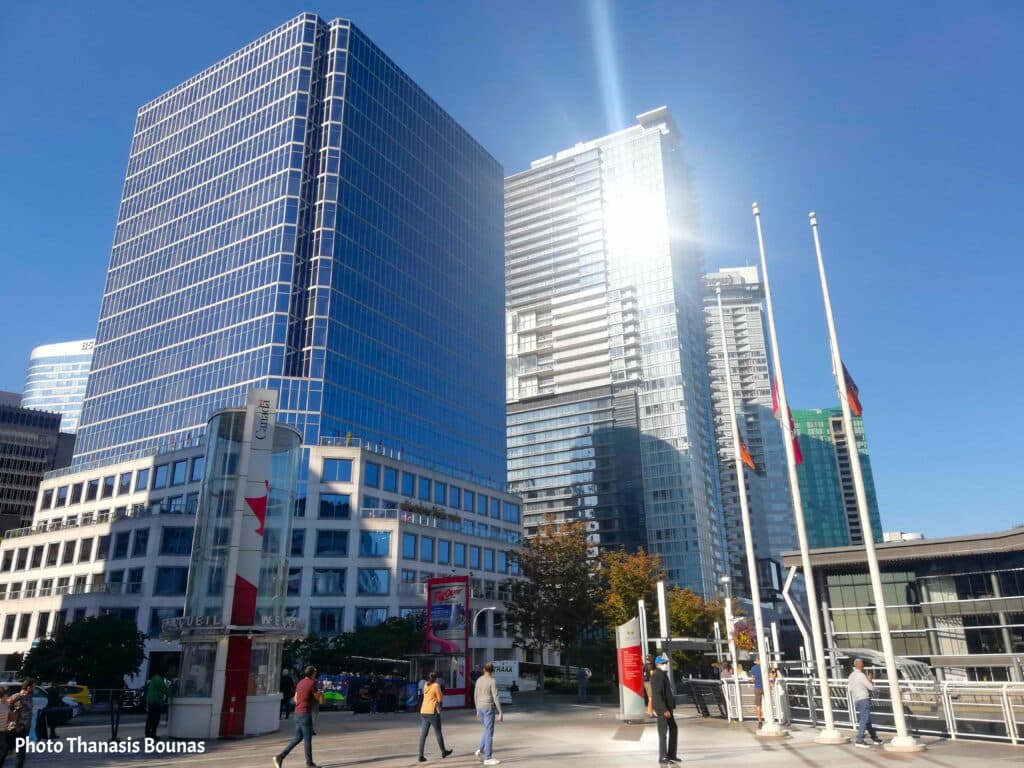
In the photo, sunlight reflects strongly off the towers.
It creates contrast.
Shadow and brightness.
Structure and openness.
Light becomes a reminder that even in dense environments, there is always room for clarity.
Travel as a pause
Breath in travel is not about stopping.
It is about allowing yourself to pause within movement.
Sailing teaches the same principle. You move with the wind, but you also learn when to soften, when to let things flow.
Between motion and stillness
People walk through the space.
The city moves.
But the feeling is not rushed.
There is a balance between motion and stillness—something rare in large cities.
Finding your own rhythm
In the end, breath is about awareness.
Noticing where you are.
How you move.
What surrounds you.
Downtown Vancouver, with its glass towers and open light, becomes more than a place.
It becomes a moment of alignment.
A reminder that even in the middle of a city, you can still find space to breathe.