The distance between Mykonos and Delos may be short, but the journey connects two very different worlds.
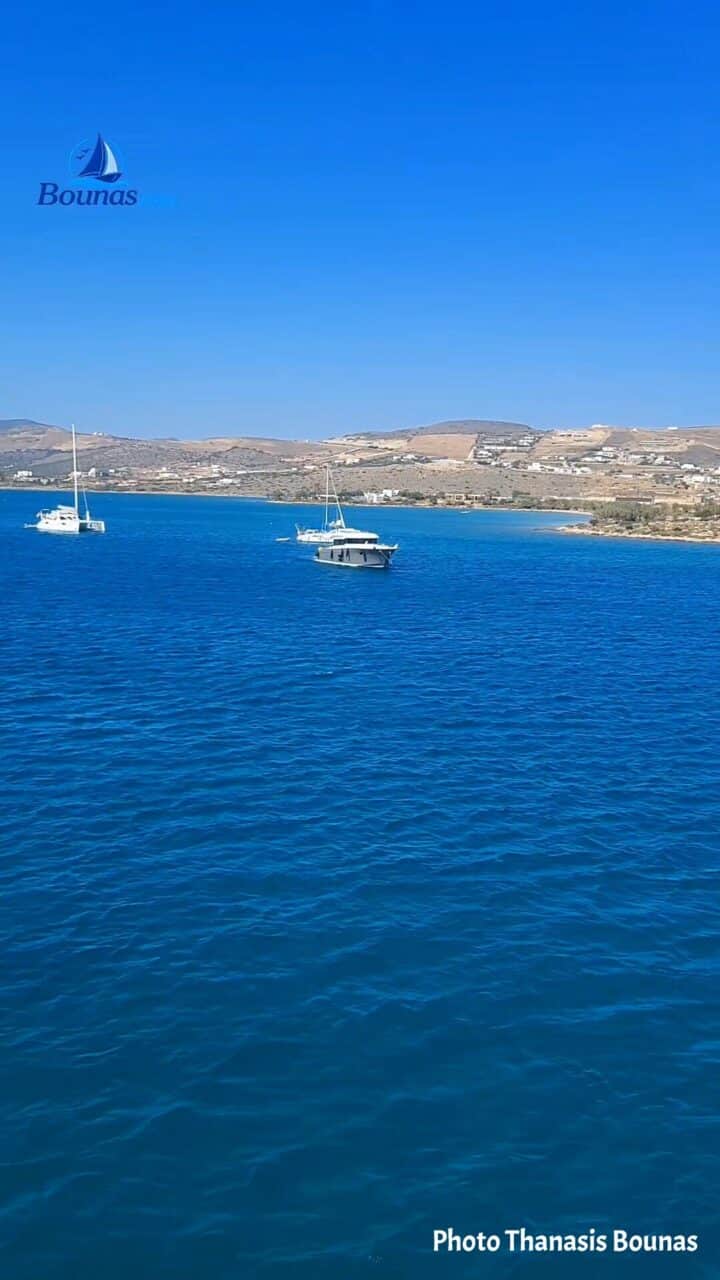
Leaving Mykonos behind and sailing across the blue waters of the Cyclades, the low landscape of Delos gradually appears ahead. Today the passage is a beautiful journey through the Aegean Sea. In antiquity, however, these waters led toward one of the most sacred places in the Greek world.
Approaching Delos from the sea offers a perspective that connects the modern traveler with a maritime route that has existed for thousands of years.
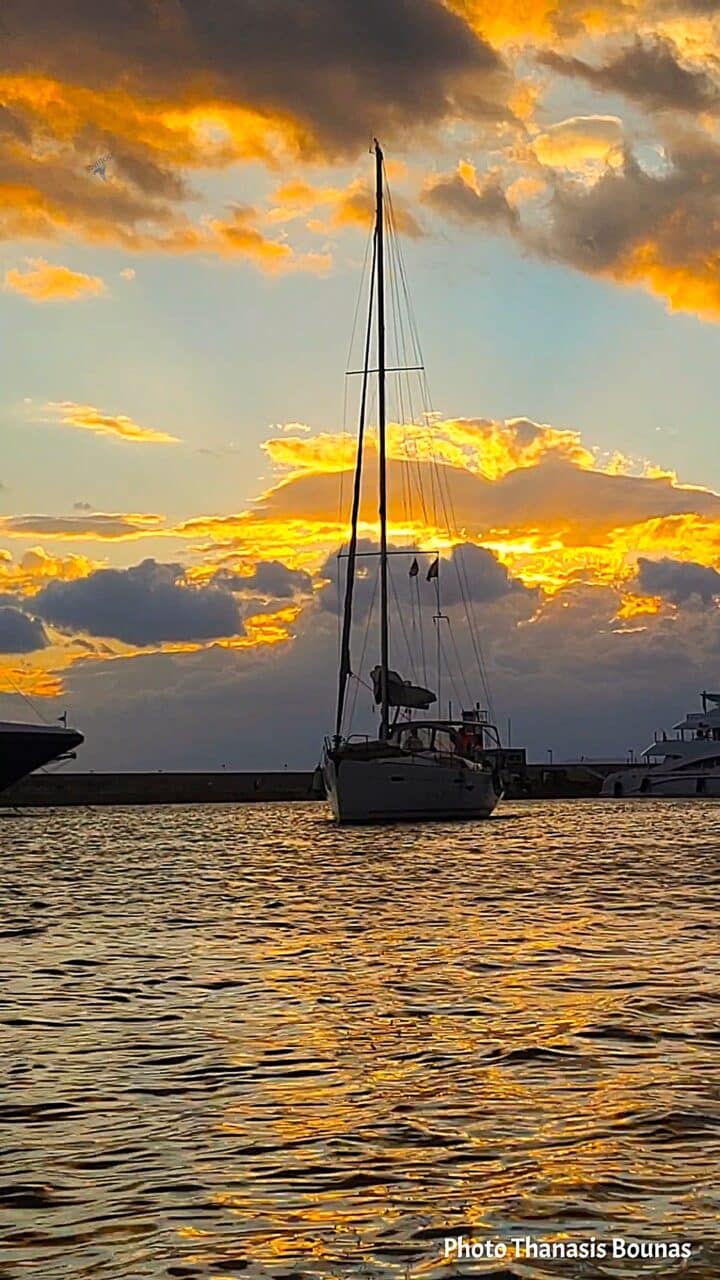
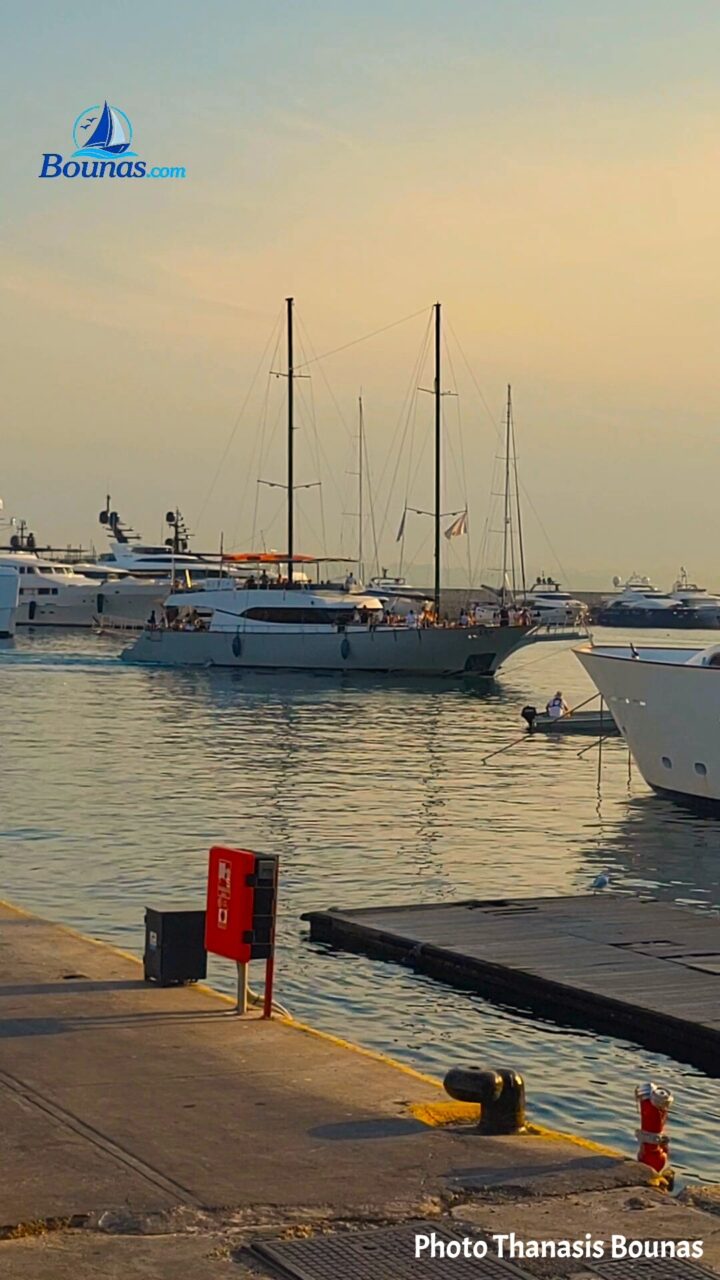
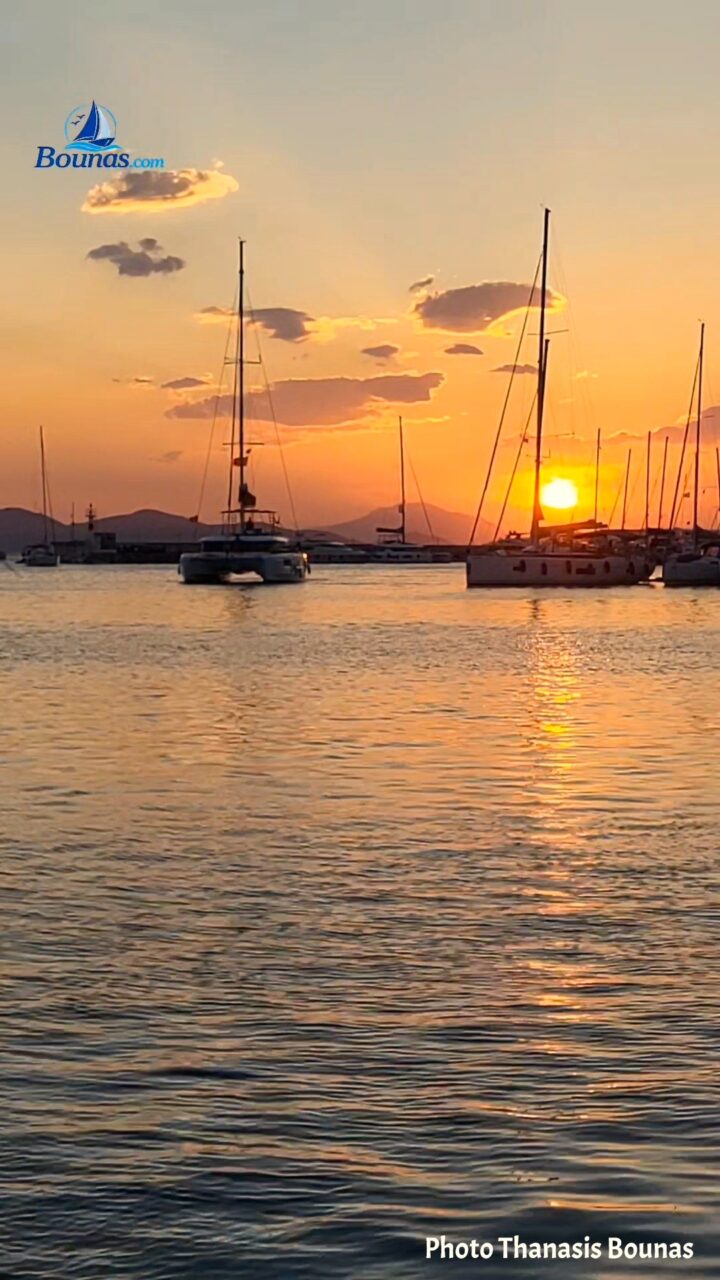
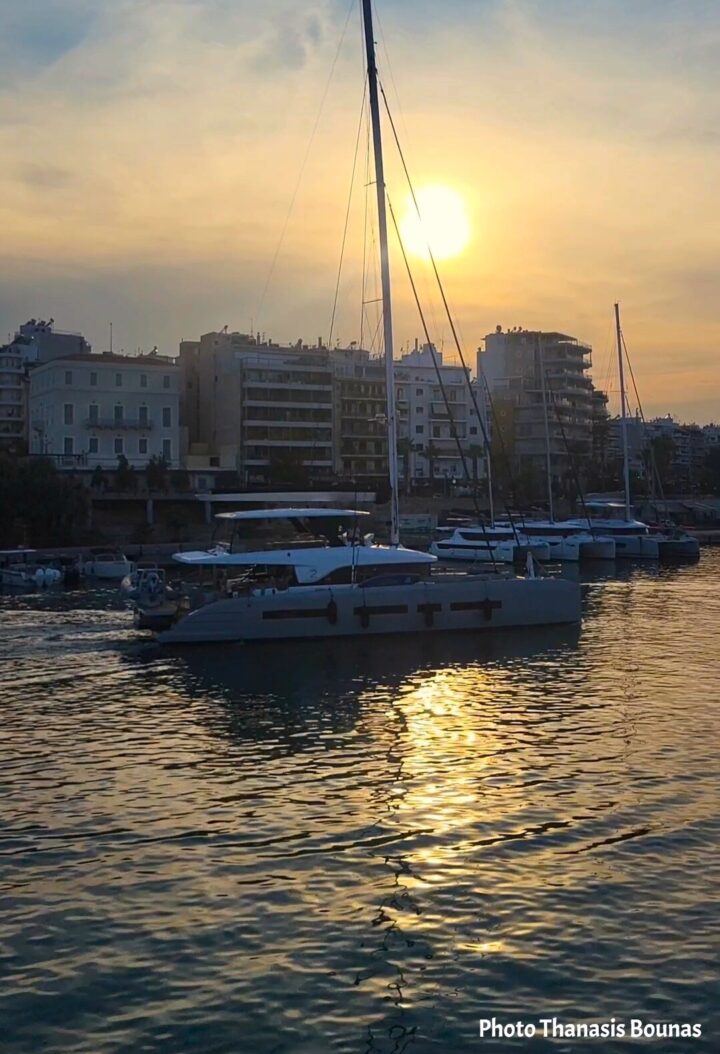
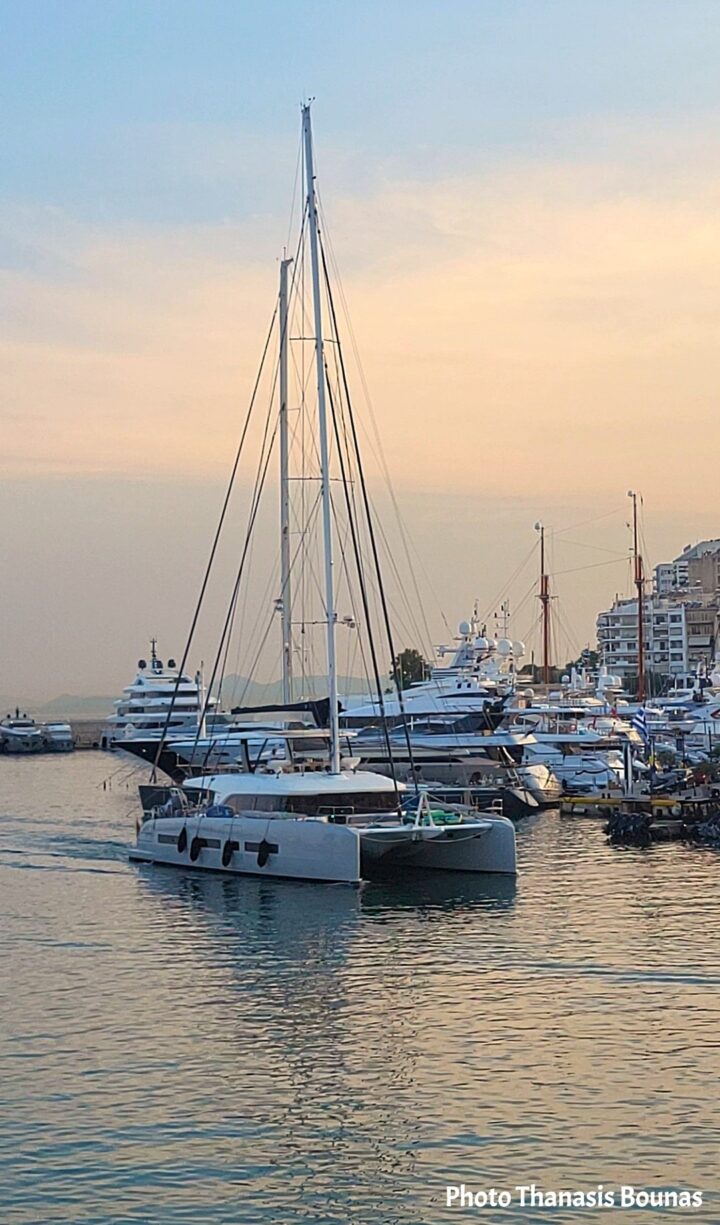
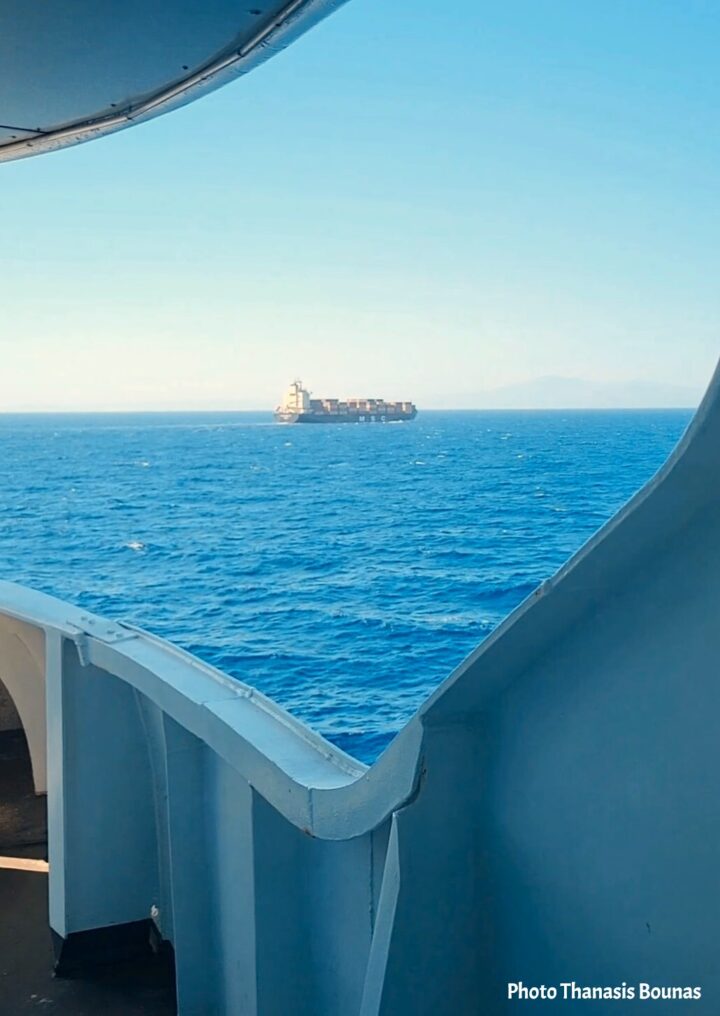
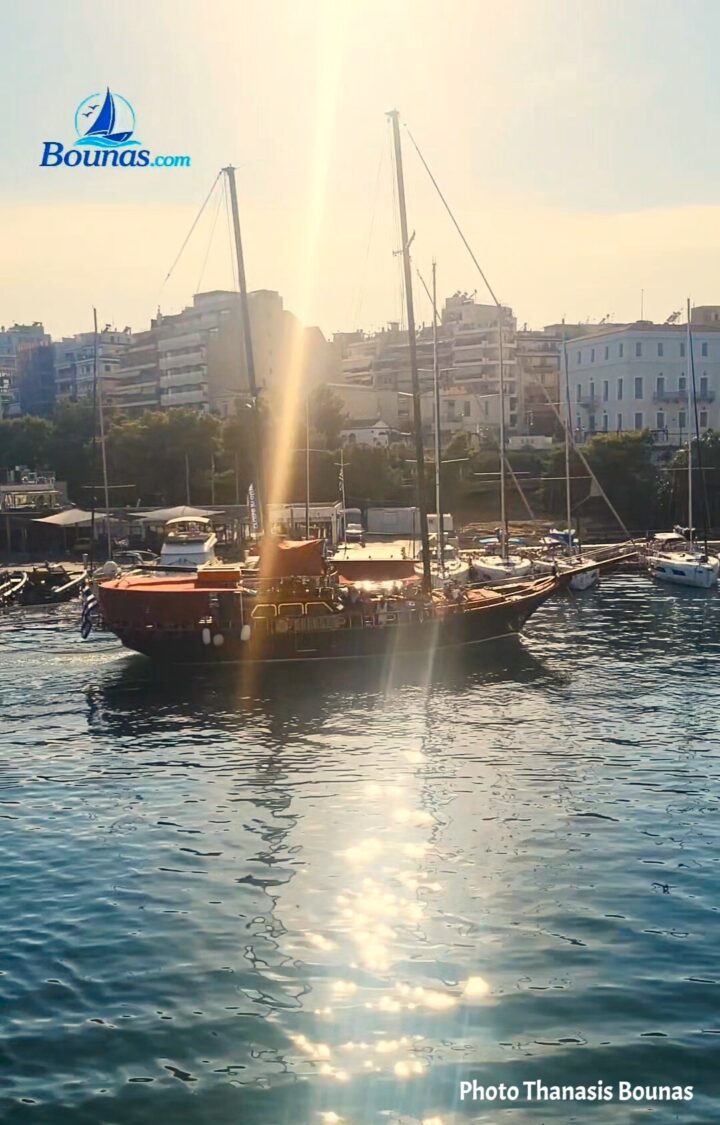
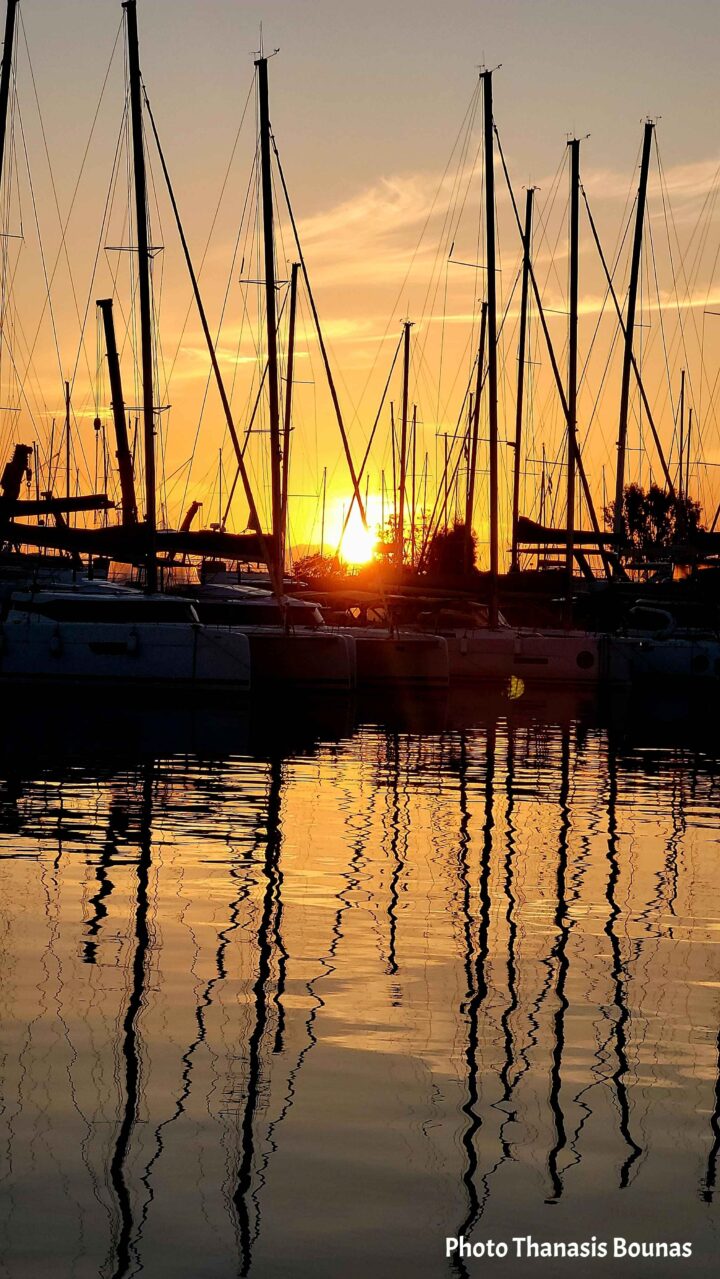
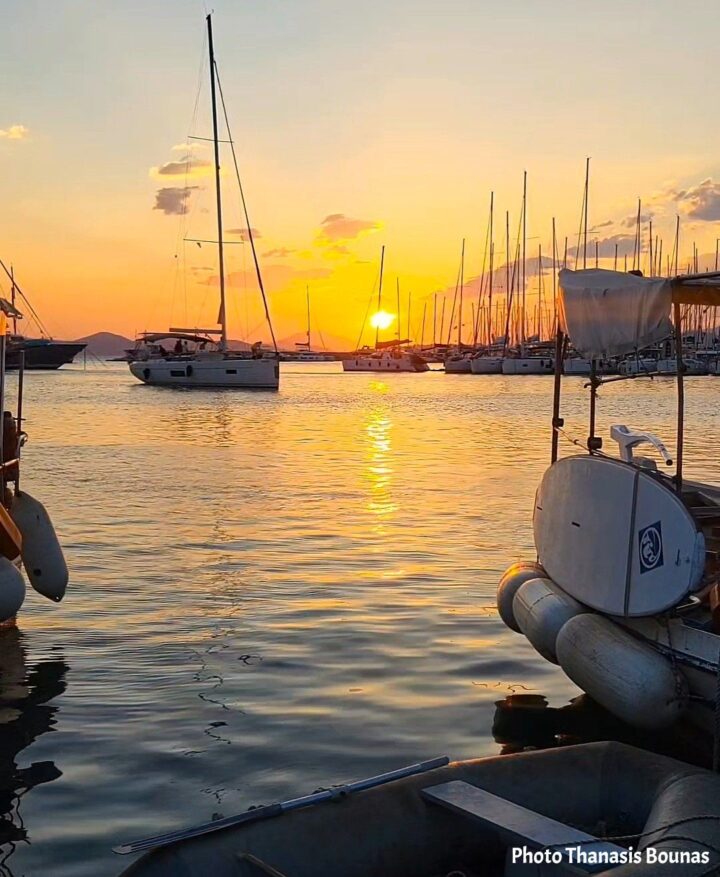
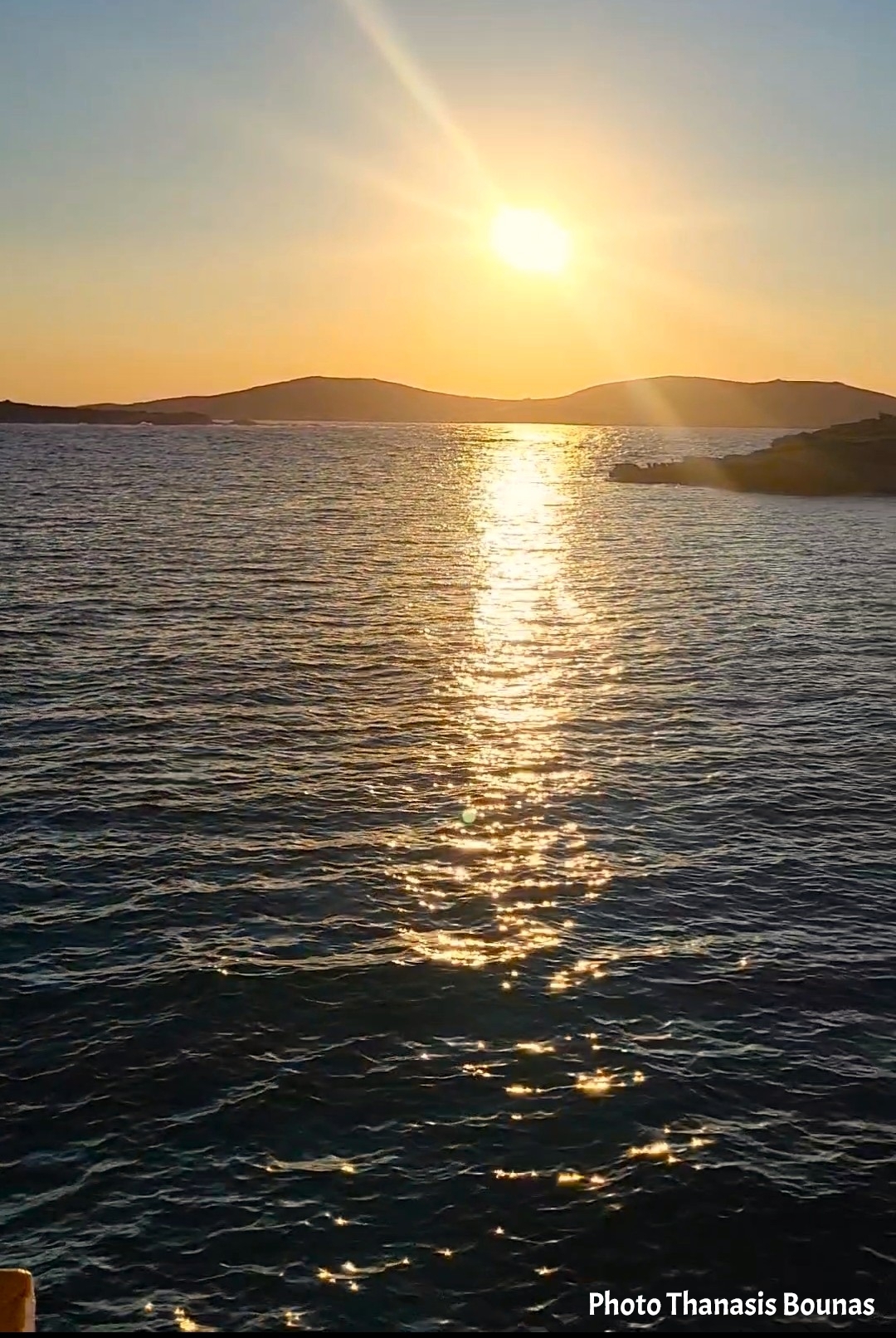
Sailing from Mykonos to Delos, Greece.
Across the Sea from Mykonos to Delos
Mykonos and Delos lie close together in the central Cyclades. From the water, the relationship between the islands becomes immediately visible.
The journey is surrounded by the characteristic landscape of the Cyclades: low rocky islands, open horizons and the intense blue of the Aegean.
For someone sailing in Greece, this relatively short passage is unusual because the destination is not simply another island. Delos is essentially an archaeological landscape surrounded by sea.
As the island grows larger on the horizon, its quiet appearance gives little indication of the extraordinary importance it once possessed.
Delos and the Ancient Greek World
According to Greek mythology, Delos was the birthplace of Apollo and Artemis, giving the island enormous religious significance.
By the Archaic and Classical periods, the Sanctuary of Apollo had developed into an important center of worship attracting visitors from different parts of the Greek world.
Delos also became politically significant. After the Persian Wars, the alliance traditionally known today as the Delian League was established in 478/477 BC, with its treasury initially kept on Delos before Athens later transferred it to the Acropolis.
Centuries later, particularly during the Hellenistic period and after the Romans declared Delos a free port in 167 BC, the island developed into a major commercial center of the Mediterranean.
The small island visible from the sea today was therefore once connected with a remarkably large network of people, ships, religions and trade.
Arriving as Ancient Sailors Once Did
There is an important reason why seeing Delos from the sea matters.
For most people arriving in antiquity, the sea was not scenery surrounding the destination. It was the road to the destination.
Pilgrims, merchants, officials and sailors approached the sacred island aboard vessels crossing the Aegean.
The first experience of Delos would therefore have been remarkably similar in one fundamental way to what a sailor experiences today: an island slowly emerging from the horizon.
The ships are different. The navigation is different. The coastline has changed.
But the geographical relationship between sea and island remains.
A Different Way to Experience the Cyclades
Sailing from Mykonos to Delos reveals something that can easily disappear when the Cyclades are experienced only as separate holiday destinations.
The islands have always been connected by water.
For thousands of years, the Aegean Sea carried people, ideas, goods and religious traditions between them. Delos became extraordinary partly because ships could connect this small island with a much larger Mediterranean world.
Today, crossing these same waters offers a quieter connection with that history.
Mykonos slowly falls behind. Delos appears ahead. Between them lies a short stretch of the Aegean that has been crossed for centuries.
Sometimes the most interesting part of visiting an ancient place begins before reaching the shore.