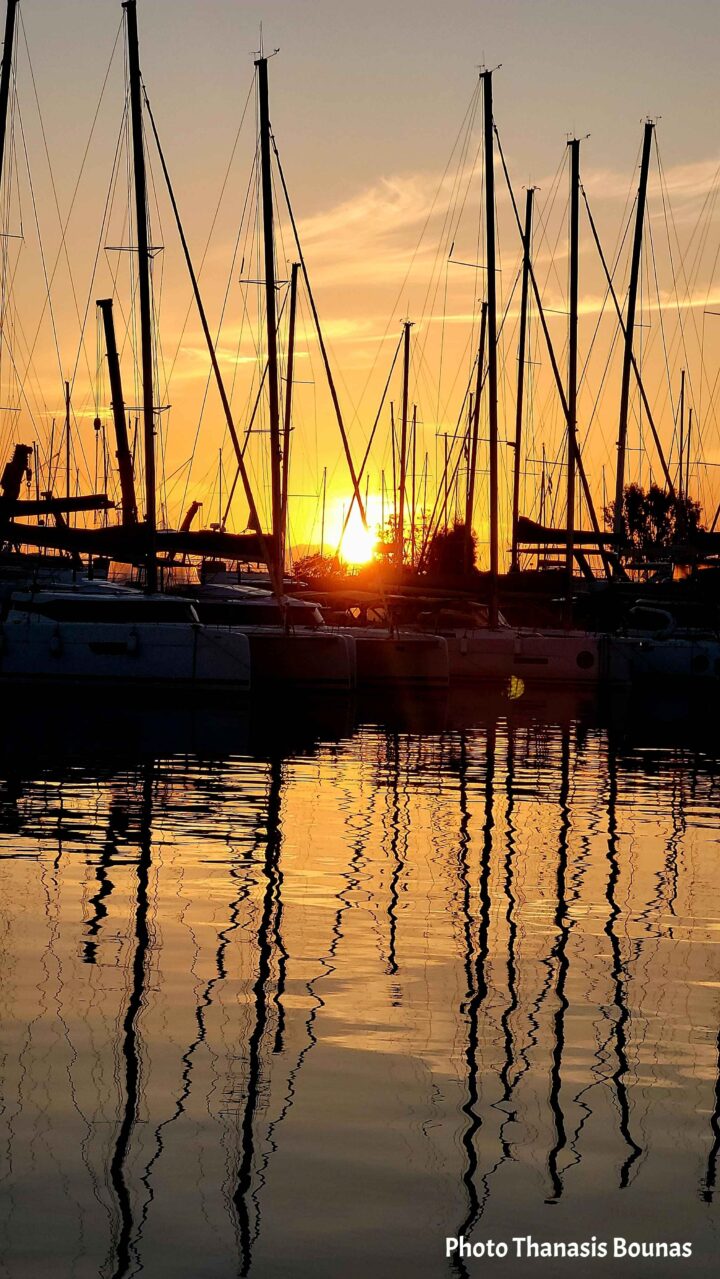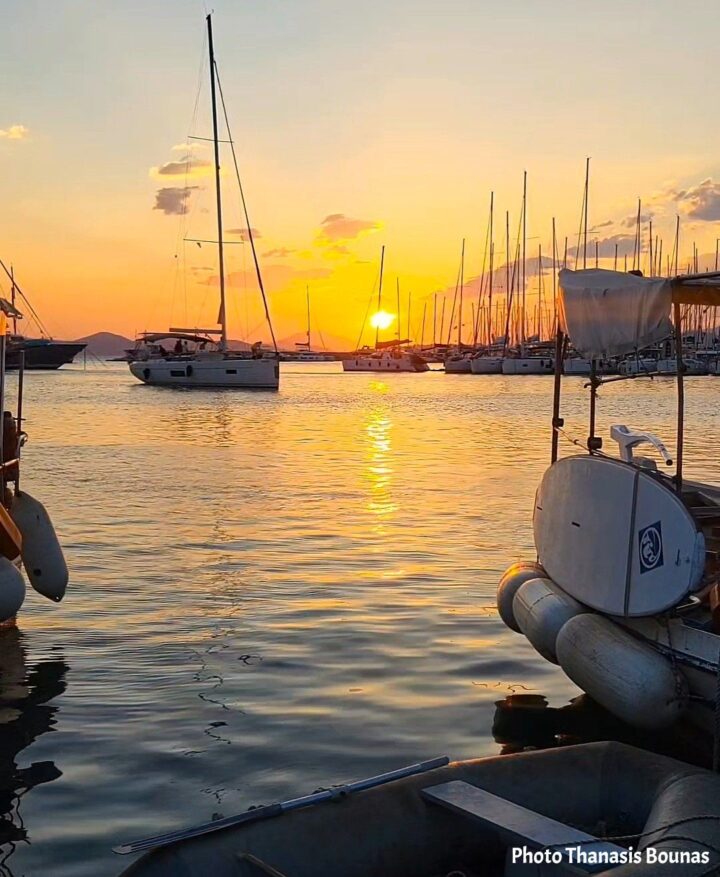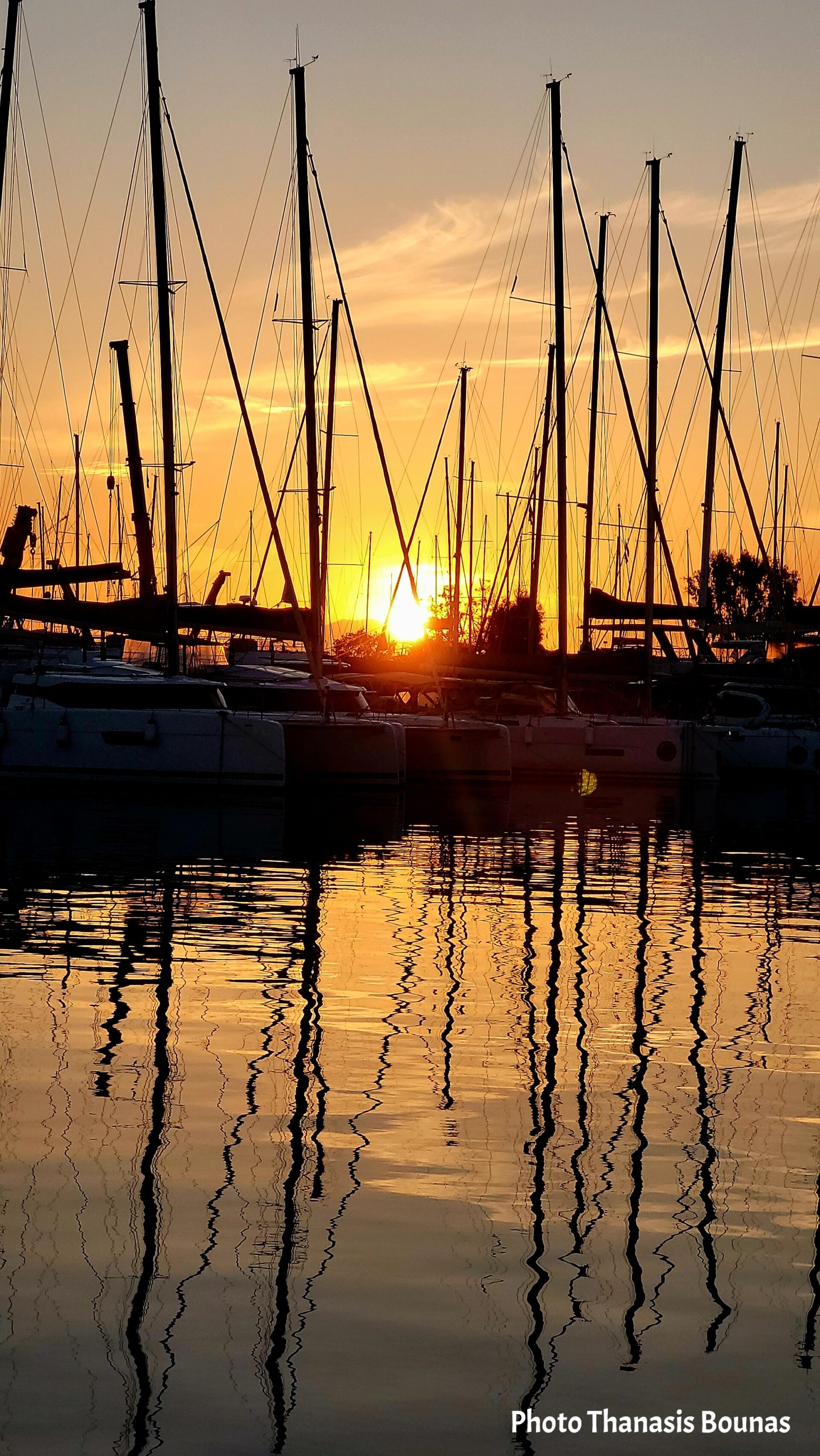
There are moments at sea when a landscape seems to carry much more than its beauty.
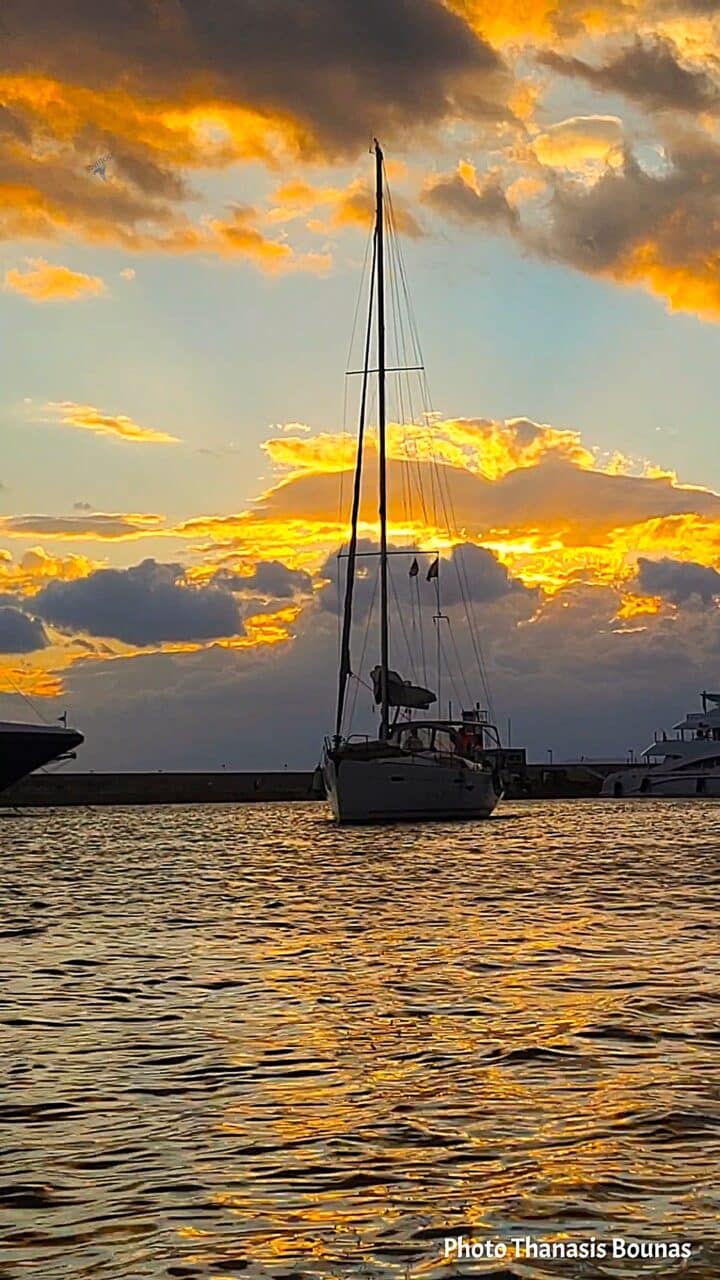
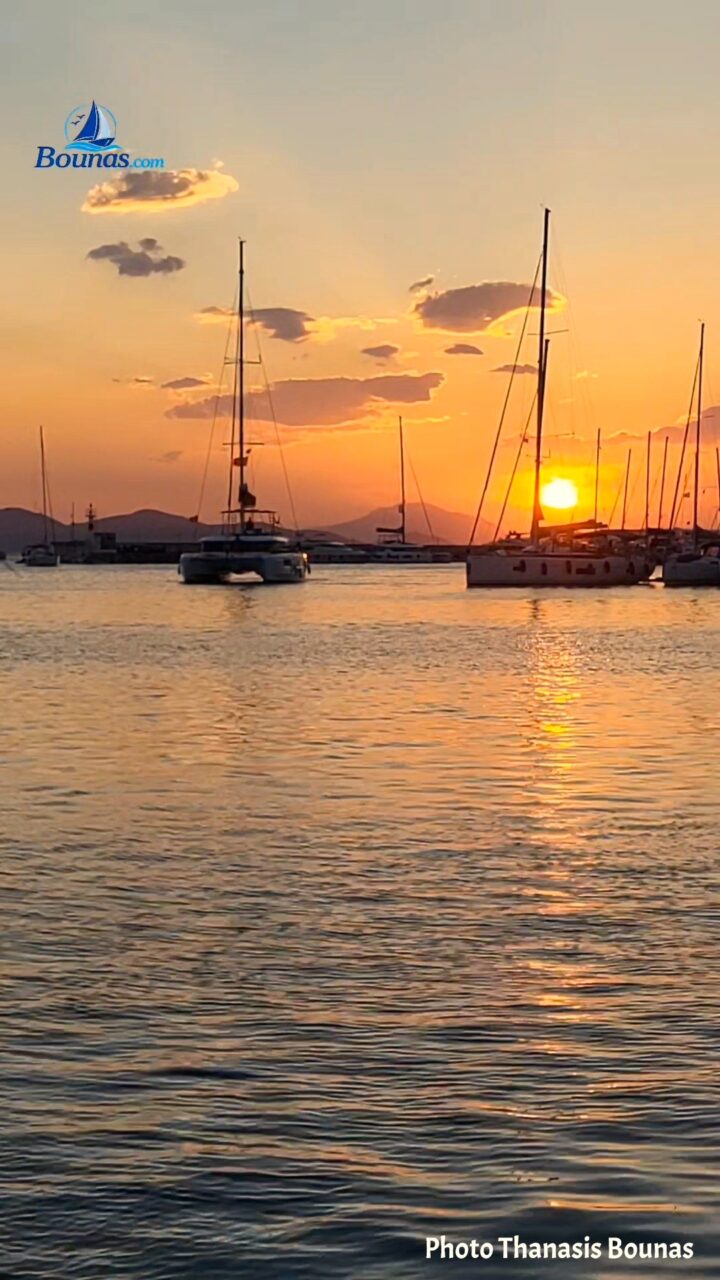
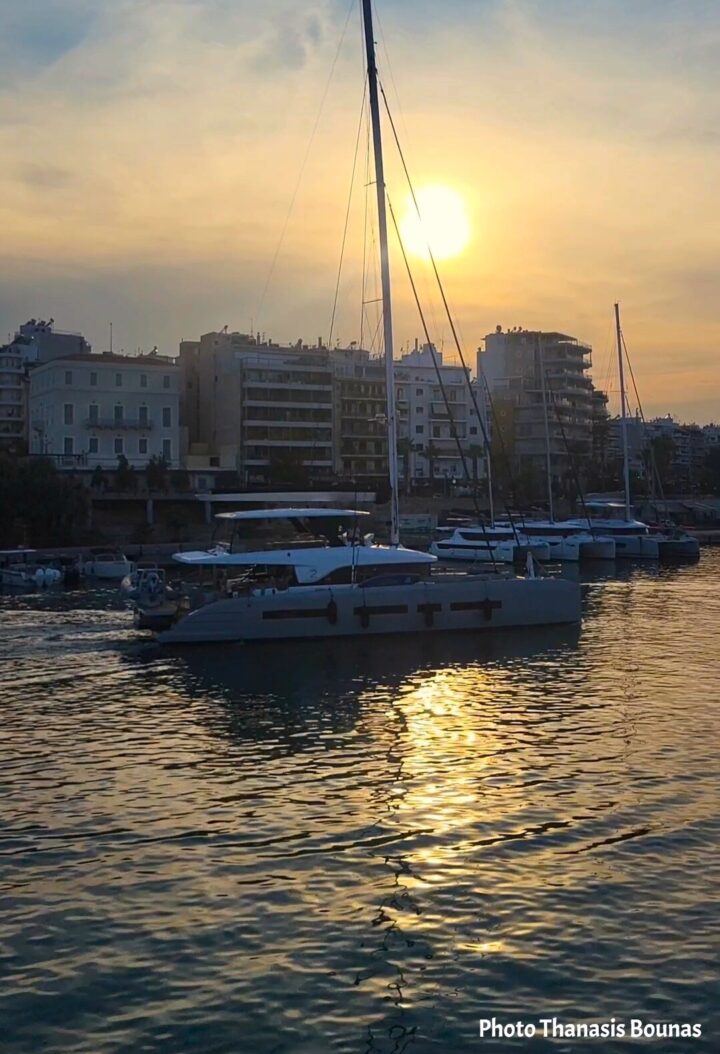
A sailboat moving slowly beneath the evening sun off Rhodes is one of them. The water turns gold, the horizon becomes almost silent, and Greece appears exactly as generations of sailors have known it — from the sea.
But Rhodes is not simply another beautiful Greek island seen from the deck of a boat. For centuries, the sea was central to its identity.
Its position in the southeastern Aegean placed the island between Greece, Asia Minor and the wider eastern Mediterranean. Long before modern sailboats crossed these waters, merchant vessels and warships followed routes that made Rhodes one of the important maritime centres of the ancient world.
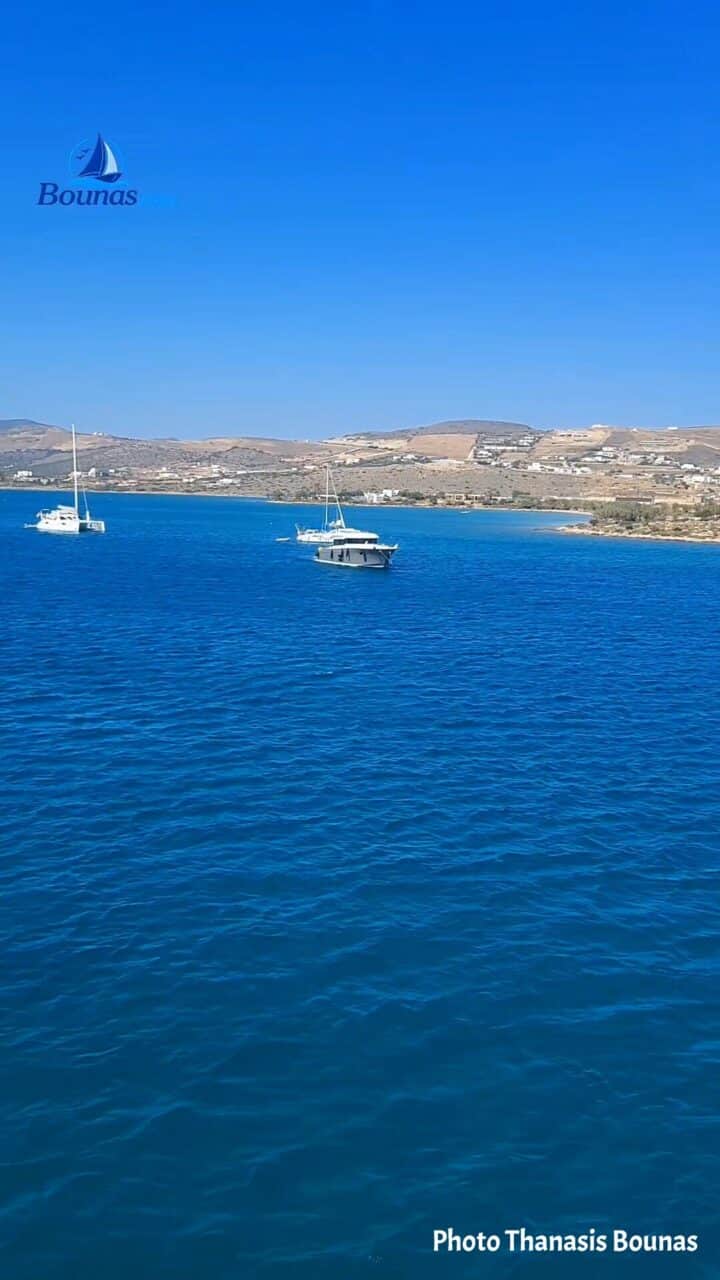
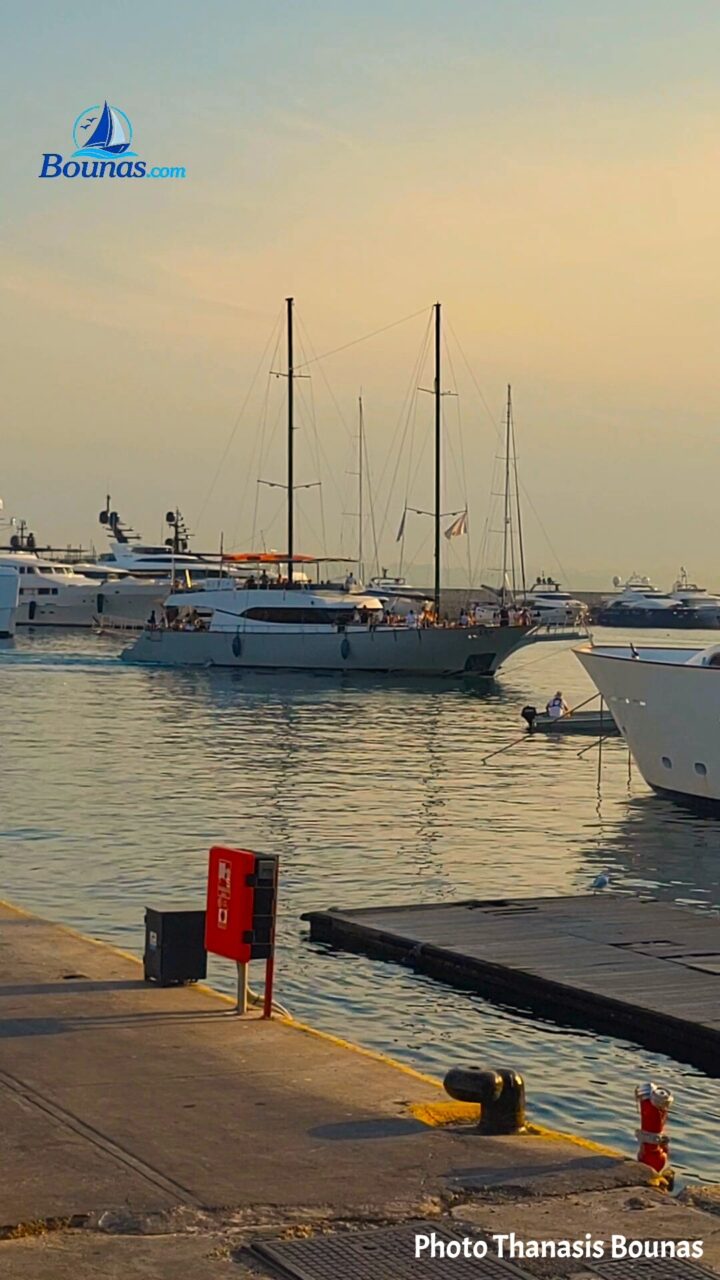
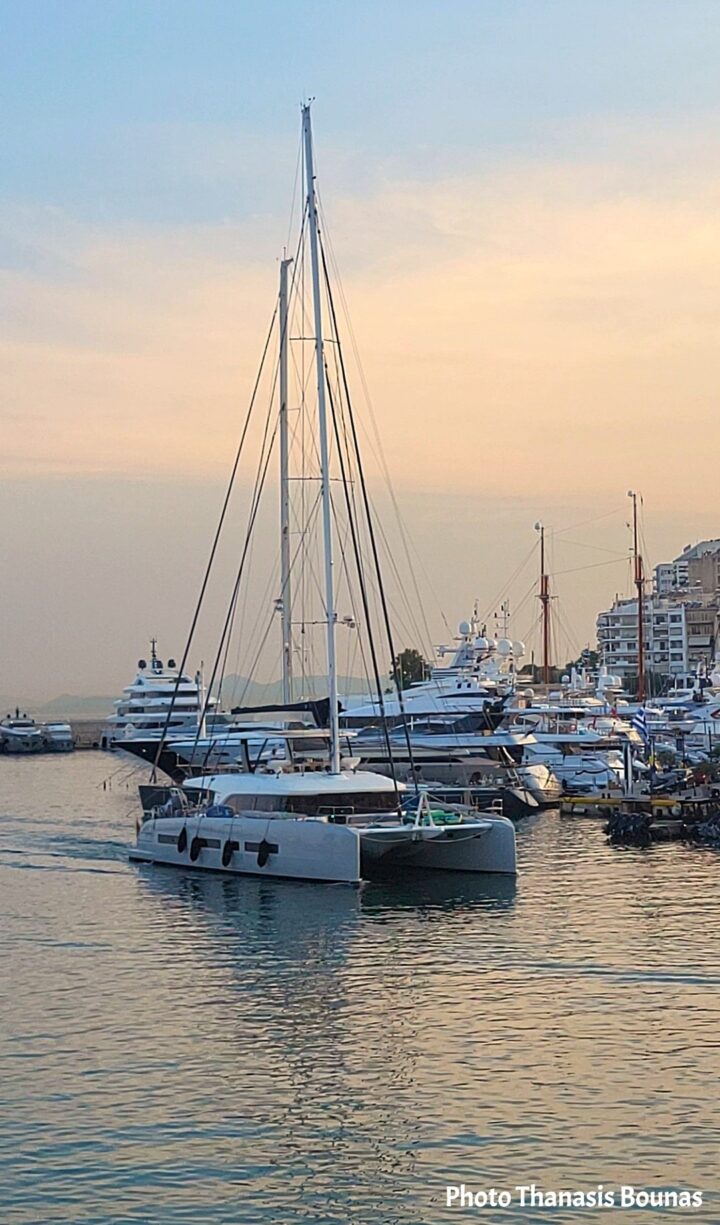
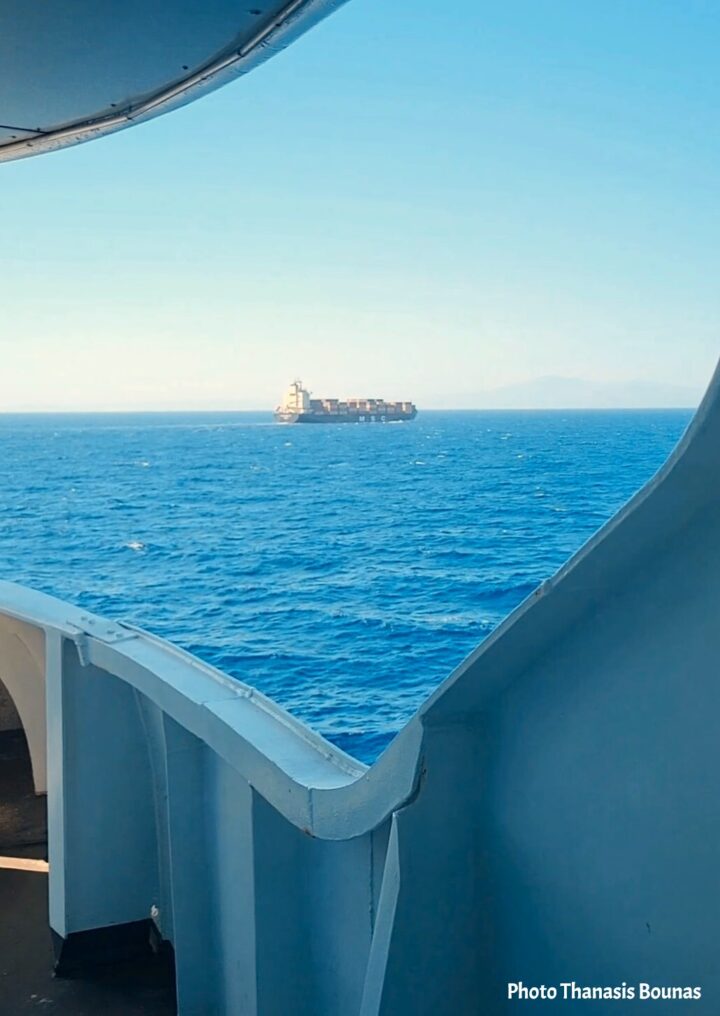
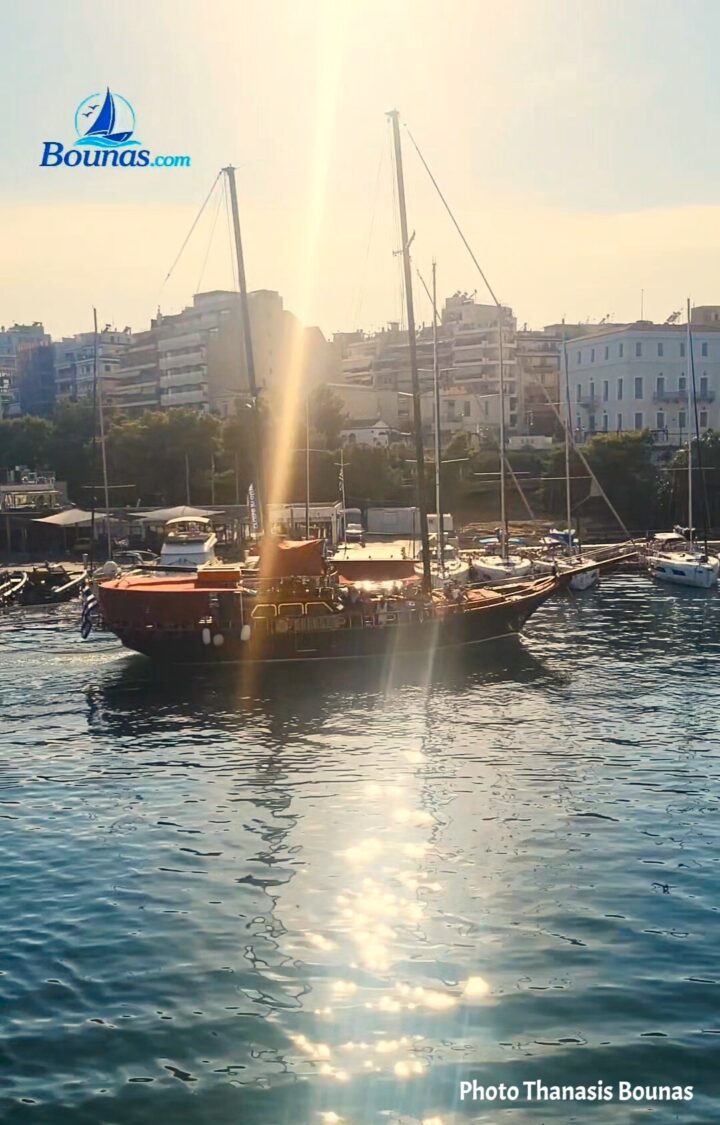
⛵ Sunset Sailing in Rhodes, Greece.
An Island Shaped by the Sea
The maritime story of Rhodes reaches deep into antiquity.
Archaeological evidence shows connections with Minoan Crete from the second millennium BC, followed by Mycenaean presence and extensive commercial contacts with other parts of the Mediterranean.
Centuries later, in 408 BC, the three major cities of Ialysos, Kamiros and Lindos united and founded the city of Rhodes at the northern end of the island.
Its location was anything but accidental.
The new city developed around a remarkable maritime environment. Rhodes possessed five harbours and occupied a strategic position close to the growing commercial networks of the eastern Mediterranean.
The centuries that followed became a period of extraordinary prosperity. Maritime trade, navigation and diplomacy helped transform Rhodes into one of the most influential islands of the Hellenistic world.
From the deck of a modern sailboat, it is easy to forget how busy these waters once were.
Ships carrying wine, pottery, grain and other goods crossed the same sea. Rhodes maintained commercial connections stretching far beyond the Aegean, while its position allowed sailors to move between the Greek world, Egypt, Cyprus and the coasts of Asia Minor.
The horizon visible today was once part of an enormous maritime network.
Rhodes and the Sailors of the Ancient Aegean
Rhodes eventually became much more than a trading station.
It became a naval power.
Its fleet was sufficiently important that Rhodes assumed a major role in protecting maritime commerce from piracy. Rhodian ships patrolled the Aegean, while the island’s economic strength depended heavily upon keeping the surrounding sea routes open and relatively secure.
That gives the modern sailing experience around Rhodes another dimension.
When a sailboat approaches the island today, navigation is supported by GPS, electronic charts, weather forecasts and modern harbours.
Ancient sailors possessed none of these.
Their world was interpreted through coastlines, islands, stars, winds and accumulated knowledge of the sea.
Rhodes itself would have been an important geographical presence within that world — an island positioned where different maritime routes converged.
The sea surrounding Rhodes was therefore not a boundary.
It was a road.
The Harbour, Helios and the Colossus of Rhodes
Perhaps nothing expressed the confidence of ancient Rhodes more dramatically than the Colossus.
After successfully resisting the siege of Demetrius I in 305–304 BC, the Rhodians eventually constructed an enormous bronze representation of Helios, the patron god of the island.
Standing approximately 33 metres high, it became one of the Seven Wonders of the Ancient World. Rhodes at this time was among the Mediterranean’s important trading ports.
The familiar modern image showing the Colossus standing with its legs across the harbour entrance while ships sail underneath is almost certainly legendary. Ancient evidence does not establish such a position, and the precise location of the monument remains uncertain.
That distinction matters.
The real history of Rhodes is impressive enough without embellishment.
Somewhere around these harbours stood one of antiquity’s most extraordinary monuments, overlooking a city whose prosperity depended heavily upon the sea.
The Colossus survived only a few decades before an earthquake brought it down in 228 or 226 BC.
The maritime importance of Rhodes lasted much longer.
Sailing Rhodes Today
Thousands of years later, the relationship between Rhodes and the sea continues.
A sailboat beneath the setting sun may seem completely removed from the merchant ships and naval vessels of antiquity, but the geography has not changed.
The same island rises from the southeastern Aegean.
The same coastline appears gradually on the horizon.
And the sun still falls across waters that once carried sailors from Greece toward Asia Minor, Egypt and the eastern Mediterranean.
This is one of the reasons sailing in Greece can feel different from simply visiting a destination by land.
The sea reveals the geography that helped create the history.
Approaching Rhodes from the water allows you to understand something that maps alone cannot fully explain: why this island became important in the first place.
Its history was written not only on land, but across the sea surrounding it.
And when a sailboat crosses that golden water at sunset, the distance between ancient and modern Rhodes suddenly feels remarkably small.
Video & Editing by Thanasis Bounas
Discover more sailing and travel stories at Bounas.com