Where the City Meets the Water
At Coal Harbour in Vancouver, the city does not end.
It softens.
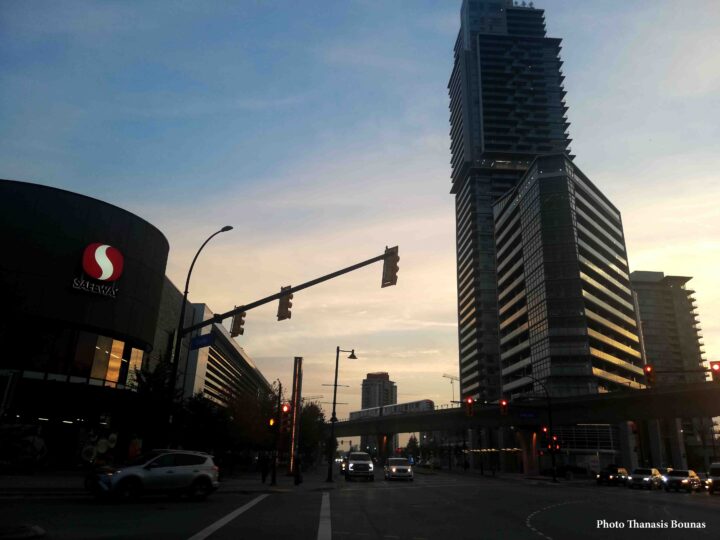
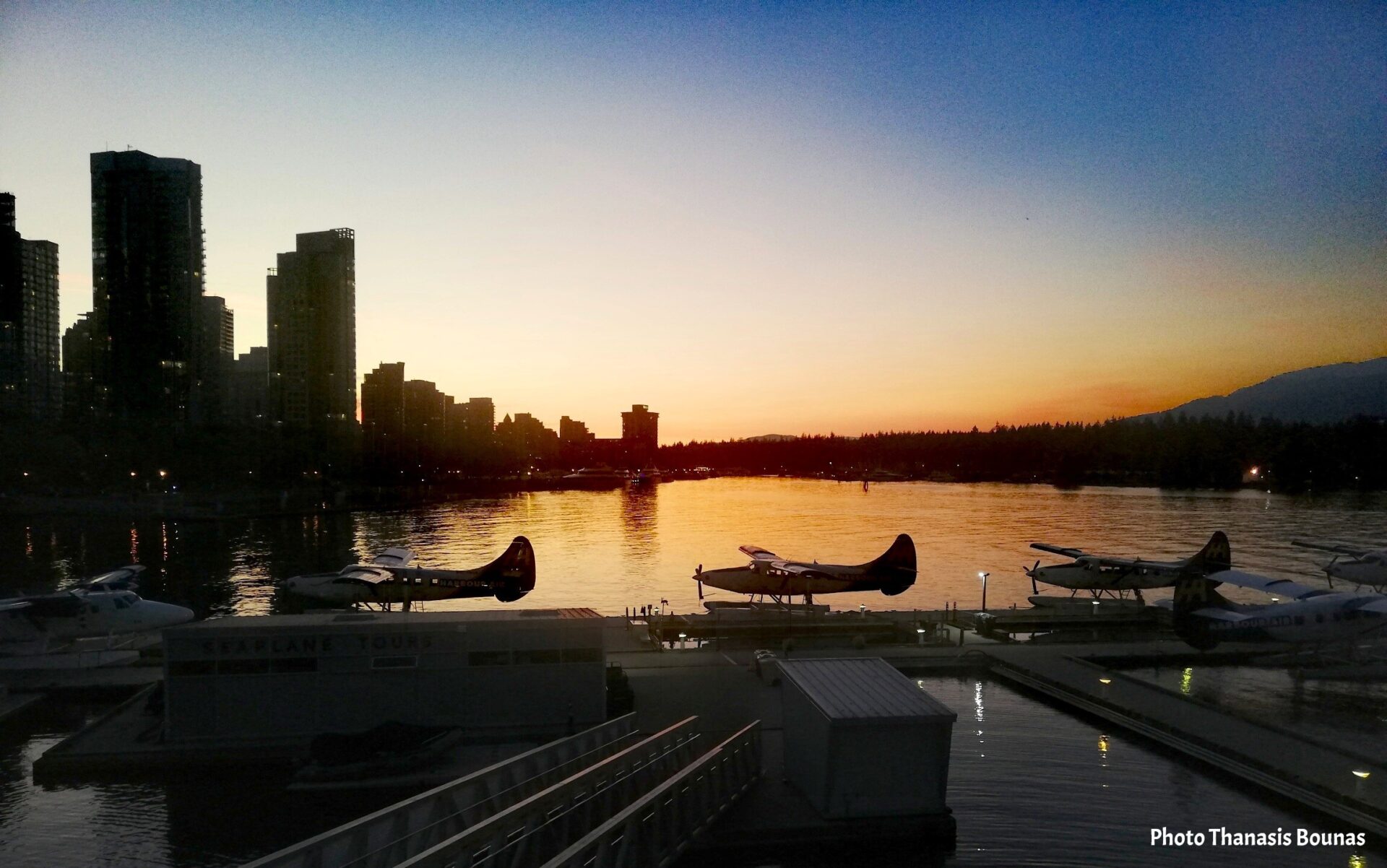
Glass towers fade into silhouette.
Water reflects the last light of the day.
Everything slows as the sun lowers behind the skyline.
Between land and sea, there is a quiet boundary —
not fixed, but constantly shifting.
A Harbour Shaped by Change
Coal Harbour was not always defined by calm views and evening reflections.
In the late 19th and early 20th centuries, it served as an industrial and maritime zone, closely tied to Vancouver’s growth as a port city.
Ships, cargo, and shipyards once filled this shoreline.
Over time, the area transformed.
What was once functional
became residential, open, and accessible.
Flight from the Water
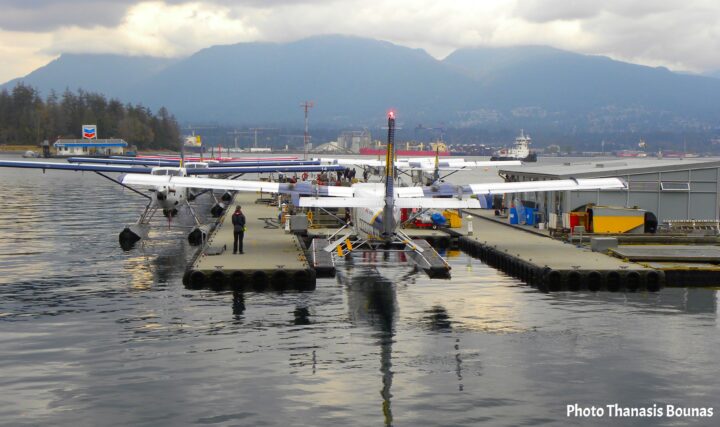
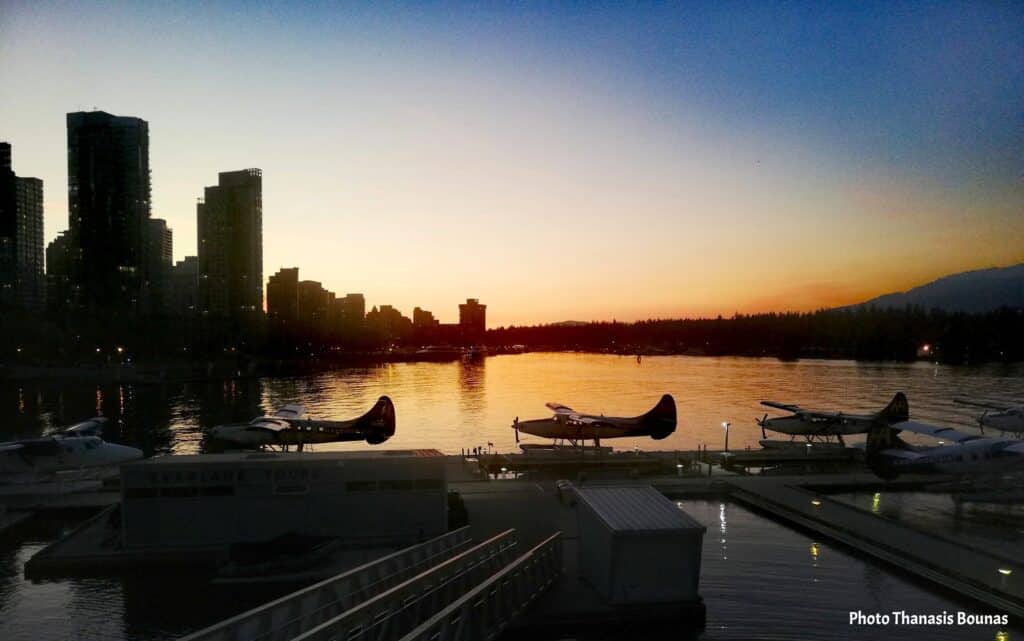
Along the docks, seaplanes rest in stillness.
Their presence reflects a unique part of the region’s transportation history.
In coastal British Columbia, water has always been a route — not a barrier.
Seaplanes expanded that idea, connecting remote areas, islands, and distant communities where roads could not reach.
Even at rest, they suggest movement.
The Moment Before Departure
At sunset, everything feels suspended.
The planes are still.
The water barely moves.
The city behind them dims into shadow.
Nothing is leaving.
Nothing is arriving.
And yet, the possibility of both remains.
Light That Defines the Scene
The sky shifts through layers of color:
Gold near the horizon.
Blue fading above.
Darkness slowly rising.
Reflections stretch across the water, turning surface into depth.
The scene is not static.
It evolves minute by minute.
What Draws You In
There is something subtle about places like this.
They do not demand attention.
They hold it quietly.
You stand at the edge — between departure and return, between movement and stillness.
And for a moment, neither direction feels urgent.