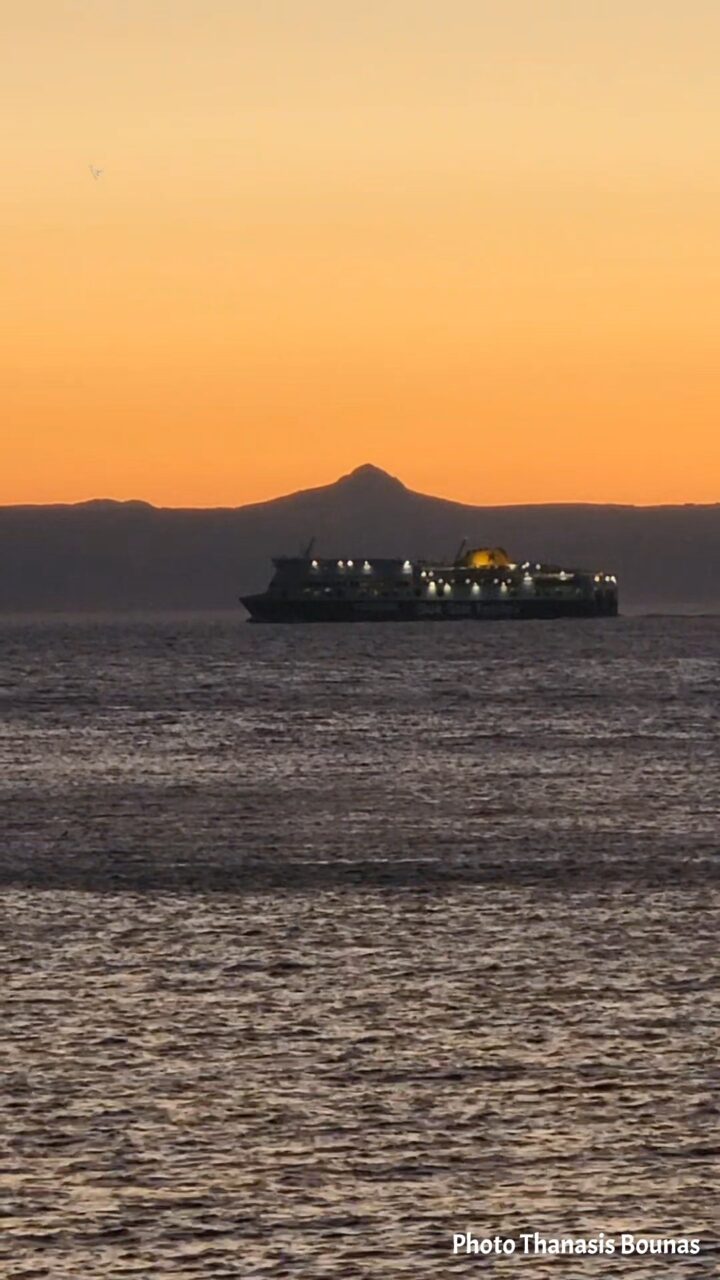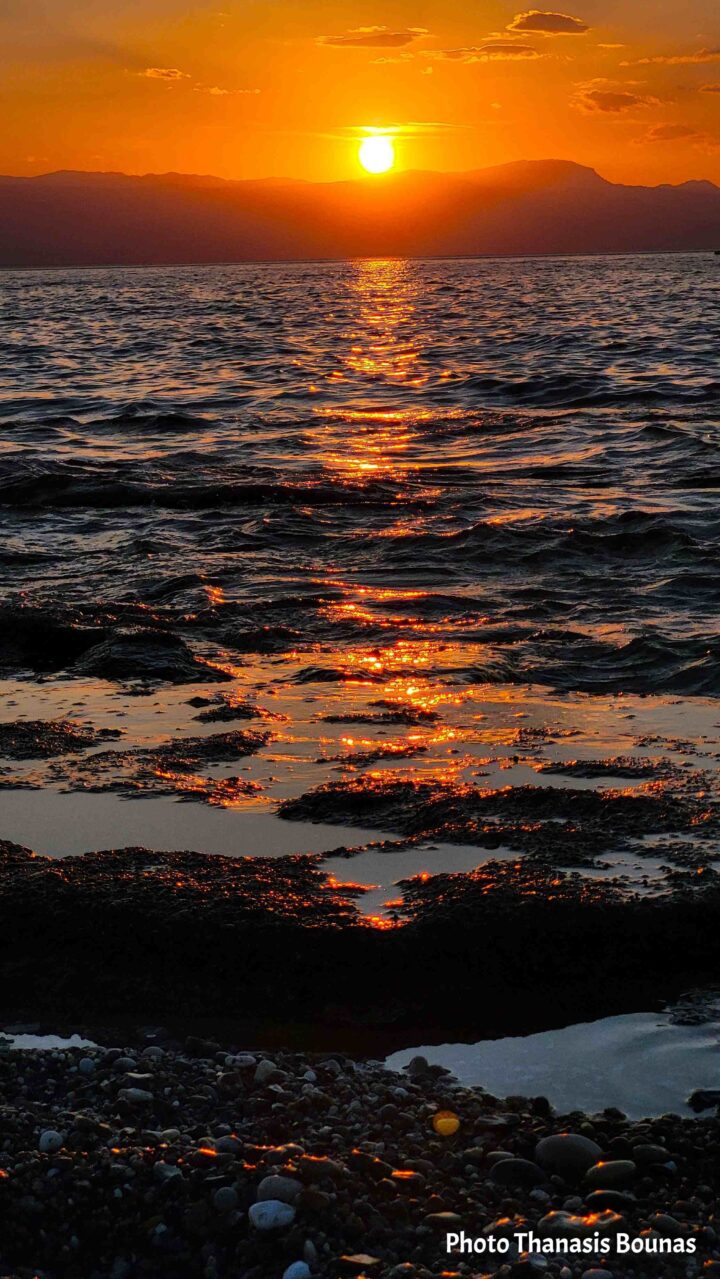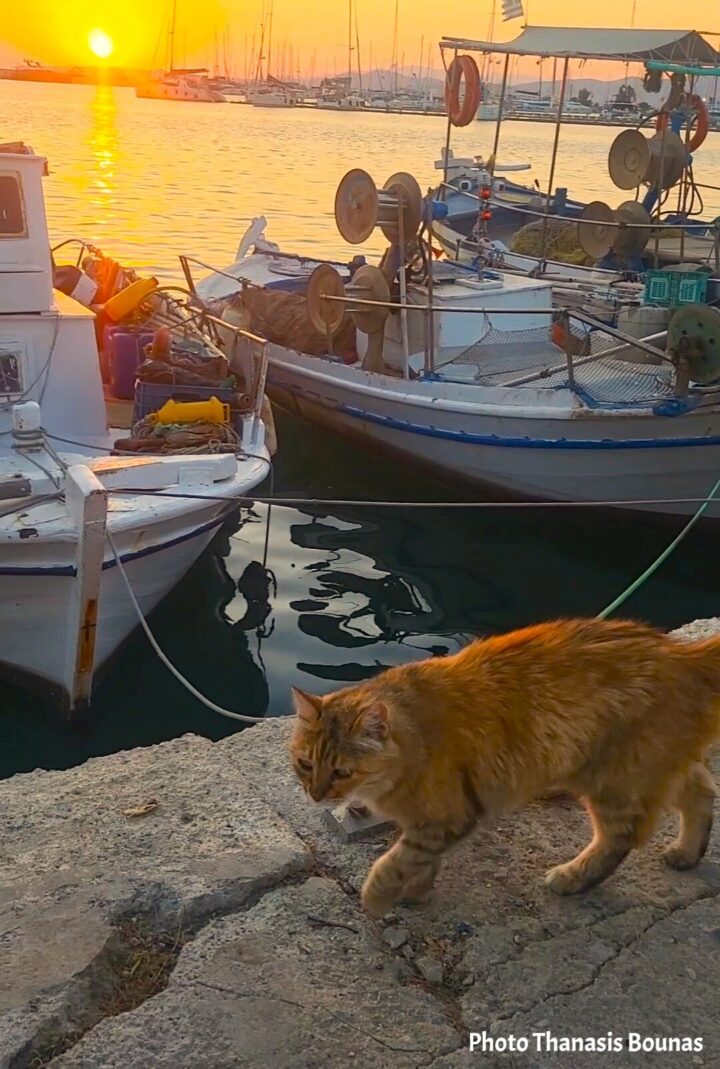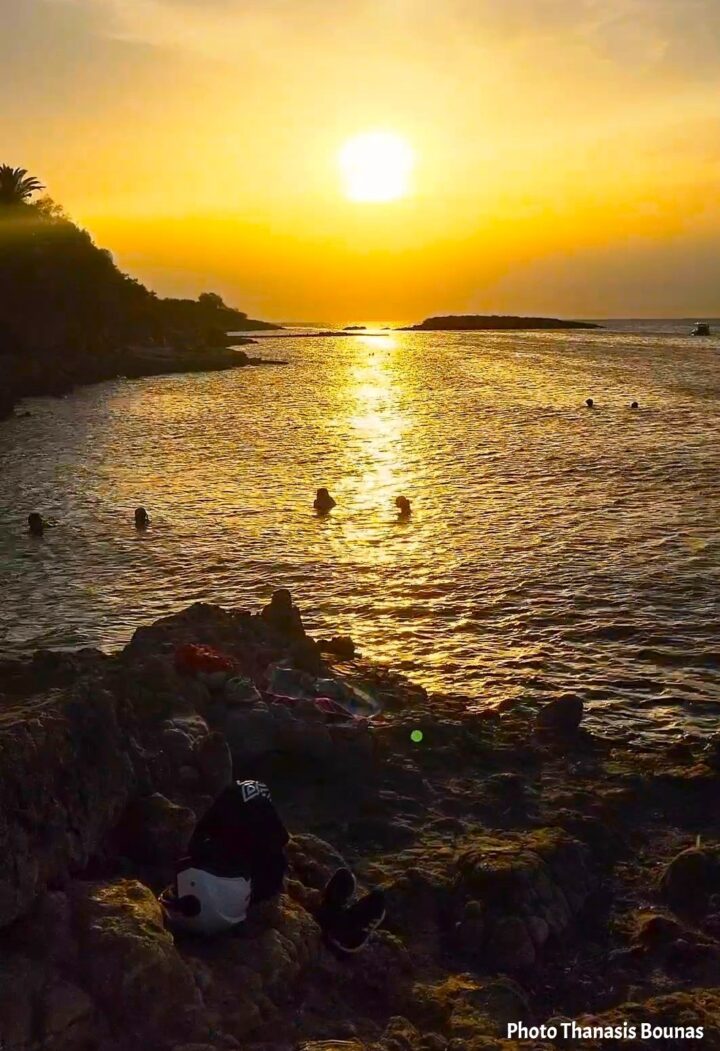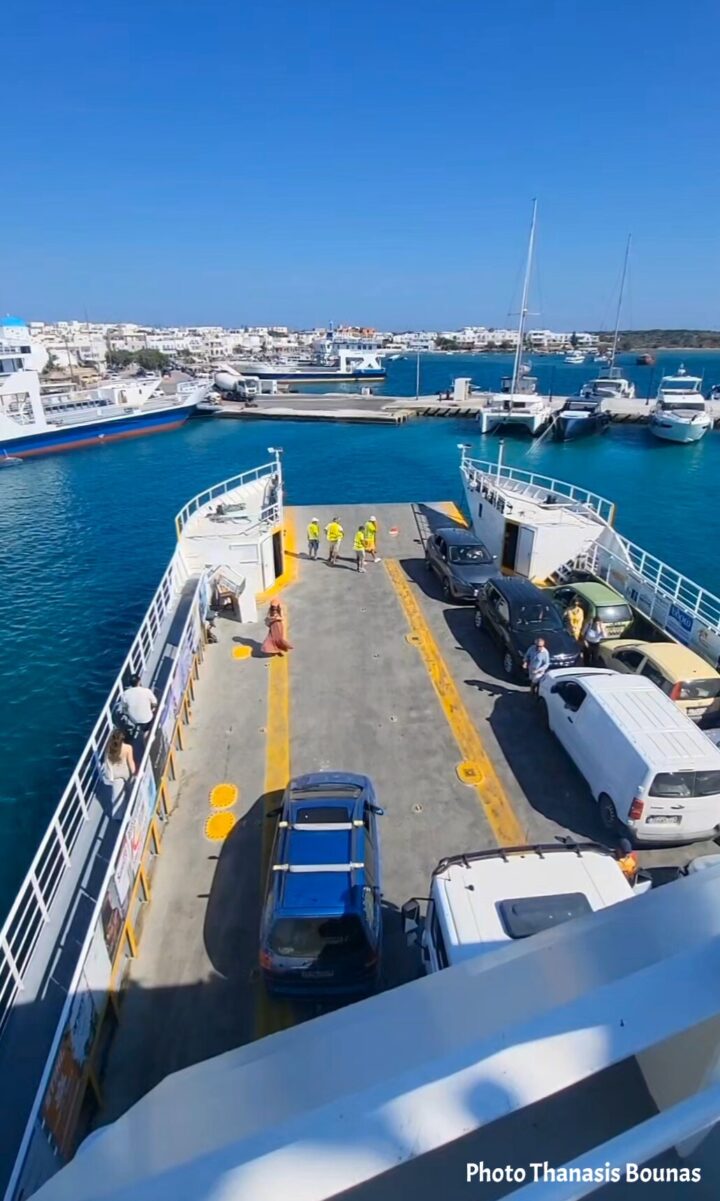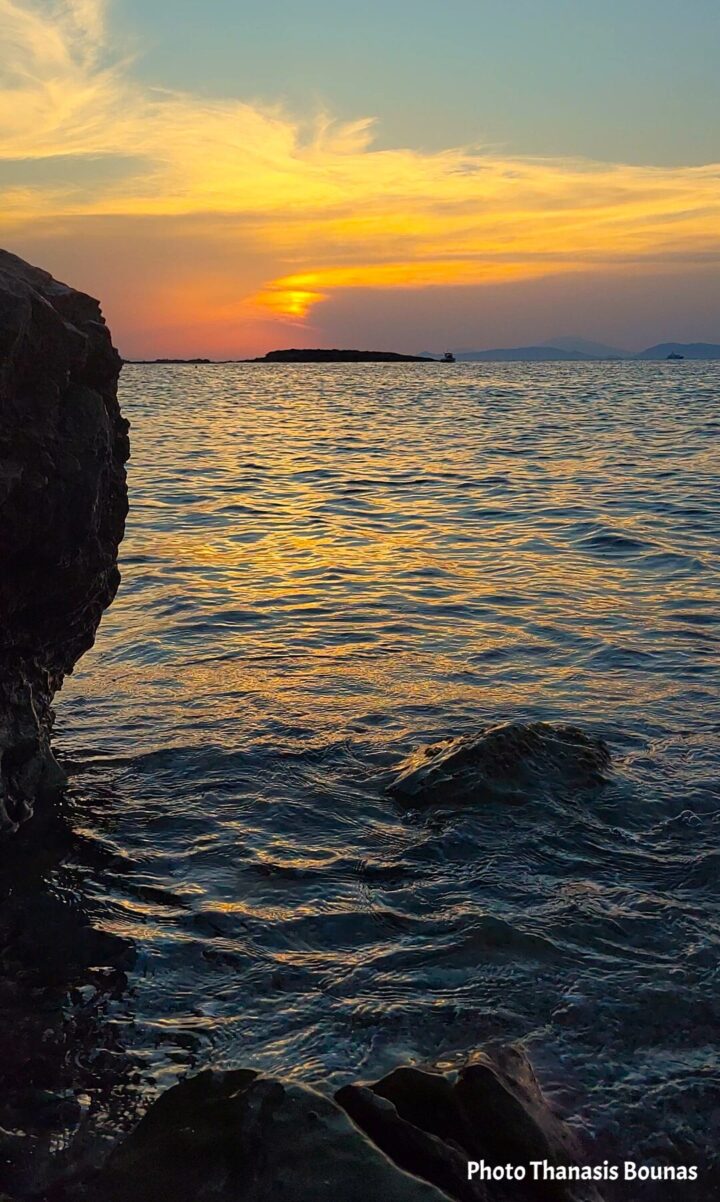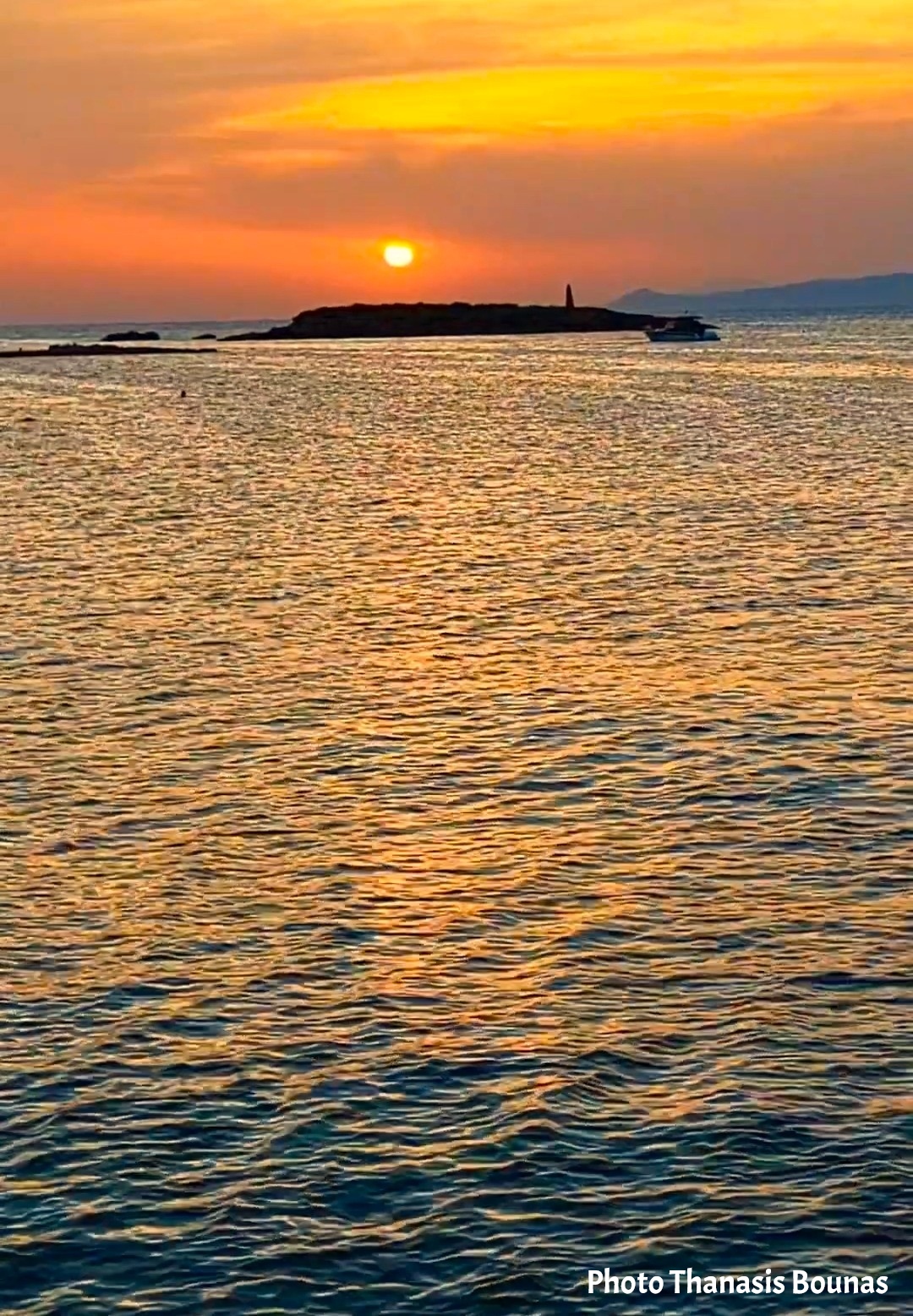
Some sunsets belong to a particular island.
Others seem to belong to an entire sea.
Across the Dodecanese Islands of Greece, evening often arrives over a landscape of open water, distant silhouettes and small islands scattered across the southeastern Aegean.
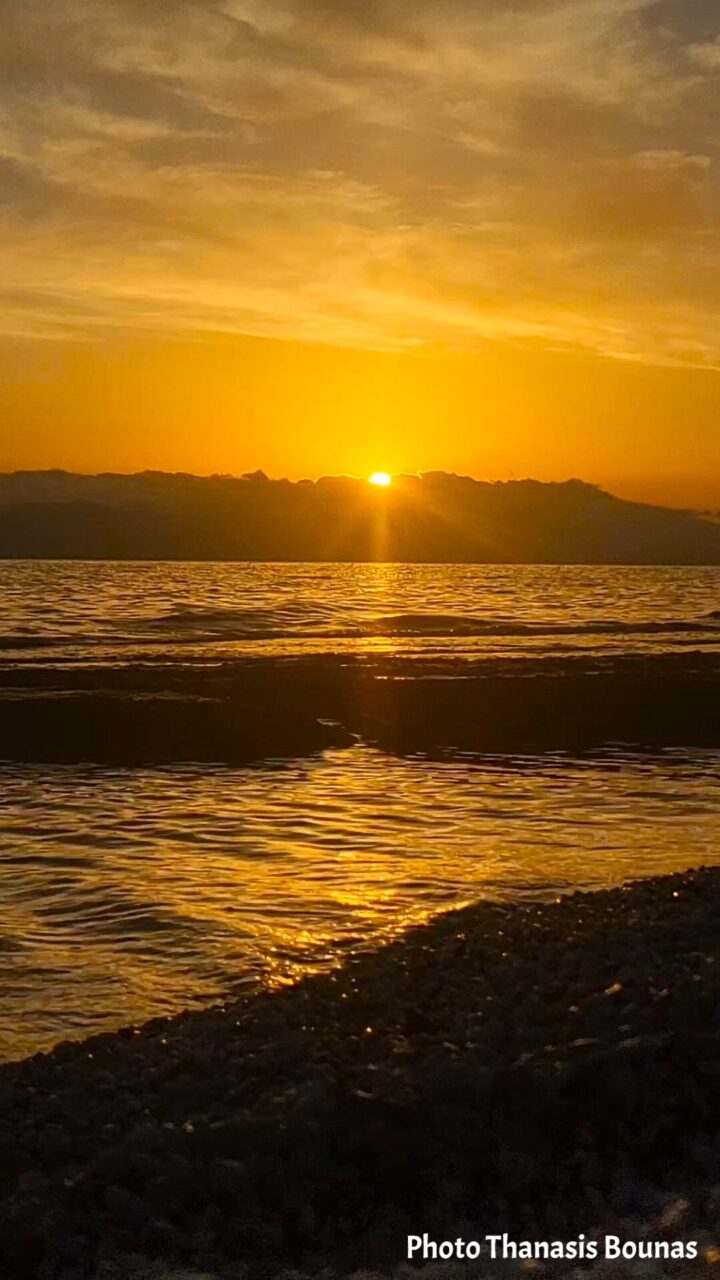
The sun slowly approaches the horizon, the sea turns gold, and islands that were clearly visible during the day become dark shapes against the sky.
In moments like this, it is easy to understand that the Dodecanese are not simply a collection of separate destinations.
They form a connected maritime world.
Sunset in the Dodecanese, Greece.
A Chain of Islands Across the Aegean
The Dodecanese stretch through the southeastern Aegean, close to the coast of Asia Minor and along some of the oldest maritime routes of the eastern Mediterranean.
Their name means “Twelve Islands,” but the island group actually includes more than twelve significant islands, together with many smaller islets.
At the northern side of the group lie Patmos, known for its religious history, Lipsi with its quieter island character, Agathonisi near the eastern edge of Greece and Leros, whose deep bays give the island a particularly strong relationship with the sea.
Nearby, Kalymnos rises dramatically from the Aegean, shaped by steep mountains and generations of sponge divers.
South of it lies Kos, one of the larger and historically important islands of the group, associated since antiquity with Hippocrates and with maritime routes crossing the eastern Aegean.
Each island is different, yet from the sea they belong to the same wider landscape.
From Astypalaia to Rhodes
Farther west, Astypalaia occupies an unusual position between the Cyclades and the Dodecanese.
Its whitewashed settlements and butterfly-shaped geography give it a character that seems to connect two island worlds.
To the south and east, Nisyros introduces an entirely different landscape, shaped by volcanic forces beneath the Aegean.
Then come the smaller islands of Tilos and Chalki, where the scale of the settlements and the surrounding sea often creates a slower rhythm of travel.
Beyond them rises Rhodes, the largest and most internationally known island of the Dodecanese.
Rhodes has been a major maritime center since antiquity and later became one of the great crossroads of the eastern Mediterranean. Its position, harbors and long history made the island a meeting point for sailors, merchants, armies and cultures over many centuries.
But the Dodecanese do not end with Rhodes.
The Islands Towards the South and East
Across the water lies Symi, instantly recognizable when approaching its harbor, where neoclassical houses climb the steep slopes above the sea. Its history is closely connected with sponge diving, shipbuilding and maritime trade.
Farther south, Karpathos stretches between Rhodes and Crete, an elongated mountainous island with wild landscapes, traditional villages and a coastline exposed to the open sea. It is the second-largest island of the Dodecanese.
Beyond Karpathos lies Kasos, one of the southernmost islands of the group, standing close to the passage toward Crete.
And far to the east, almost at the edge of Greece, lies Kastellorizo, also known as Megisti — small in size but extraordinary in its geographic position and maritime atmosphere.
From Astypalaia in the west to Kastellorizo in the east, the distances between these islands reveal just how widely the Dodecanese are spread across the Aegean.
Smaller Islands Between the Larger Names
The maritime landscape becomes even richer when the smaller islands and islets are included.
Pserimos lies between Kalymnos and Kos.
Telendos rises just offshore from Kalymnos.
Arki and Marathi sit among the waters north of Leros and Lipsi.
Near Rhodes lies Alimia, while Nimos lies beside Symi.
Close to Karpathos, Saria forms another dramatic piece of the same mountainous landscape, while Gyali, between Kos and Nisyros, reveals the volcanic geology of this part of the Aegean.
These smaller islands may not always appear on the first itinerary of a traveller, but from the sea they are part of the geography that connects the larger Dodecanese.
They appear on the horizon, mark passages between islands and create countless sheltered bays, channels and sailing routes.
Sunset Over the Dodecanese
Perhaps this is why a sunset somewhere among the Dodecanese can feel different from simply watching the sun disappear from a beach.
There is often another island on the horizon.
A fishing boat crossing the light.
A distant coastline that may be Kalymnos, Leros, Kos, Rhodes or one of dozens of smaller pieces of land scattered through the Aegean.
For sailors, every one of these silhouettes can represent another destination.
Patmos, Lipsi, Agathonisi, Leros, Kalymnos, Kos, Nisyros, Tilos, Chalki, Rhodes, Symi, Kastellorizo, Karpathos, Kasos and Astypalaia each have their own landscapes, histories and harbors.
Together, they create one of the most fascinating maritime regions of Greece.
And when evening falls, the boundaries between them seem to disappear.
For a few minutes there is only sea, sky and islands in the distance.
The Dodecanese become one landscape.
FAQ
Which are the main islands of the Dodecanese?
The main islands include Rhodes, Kos, Kalymnos, Karpathos, Astypalaia, Kasos, Leros, Patmos, Nisyros, Symi, Tilos, Chalki, Lipsi, Agathonisi and Kastellorizo, together with many smaller islands and islets.
Where are the Dodecanese Islands located?
The Dodecanese lie in the southeastern Aegean Sea, extending from the area near the Cyclades towards the coast of Asia Minor and south toward Crete.
Are the Dodecanese good for island hopping and sailing?
Yes. The group includes large islands, small harbors, remote islets and numerous routes between them. Conditions can vary significantly, so sailors should always plan passages according to current weather and marine forecasts.