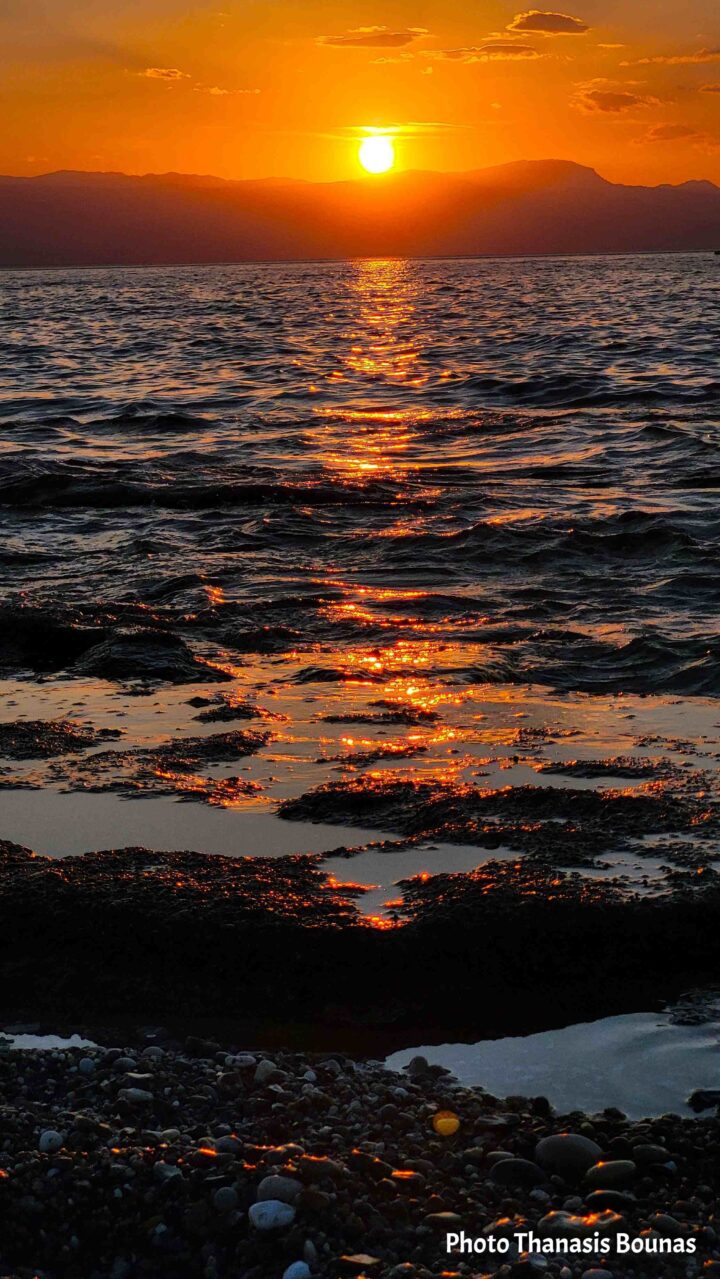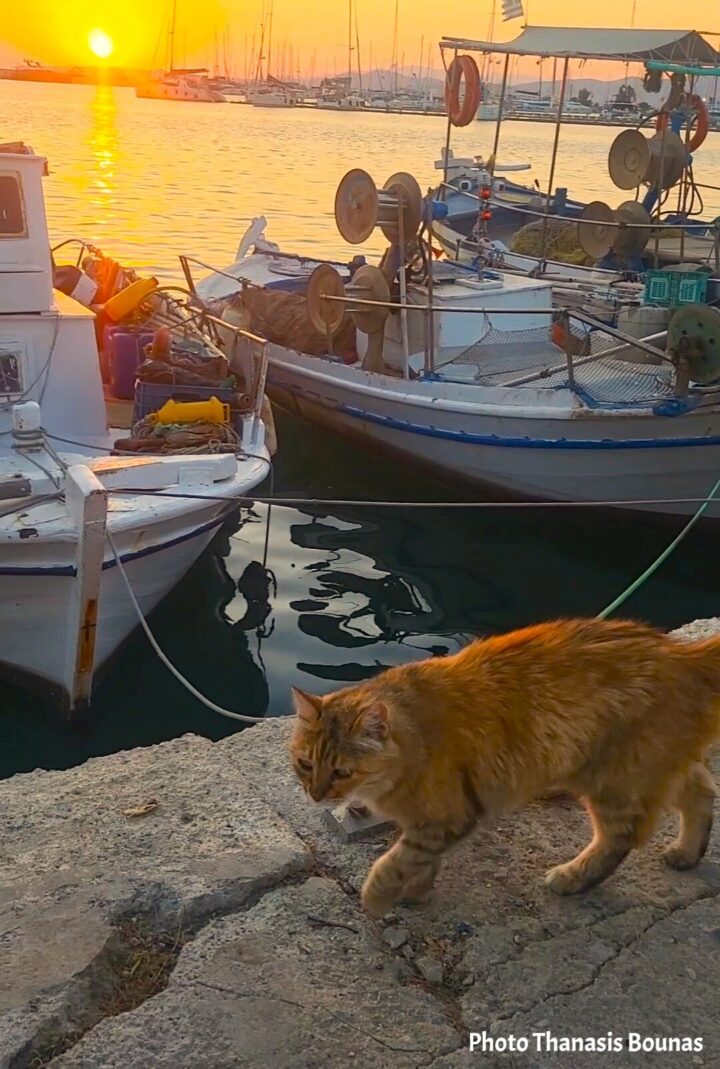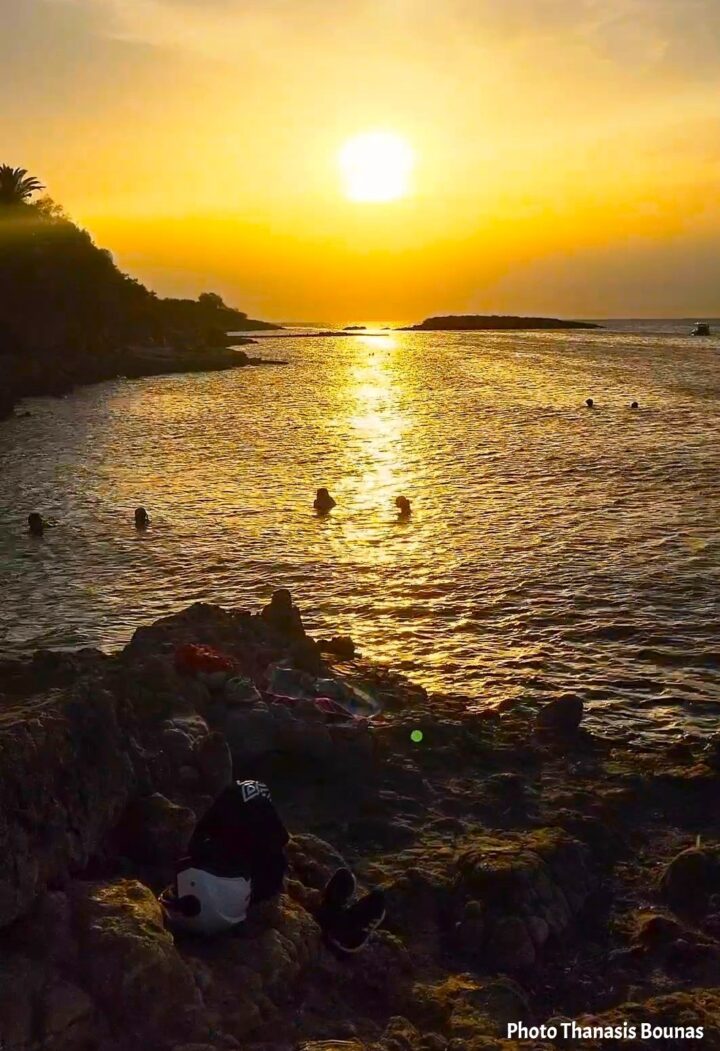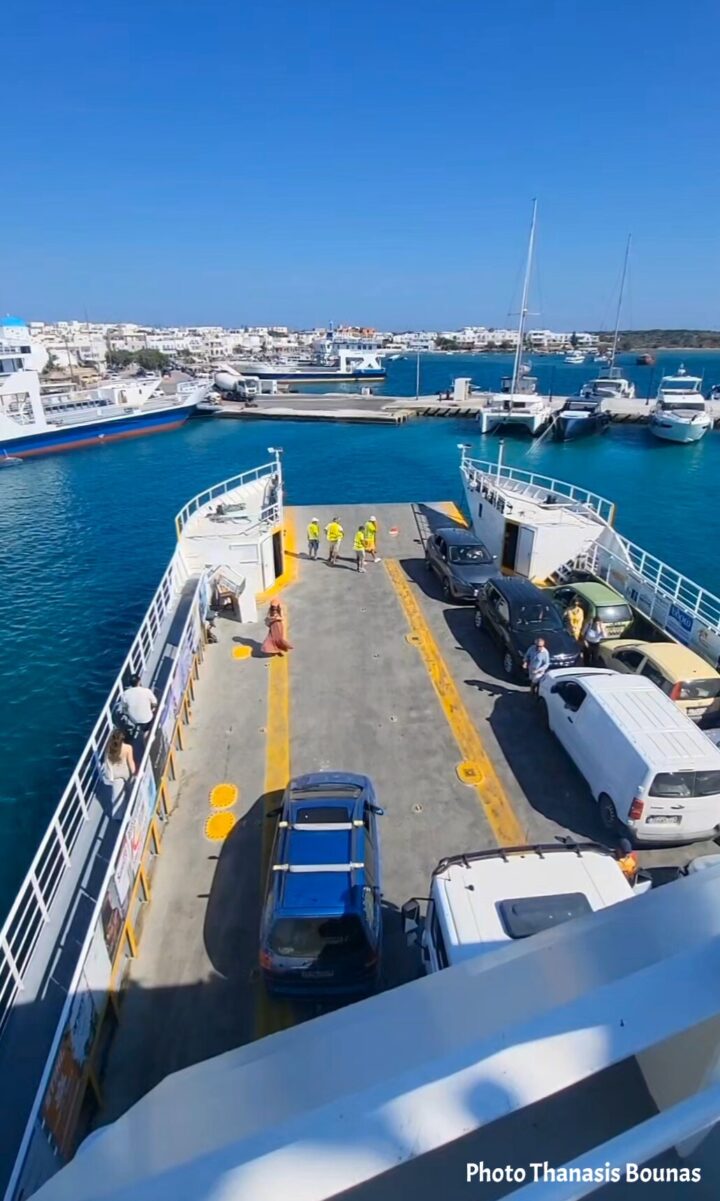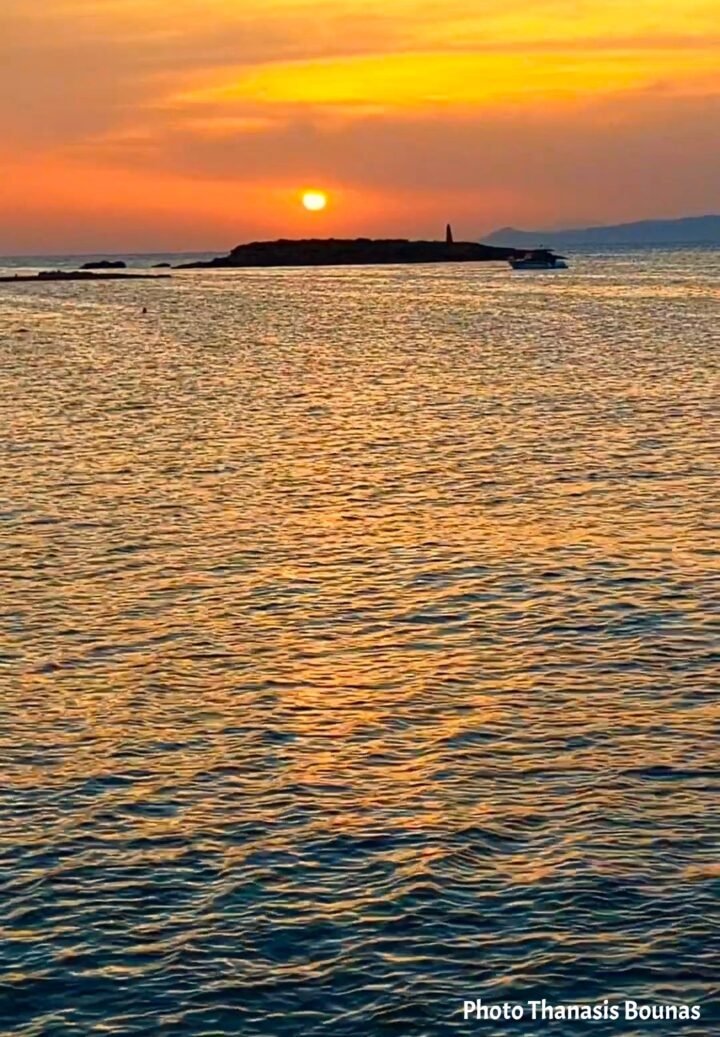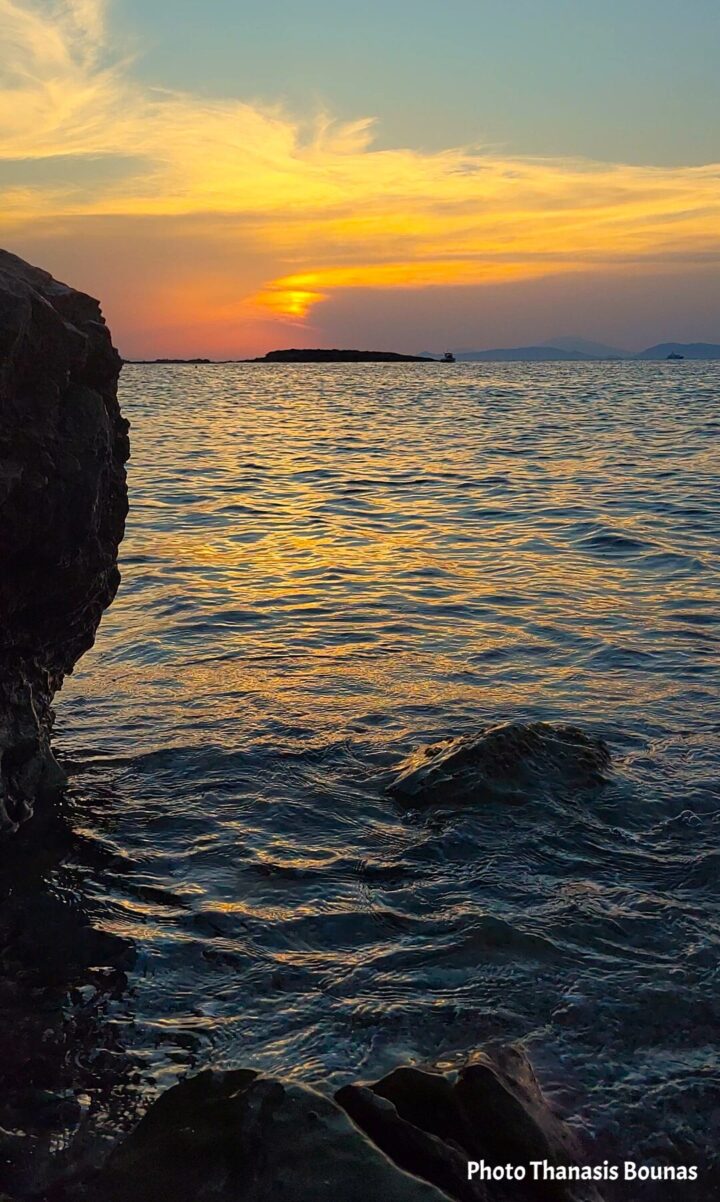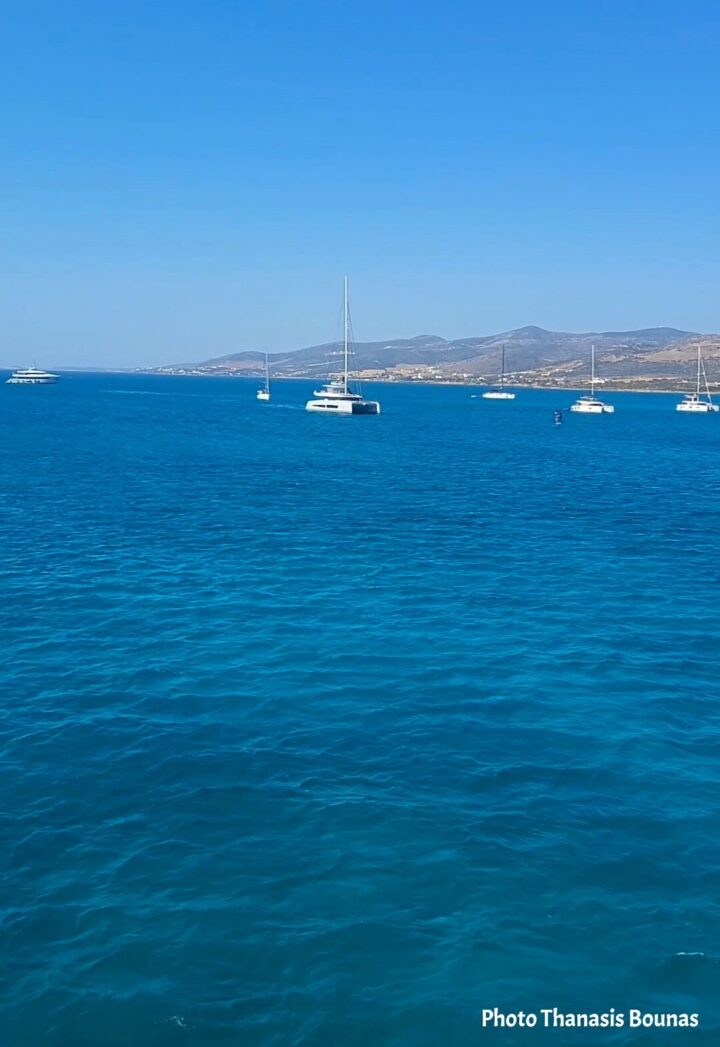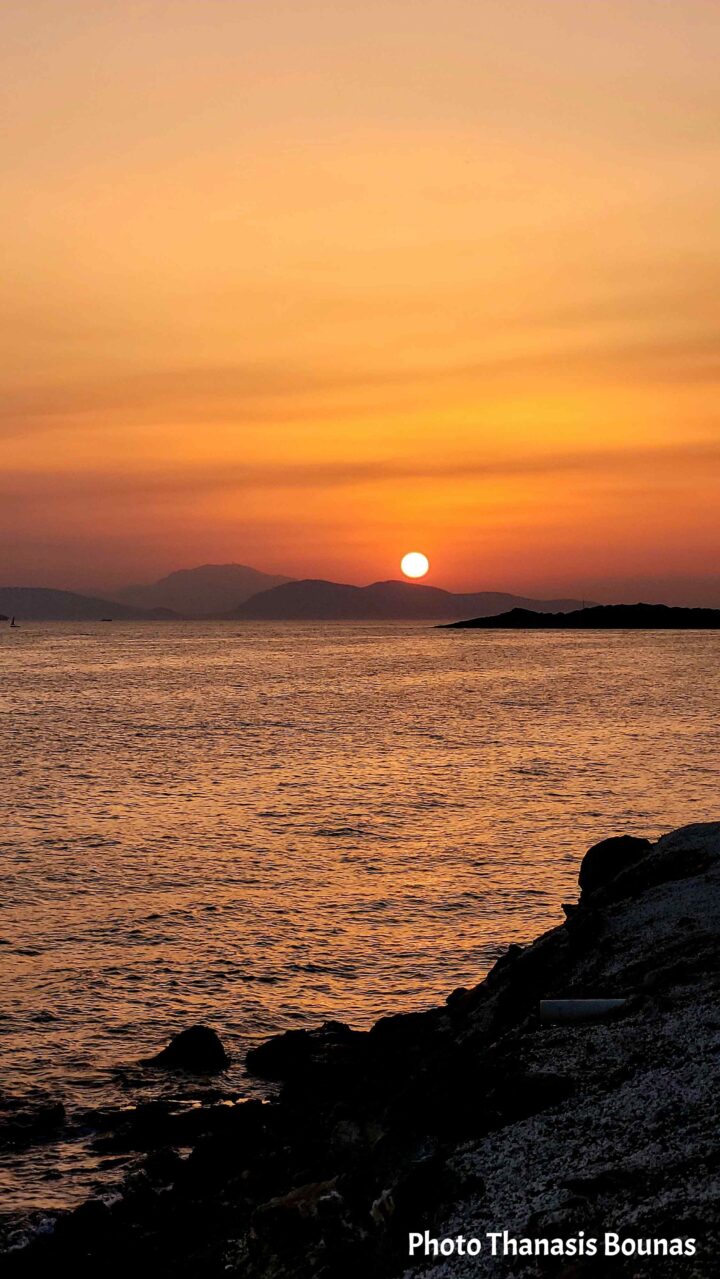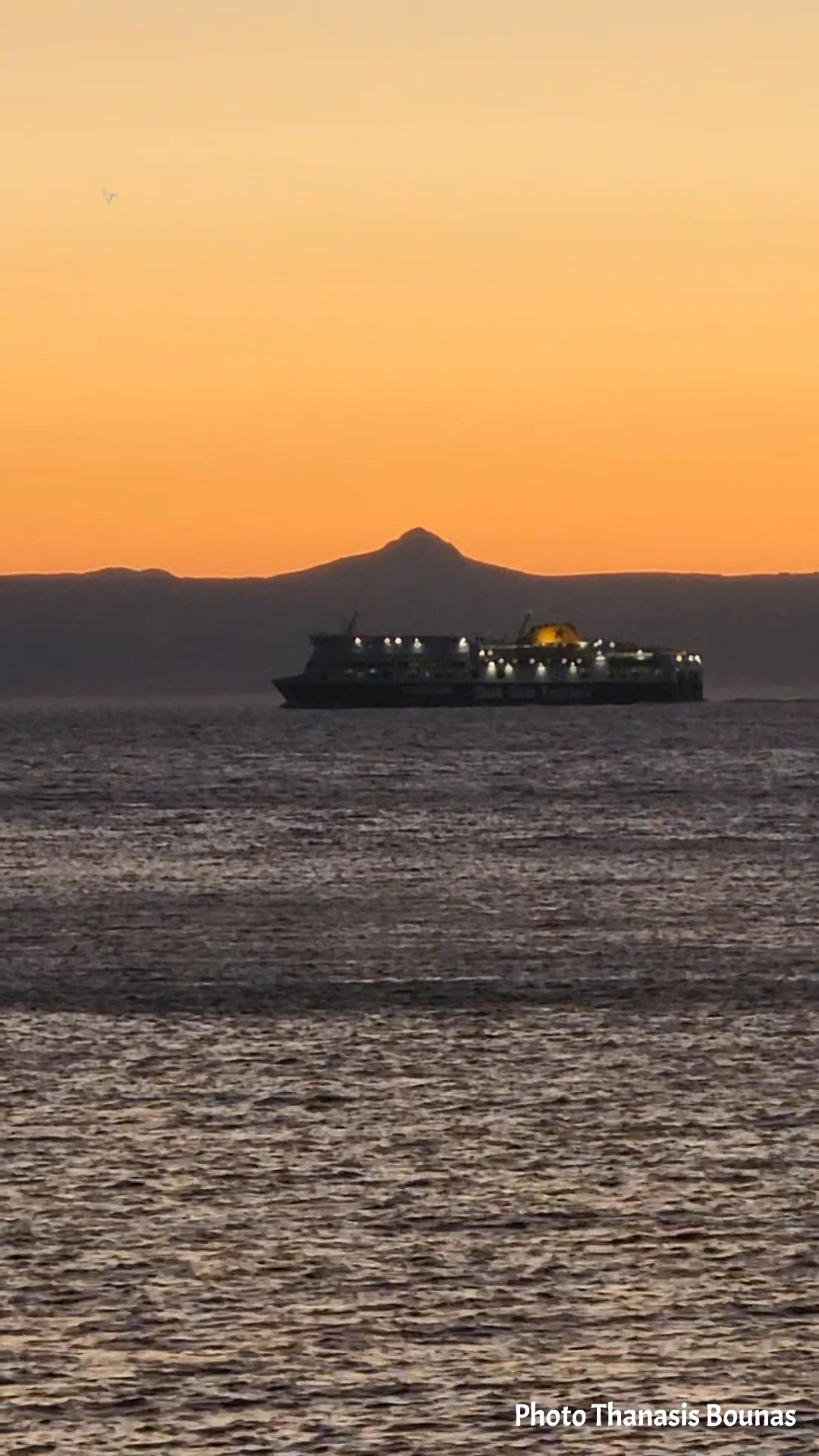
As daylight fades over Karpathos, the island becomes a dark silhouette against the warm colors of the evening sky.
A ship passes quietly offshore. The mountains lose their details, the sea becomes darker, and the last light of the day remains along the horizon.
It is a simple scene from Karpathos, Greece, but one that reveals something essential about the island.
Here, the sea is never far away.
Karpathos rises from the southeastern Aegean between Rhodes and Crete, surrounded by waters that have connected the island with the wider Mediterranean world for centuries.
At dusk, that geography can almost be felt.
Karpathos | Dodecanese, Greece.
Karpathos Between Rhodes and Crete
Karpathos belongs to the Dodecanese and is the second-largest island of the group after Rhodes.
Its position is particularly interesting.
To the northeast lies Rhodes, while beyond the waters to the southwest lies Crete. Nearby Kasos forms another link in this chain of islands across the southeastern Aegean.
This position has given Karpathos a strong relationship with the sea.
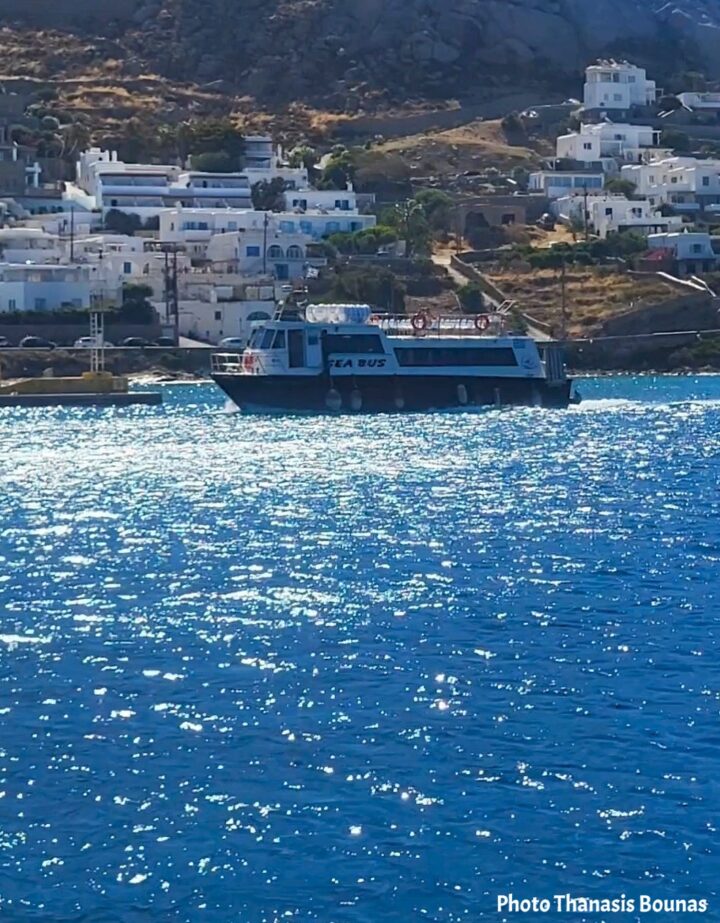
From offshore, the island appears mountainous and rugged. Long ridges dominate much of the landscape, while settlements, beaches and small harbors occupy the spaces between mountains and coastline.
It is a very different landscape from the white, low hills often associated with the Cyclades.
Karpathos feels wilder.
An Island of Mountains and Traditions
The geography of Karpathos helped some communities preserve traditions that developed differently from those of many other Greek islands.
One of the best-known examples is Olympos, the mountain village in the northern part of Karpathos.
Built high above the sea, the settlement became known for preserving distinctive local customs, traditional dress, music and dialect features.
But Karpathos is not defined by a single village.
Its character comes from the relationship between isolated mountain landscapes and the sea surrounding them.
From the coast, especially in the softer evening light, this contrast becomes particularly visible.
Mountains rise almost directly from the water.
Small settlements appear beneath steep slopes.
And the open Aegean remains constantly present.
Sailing Through the Southeastern Aegean
For anyone travelling by sea, Karpathos occupies a fascinating position among the islands of the Dodecanese.
A journey through these waters can connect Astypalaia, Kalymnos, Kos, Nisyros, Tilos, Symi and Rhodes before extending toward Karpathos and Kasos.
Each island has a different character, yet together they form a long maritime landscape across southeastern Greece.
Karpathos feels particularly exposed to that larger sea.
Strong winds can affect these waters, and passages always require careful attention to weather forecasts and local conditions.
But when the wind settles and evening arrives, the experience changes completely.
The boat slows.
The mountains darken.
Another vessel becomes a silhouette on the horizon.
The journey itself becomes part of the memory.
When Karpathos Becomes a Silhouette
There is a point after sunset when an island stops being a collection of roads, villages and beaches.
From the sea, it becomes a shape.
That is the Karpathos captured in this moment.
A mountainous outline against the last light of the day.
A ship passing between island and horizon.
The quiet movement of the Aegean below.
Tomorrow there may be another harbor, another beach or another passage through the Dodecanese.
But for a few minutes, there is nowhere else to go.
Karpathos is disappearing into the evening.
And the sea continues around it.
FAQ
Where is Karpathos in Greece?
Karpathos is part of the Dodecanese in the southeastern Aegean Sea. It lies between Rhodes and Crete, with the smaller island of Kasos nearby.
What is Karpathos famous for?
Karpathos is known for its rugged mountain landscapes, beaches, strong local traditions and the village of Olympos, which is particularly associated with the preservation of traditional island culture.
Is Karpathos part of the Dodecanese?
Yes. Karpathos belongs to the Dodecanese and is the second-largest island of the group after Rhodes.