The rhythm of the city
Every city moves differently.
Some feel fast.
Some feel heavy.
And some, like Vancouver, find a rhythm somewhere in between.
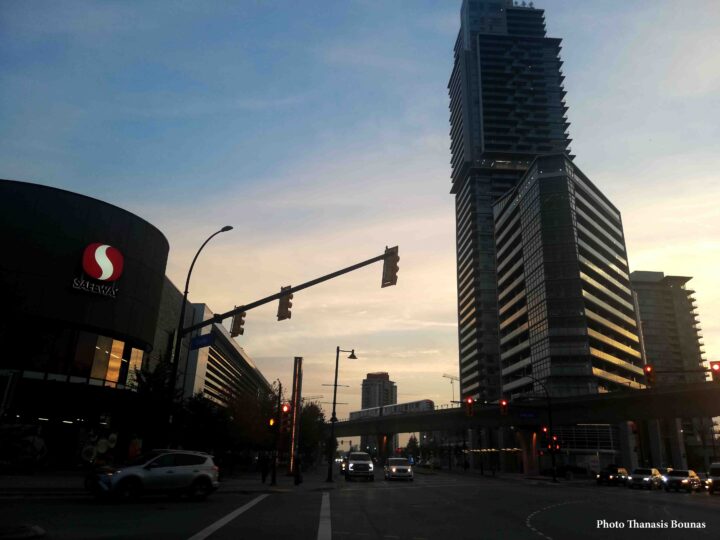
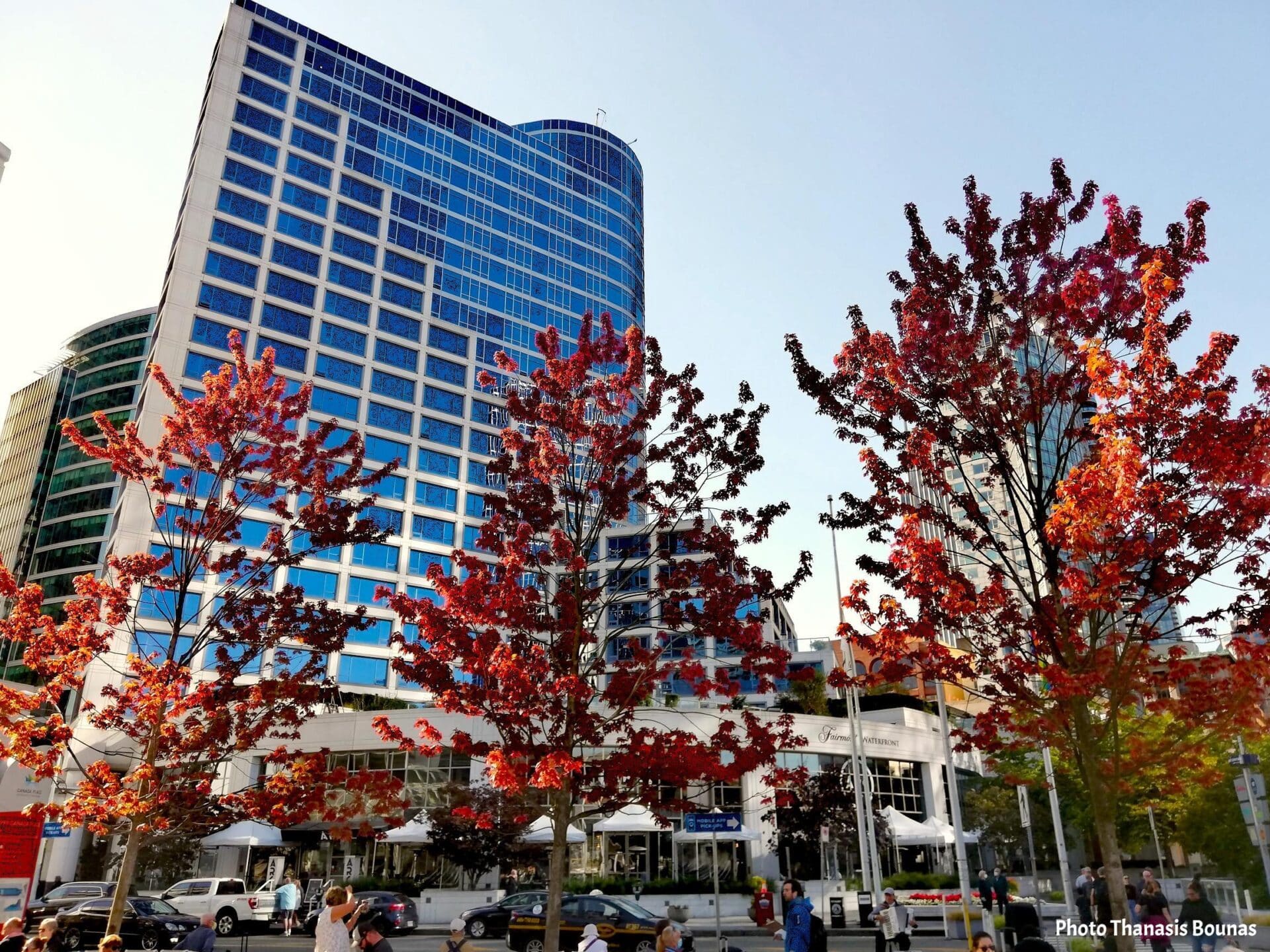
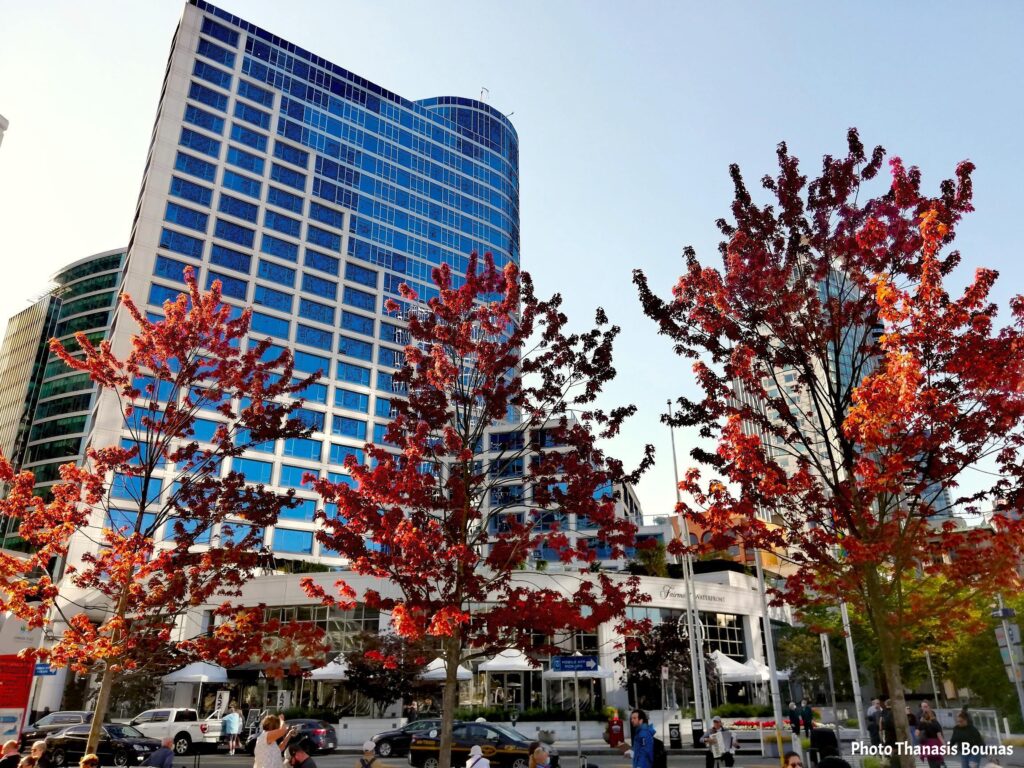
Standing near Canada Place, surrounded by glass towers and autumn trees, the city feels alive—but not overwhelming. The movement is there, but it does not push you.
It invites you to align with it.
A balance shaped over time
Vancouver did not grow randomly.
From its incorporation in 1886, the city evolved with a clear relationship between nature and urban design. Unlike many modern cities, Vancouver preserved space—waterfronts, parks, and visual openness—while still building vertically.
That is why places like this feel different.
The towers rise, but they don’t dominate.
Between reflection and structure
Glass buildings do something interesting.
They reflect everything around them.
Sky, light, trees, movement.
And suddenly, the city is no longer just structure—it becomes part of its environment.
Looking at these reflections, you begin to understand rhythm differently. It is not just about movement. It is about interaction.
Sailing follows the same idea. You don’t move independently from the environment. You respond to it.
The quiet movement of everyday life
People walk.
Cars pass.
Light shifts slowly across the buildings.
Nothing stands still, yet nothing feels chaotic.
This is where rhythm becomes visible.
Not in big moments.
But in small, continuous movement.
Travel often makes you notice these things. It slows your perception just enough to see what was always there.
Nature inside the city
The autumn trees in front of the towers change everything.
They soften the edges.
They break the symmetry.
They remind you that even in a structured environment, nature still leads.
Vancouver understands this well. Its identity is not just urban—it is coastal, natural, and deeply connected to the environment that surrounds it.
And that connection shapes its rhythm.
A different kind of flow
There is a quiet connection here with the water, even if you don’t see it directly.
Canada Place is only steps away.
The sea influences everything—the light, the air, the pace of the city. And that influence creates a softer kind of movement.
Closer to sailing than to speed.
Not rushed.
Not forced.
Rhythm as awareness
In the end, rhythm is not something external.
It is something you tune into.
Somewhere between the reflections of glass, the color of the trees, and the quiet movement of Vancouver, you begin to feel it.
You don’t need to chase the experience.
You just need to notice it.